
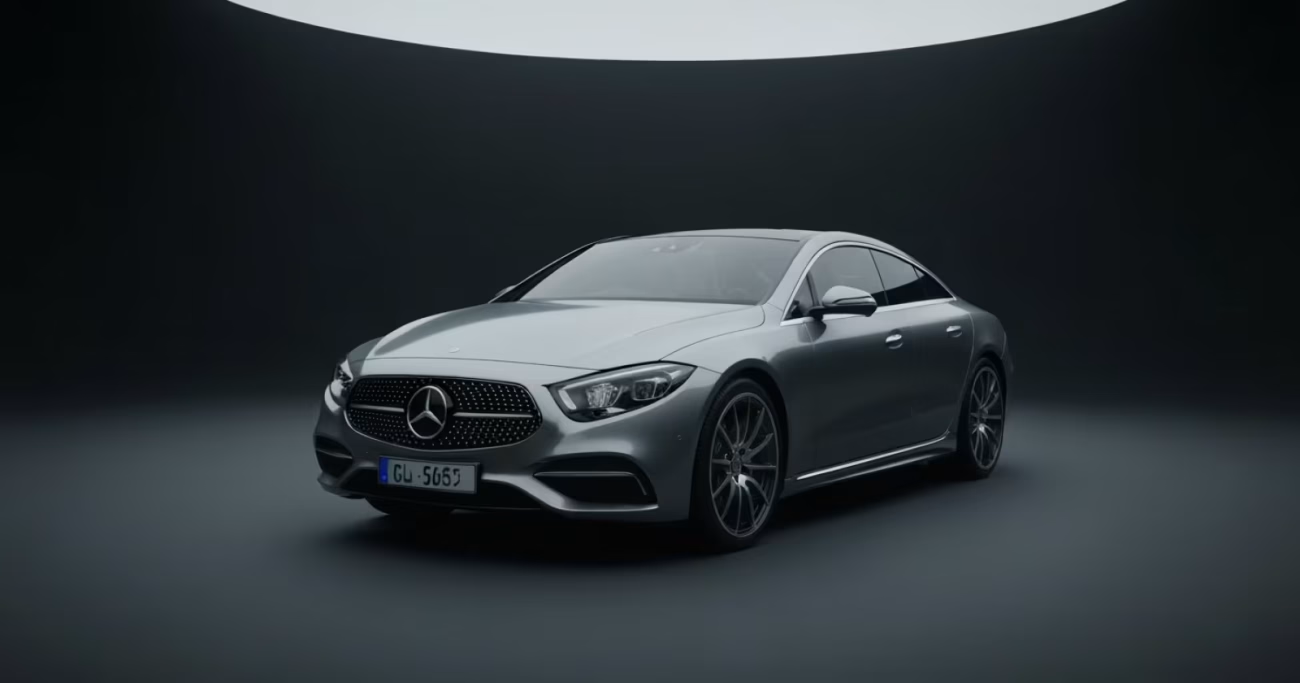
Mercedes built one of the most technically sophisticated electric cars on the market — and almost nobody bought it. Now the brand is pulling out a second facelift in just a few years, and this time it’s bringing a yoke steering wheel and steer-by-wire technology to try to change the conversation around the EQS.
It’s a bold swing. It’s also, depending on how you look at it, either a genuine innovation move or an admission that the car still hasn’t found its audience. Let me break down exactly what’s changing, what it means to drive, and whether any of this is actually enough to save one of luxury EVs’ biggest commercial disappointments.
The EQS story so far is not a pretty one
When Mercedes launched the EQS, the pitch was simple: take everything the brand knew about S-Class luxury and pour it into an electric shell. The result was a car with stunning range, a spectacular Hyperscreen interior, and the visual appeal of a bar of soap. Buyers stayed away.
An emergency facelift arrived in 2024 with a proper grille, a hood ornament, interior tweaks, and a bigger battery. It helped a little. But Mercedes clearly decided that wasn’t enough, because a second round of surgery is already in progress — and this one goes deeper than sheetmetal.
Steer-by-wire removes the column and changes everything
The headline change is steer-by-wire, which cuts the mechanical connection between the steering wheel and the front wheels entirely. Instead, electronic signals do the work. Mercedes says the system has logged over 1 million kilometers — roughly 621,000 miles — of testing, and it includes 2 independent signal paths so steering is always guaranteed even if one fails.
The practical effect is genuinely interesting. Small inputs produce larger responses, meaning drivers don’t need to shuffle their hands through tight turns anymore. Road vibrations that would normally transmit through the column simply don’t reach the wheel. Mercedes is promising what it calls a “precise, intuitive steering feel” despite the digital intermediary — a claim that will need real-world verification, but one that at least sounds credible given the testing mileage.
The yoke is optional, but here’s what makes this one different
Cars with steer-by-wire will get a new yoke-style wheel with a rectangular frame, 4 spokes, and curved edges at the top and bottom. Mercedes says it creates more space in the cockpit, makes it easier to get in and out of the car, and stops the rim from partially blocking the digital instrument cluster. Those aren’t marketing spin points — they’re real ergonomic wins if executed well.
Here’s the catch: a yoke only makes sense when you don’t need to rotate the wheel multiple times in a single maneuver. Steer-by-wire solves exactly that problem by reducing the steering ratio. Tesla’s yoke in the Model S drew criticism partly because it kept the traditional steering ratio and just removed the top of the wheel. Mercedes is at least approaching this correctly by pairing the two technologies together. The system is optional, not standard, which is a sensible way to manage customer skepticism.
| Feature | Current EQS | Updated EQS |
|---|---|---|
| Steering system | Conventional rack | Steer-by-wire (optional) |
| Steering wheel | Round, traditional | Yoke-style, 4-spoke |
| Electrical architecture | 400-volt | 800-volt (expected) |
| Max range | Up to 390 miles | Improved (unconfirmed) |
| Infotainment | MBUX Hyperscreen | Updated OS, new graphics |
| Headlights | Standard LED units | New star-pattern design |
The 800-volt upgrade could be the biggest story nobody’s talking about
Beyond the steering drama, the real story might be under the hood — or more precisely, under the floor. Mercedes is widely expected to shift the EQS to an 800-volt electrical architecture. That’s the same setup Porsche uses in the Taycan and Hyundai uses in the Ioniq 6, enabling charging speeds that make today’s EQS look embarrassingly slow at the plug.
The current EQS tops out around 200 kW of DC fast charging. An 800-volt system could push that figure significantly higher, which matters far more to most buyers than steering geometry. Pair that with a new battery chemistry and the in-house motors Mercedes has been developing, and you’re looking at a car that might finally compete on the spec sheet where luxury EV buyers actually compare cars. Range was never the EQS’s problem — charging speed absolutely was.
Whether a yoke can fix a brand perception problem is another question entirely
The real challenge Mercedes faces isn’t technical. Steer-by-wire works. An 800-volt system works. A new infotainment layout built on the same operating system as the CLA is a welcome update. The problem is that the EQS carries 3 years of “anonymous electric blob” baggage, and no amount of technology can instantly erase that reputation among buyers who already wrote it off.
What I find genuinely encouraging is that Mercedes isn’t just reskinning the car. The steer-by-wire system required a completely new airbag design — that’s not a cosmetic refresh, that’s engineering investment. The star-infused headlights and revised bumpers will sharpen the exterior. If the 800-volt upgrade lands as expected, the charging story finally becomes competitive. This is a more serious attempt to fix the EQS than the 2024 update was.
If you’ve been waiting to give the EQS a fair shot, this second facelift is shaping up to be the version that actually earns that consideration. Keep an eye on the official reveal — the specs will tell you whether Mercedes has done enough to make the yoke a symbol of reinvention rather than desperation.
