
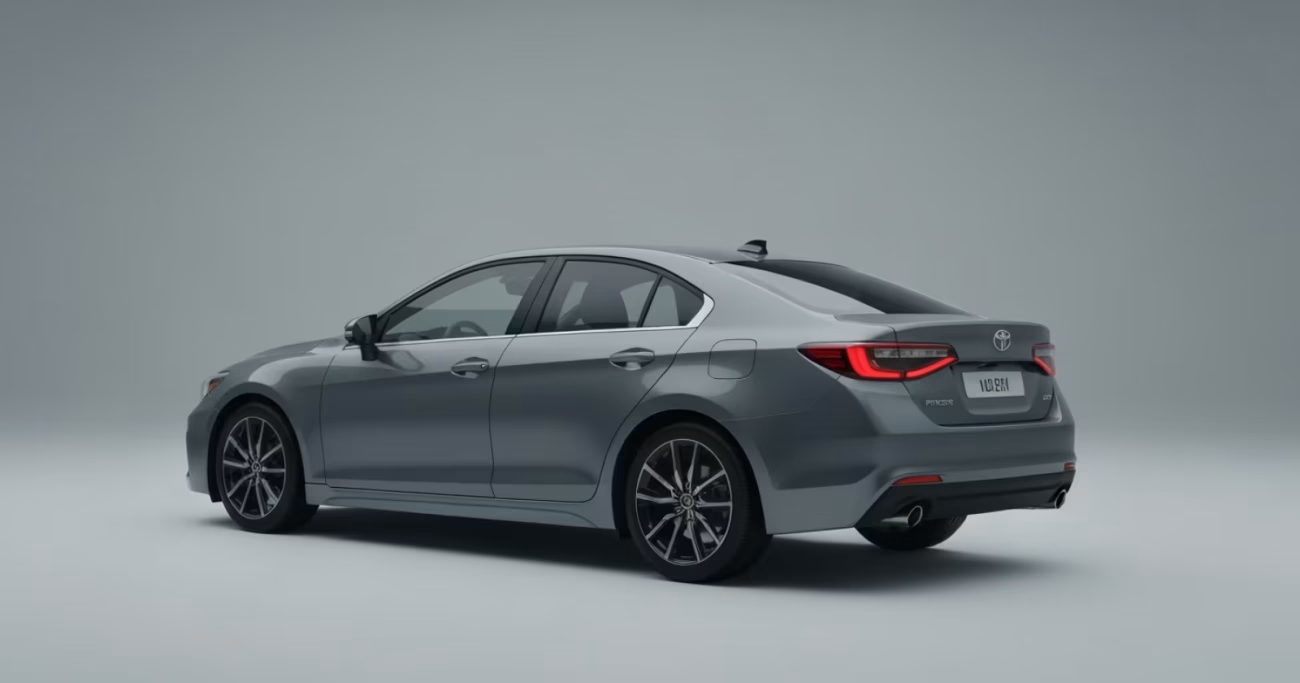
A 17% jump in a single month is no small feat for any automaker in India, but when hybrid vehicles are doing the heavy lifting, it tells you exactly where the market is heading. Toyota Kirloskar Motor just dropped its April 2026 numbers, and the story is clear — domestic buyers are betting big on electrified powertrains, and Toyota is cashing in.
Domestic Demand Powers The Surge
I have been tracking Toyota’s monthly numbers for a while now, and April 2026 stands out for one reason — domestic sales absolutely carried the brand. Toyota moved 30,159 units within India alone, a 21.45% year-on-year jump compared to 24,833 units in April 2026. That is serious volume growth in a market where most manufacturers are fighting for single-digit gains.
Total sales for the month came in at 32,086 units against 27,329 units in the same month last year, translating to a 17.41% overall increase. Now, if you are wondering why the total growth figure is lower than the domestic number, exports tell that part of the story. But I will get to that in a moment.
What really matters here is the consistency. Toyota is not riding a one-month spike. The January to April 2026 cumulative tally sits at 1,37,194 units, reflecting a 19.14% growth over 1,15,157 units during the same period in 2026. Domestic volumes for the four-month window reached 1,26,651 units, up 19.71%. These are not flash-in-the-pan numbers. This is sustained momentum.
Innova HyCross Crosses 2 Lakh Cumulative Sales
The headline within the headline, if you ask me, is the Innova HyCross hitting the 2 lakh cumulative sales milestone. That is two lakh buyers in India who chose a hybrid MPV over a conventional diesel or petrol alternative. For a market that was skeptical about hybrid technology just a few years ago, this is a massive validation.
I remember when Toyota first launched the HyCross and people questioned whether Indian families would pay a premium for hybrid tech. The answer, clearly, is yes. The combination of fuel efficiency, refinement, and that familiar Innova badge has created a formula that competitors have struggled to match. Neither the Hyundai Alcazar nor the Kia Carens have managed to dent the HyCross’s dominance in the premium MPV space.
Toyota’s leadership acknowledged this directly. Sabari Manohar, Executive Vice President for Sales, Service, and Used Car Business at Toyota Kirloskar Motor, pointed to the HyCross milestone as a key highlight, calling it proof of growing market acceptance for hybrid offerings. He also credited product excellence and a disciplined dealer network for sustaining the growth trajectory.
The Numbers At A Glance
| Metric | April 2026 | April 2026 | YoY Change |
|---|---|---|---|
| Total Sales | 32,086 | 27,329 | +17.41% |
| Domestic Sales | 30,159 | 24,833 | +21.45% |
| Export Sales | 1,927 | 2,496 | -22.80% |
| March 2026 Total | 35,125 | — | -14.14% MoM |
| Jan–Apr 2026 Total | 1,37,194 | 1,15,157 | +19.14% |
| Jan–Apr 2026 Domestic | 1,26,651 | 1,05,789 | +19.71% |
| Jan–Apr 2026 Exports | 10,543 | 9,360 | +12.65% |
Exports Dip But The Bigger Picture Holds
Not everything was rosy in April. Export volumes dropped to 1,927 units from 2,496 units a year ago, a decline of 22.80%. That is a notable fall, and it did pull down the overall growth percentage. However, I would not read too much into a single month of export softness. Global shipping schedules, order cycles, and destination market conditions all play a role in monthly export fluctuations.
The broader January to April export picture is actually positive, with 10,543 units shipped compared to 9,360 units last year — a 12.65% increase. So the export business is growing on a cumulative basis even if April was a weaker month. Toyota’s export share remains relatively small compared to domestic volumes, so the real story continues to be what happens inside India.
There is also the month-on-month dip to address. April’s 32,086 units came in 14.14% lower than March 2026’s 35,125 units. This is entirely expected. March is traditionally the strongest sales month in India due to year-end registration rushes, corporate fleet purchases, and dealer push to close annual targets. April always sees a correction, and a 14% drop is well within normal seasonal patterns.
The Ebella EV Is Coming — And It Changes Everything
Here is where things get really interesting for the rest of 2026. Toyota has confirmed that its first all-electric model for India, called the Ebella, is on the way. Testing and preparations are already underway, and a launch is expected in the near future. This is a significant strategic shift for a company that has been vocal about its hybrid-first approach globally.
I think the timing makes sense. Toyota has built credibility with Indian buyers through the HyCross and its other hybrid offerings. Now, entering the pure EV space gives them a two-pronged electrification strategy — hybrids for buyers who want efficiency without range anxiety, and a full EV for the growing segment of urban professionals ready to go all-electric.
The Indian EV car market is heating up fast. Tata is dominant with the Nexon EV and Punch EV, Mahindra is pushing hard with the BE series, Hyundai has the Creta Electric, and MG continues to hold its niche. Toyota entering this space with the Ebella adds another credible player, and given their manufacturing quality reputation, I expect strong interest from day one.
What This Means For The Indian Market
Toyota’s April performance reinforces a few trends I have been watching closely. First, hybrid technology is no longer a niche play in India. Two lakh HyCross sales prove that Indian buyers will pay for fuel-efficient tech when the product delivers on practicality and reliability. Second, Toyota’s domestic growth rate consistently outpacing the industry average suggests their product-market fit is strong right now.
Third, and this is the bigger takeaway, the Indian auto market in 2026 is rewarding brands that offer electrified options. Whether it is Maruti‘s mild hybrids, Toyota’s strong hybrids, or Tata’s full EVs, the direction is unmistakable. Buyers want cleaner, more efficient vehicles, and they are willing to put their money where their preferences are.
For competitors like Hyundai, Kia, and even Maruti, Toyota’s consistent double-digit domestic growth should be a wake-up call. The hybrid advantage is real, and until rivals bring comparable strong hybrid options to market at competitive prices, Toyota will continue to own this space.
Keep An Eye On The Next Few Months
If you are in the market for a new car or simply tracking where the Indian auto industry is headed, Toyota is a brand worth watching closely right now. The hybrid momentum is strong, the Ebella EV launch could shake up the electric segment, and the sales trajectory suggests Toyota Kirloskar is not slowing down anytime soon. Whether you are considering an Innova HyCross for your family or waiting to see what the Ebella brings to the table, now is a great time to visit your nearest Toyota dealership and explore what is on offer. The numbers do not lie — over 30,000 buyers in a single month cannot all be wrong.
