
Ford just handed analysts one of the most contradictory quarterly sales reports in recent memory. The company’s best-selling vehicle is bleeding units, and an iconic sports car that most people had quietly written off is suddenly posting its best numbers in years.
A factory fire that brought Ford’s biggest asset to its knees
In September 2026, a catastrophic fire broke out at Novelis, one of Ford’s primary sheet aluminum suppliers based in upstate New York. What followed wasn’t a temporary production hiccup — subsequent smaller fires kept the facility offline long enough to wipe out roughly 40% of the entire US sheet aluminum supply almost overnight. For a company that builds aluminum-bodied trucks and full-size SUVs at scale, this was about as damaging as a supply chain disaster gets.
The numbers in Q1 2026 tell the full story. F-Series sales totaled 159,901 units through the first three months of the year, down from just over 190,000 in Q1 2026. That’s a 16% decline in the single most profitable vehicle lineup in the American market. Ford was forced to ration available aluminum, slash production, and ultimately pull forward the discontinuation of the F-150 Lightning electric truck — sacrificing its EV entirely to keep the gas-powered F-150 assembly lines fed and running.
The one catch nobody is talking about with Ford’s truck lead
Here’s the catch: Ford still leads the full-size segment on a brand-by-brand basis. Chevrolet sold around 126,000 pickups in Q1 2026, which puts Ford’s 159,901 units comfortably ahead in any direct comparison. Add GMC’s volume and General Motors technically wins on combined truck sales — but those are counted as two entirely separate brands competing in the same segment. Ford’s 49-year run as the best-selling full-size pickup brand remains intact for now.
What is genuinely at risk is revenue. Ford has already committed to building an extra 50,000 trucks this year once aluminum supply normalizes — but that timeline is completely out of Ford’s hands. Every week the Novelis situation remains unresolved, Ford loses margin on its highest-profit vehicles. The company posted a 9% overall drop in Q1 2026, moving 433,705 total vehicles, and the F-Series shortage accounts for the bulk of that missing ground.
Mustang’s 50% surge is the comeback story Ford needed most right now
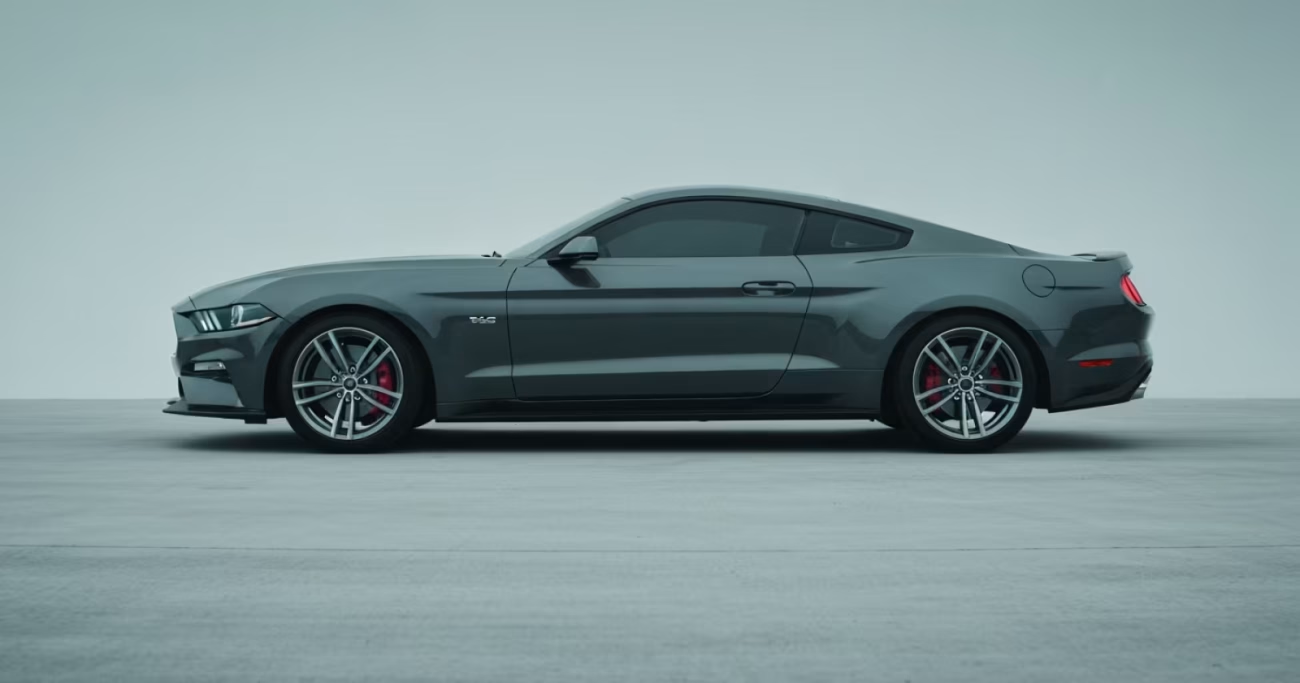
Nobody saw this one coming. After spending the past couple of years getting outsold by its own electric namesake — the crossover-shaped Mustang Mach-E — the original pony car just put together its most impressive quarter in a long time. Ford sold 14,074 Mustangs in Q1 2026, up from just 9,377 in the same period last year. That’s a 50% jump, and it happened without any major model-year changes to explain it away.
I went through Ford’s official statement on the matter carefully. The company pointed to Mustang’s 62-year uninterrupted heritage, its position as America’s best-selling sports car, and two significant additions arriving later in 2026 — the Darkhorse SC and the Mustang RTR. Ford also credited the Mustang GTD, its halo-level performance model, with generating renewed energy across the entire Mustang brand. The current generation launched for the 2024 model year with no appreciable changes since. That makes the 50% Q1 jump even harder to dismiss as a fluke. Consumer appetite for a genuine rear-wheel-drive sports car with real character hasn’t evaporated — it just needed the right moment to resurface.
Explorer and Expedition are quietly carrying more weight than expected
While the Mustang story is the loudest headline, several other Ford nameplates stepped up in a meaningful way during Q1. The Explorer moved 61,387 units — up 30% year-over-year — making it one of the top-performing models across the entire Ford portfolio. The Expedition matched that exact growth rate, reaching 17,554 units. The Ford Ranger added 19% growth to hit 17,775 units, giving the company a third solid performer in an otherwise uneven quarter.
Lincoln also held its ground better than expected. The Aviator climbed 31% to 6,266 sales, and Lincoln overall ended Q1 down just 0.5% year-over-year — essentially flat. The contrast with Ford’s EV numbers is impossible to ignore. Total Ford EV sales collapsed from 22,550 in Q1 2026 to just 6,860 this year, with the Lightning gone and Mach-E falling to only 4,600 units — barely a third of its prior-year Q1 total. Hybrid sales dipped too, partly tied to Ford ending Escape production. Right now, combustion-powered trucks and SUVs are doing all of the heavy lifting for this company.
| Model | Q1 2026 Sales | Q1 2026 Sales | Year-Over-Year Change |
|---|---|---|---|
| Ford F-Series | 159,901 | ~190,000 | -16% |
| Ford Mustang | 14,074 | 9,377 | +50% |
| Ford Explorer | 61,387 | ~47,200 | +30% |
| Ford Expedition | 17,554 | ~13,500 | +30% |
| Ford Ranger | 17,775 | ~14,900 | +19% |
| Ford EV Total | 6,860 | 22,550 | -70% |
| Lincoln Aviator | 6,266 | ~4,783 | +31% |
The rest of 2026 is going to be a story of recovery speed. If Ford can stabilize its aluminum supply and begin building those extra 50,000 trucks, the full-year numbers could look far healthier than Q1 alone suggests. The Mustang momentum should only build as the Darkhorse SC and RTR models arrive and the peak spring and summer selling season hits full stride. If you’ve been sitting on the fence about picking up a Mustang before those special editions generate fresh demand — or before inventory tightens — that window is narrowing. Track Ford’s Q2 report closely, because it will tell us definitively whether this is a genuine turnaround or just one strong quarter catching up from a weak prior year.
