
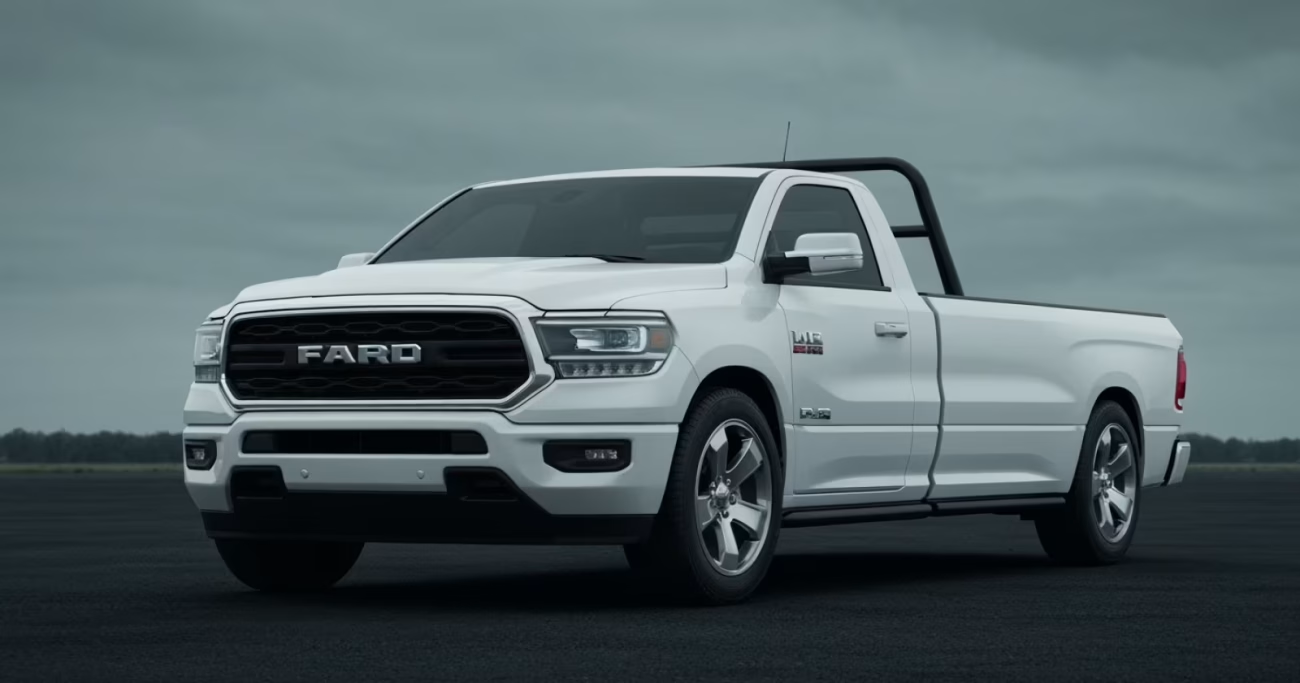
The entire American automotive lobby is currently fighting to sell more giant trucks in a market where gasoline costs $10 a gallon. That one fact alone tells you almost everything you need to know about how this trade dispute is actually playing out.
In 2024, US automakers managed to sell exactly 7,000 trucks across all EU member states combined — in a market that moved more than 10.5 million vehicles that year. That is not a regulatory crisis. That is a rounding error dressed up in trade war language.
The Low-Volume Loophole That Quietly Started This Fight
The EU operates something called the Individual Vehicle Approval arrangement, or IVA. It was created to let small-volume, special-interest vehicles — think rare classics or low-production exotic sports cars — enter Europe without satisfying every EU safety regulation. What nobody planned for was automakers using it to funnel in Ford F-150s and Chevy Suburbans at commercial scale.
Those vehicles don’t meet EU pedestrian protection standards, don’t satisfy European emissions limits, and don’t pass the crash requirements that European regulators have spent years tightening. The EU had been planning to update the IVA rules long before any tariff dispute landed on anyone’s desk. But timing, in politics, is everything. Now that President Trump secured a deal bringing US import tariffs down to 15% — from a threatened 27.5% — in exchange for the EU zeroing out its own tariffs on American goods, the IVA update has become a diplomatic flashpoint.
EU Pedestrian Rules Are Not Red Tape — They’re Designed to Stop Deaths
US Ambassador to the EU Andrew Puzder told the Financial Times that the planned IVA changes could breach the new trade agreement. That’s serious language. But the rules being discussed aren’t arbitrary bureaucratic hurdles — they’re designed so that when a vehicle hits a person, that person survives.
European regulations mandate minimum clearance between a vehicle’s engine and its hood to absorb head-impact energy in a pedestrian strike. They require external airbags, softer bumper designs, and visibility standards that ensure drivers can actually see pedestrians directly in front of them. The US, by comparison, has no pedestrian impact regulations at all. American automakers largely self-certify safety compliance — regulators don’t even crash-test every model sold to the public. So when US automakers argue that EU safety requirements are unfair trade restrictions, what they’re really arguing is that Europe should accept vehicles built to a lower standard. That argument tends to land differently when you say it plainly.
$10 Gas and 500-Year-Old Streets Are Not Regulatory Inventions
I want to be direct about something the lobbying language carefully avoids: the market has already delivered its verdict on American big trucks in Europe, and that verdict is overwhelming. Fuel prices across the EU sit around $10 per gallon. City streets in Rome, Lisbon, Amsterdam, and dozens of other major markets were designed before anyone conceived of a Ram 1500. Parking structures simply don’t fit vehicles with American-market footprints.
European buyers aren’t starved for towing capacity, either. A Volkswagen Passat wagon can pull close to 5,000 pounds — nearly identical to a US-spec Ford Ranger. Tradespeople rely on purpose-built vans that are cheaper to fuel, easier to maneuver, and purpose-designed for urban work environments. Real freight moves in actual commercial trucks. The consumer need that American full-size pickups solve in the US doesn’t exist in the same form across the Atlantic, and no amount of trade pressure changes that underlying reality.
| Factor | US Market | EU Market |
|---|---|---|
| Average gas price (2026) | ~$3.20/gallon | ~$10.00/gallon |
| US trucks sold annually | Millions (segment leader) | 7,000 total (2024) |
| Total auto market size | ~15M units/year | ~10.5M units/year |
| Pedestrian impact regulation | None | Mandatory |
| IVA loophole currently used for | N/A | F-150, Suburban imports |
| EU tariff on US vehicles (post-deal) | N/A | 0% (proposed) |
| US tariff on EU vehicles (post-deal) | 15% | N/A |
What US Automakers Are Really Asking For Here
In December 2026, the American Automotive Policy Council sent a formal letter to the US Commerce Secretary requesting direct government intervention against the planned IVA changes. One unnamed automaker executive told the Financial Times that Europe is “limiting customer choice” — which is a remarkable framing for a product with 7,000 annual buyers across 450 million people.
The real story is simpler than the diplomatic language suggests. Automakers want to preserve a low-volume regulatory loophole and use trade deal negotiations as leverage to keep it open. Will it work? My honest read is probably not. The EU’s safety update timeline predates this entire tariff saga, and Brussels has little incentive to soften pedestrian protection rules as a favor to foreign automakers. But rattling diplomatic sabers costs almost nothing, and if one conversation in the right office softens the IVA update even slightly, the lobbying investment pays off. That’s the actual calculation happening here — not a principled stand for consumer freedom.
If you follow US-EU trade policy or work in the automotive industry, now is the time to watch the IVA regulatory process closely. The outcome will shape what non-compliant vehicles can access European markets for years to come — and it will set a precedent for how safety standards interact with trade agreements globally. Track the EU’s official vehicle approval updates and watch whether the Commerce Department takes any formal action in response to the AAPC letter. This is one of those slow-moving stories that suddenly accelerates without warning.
