
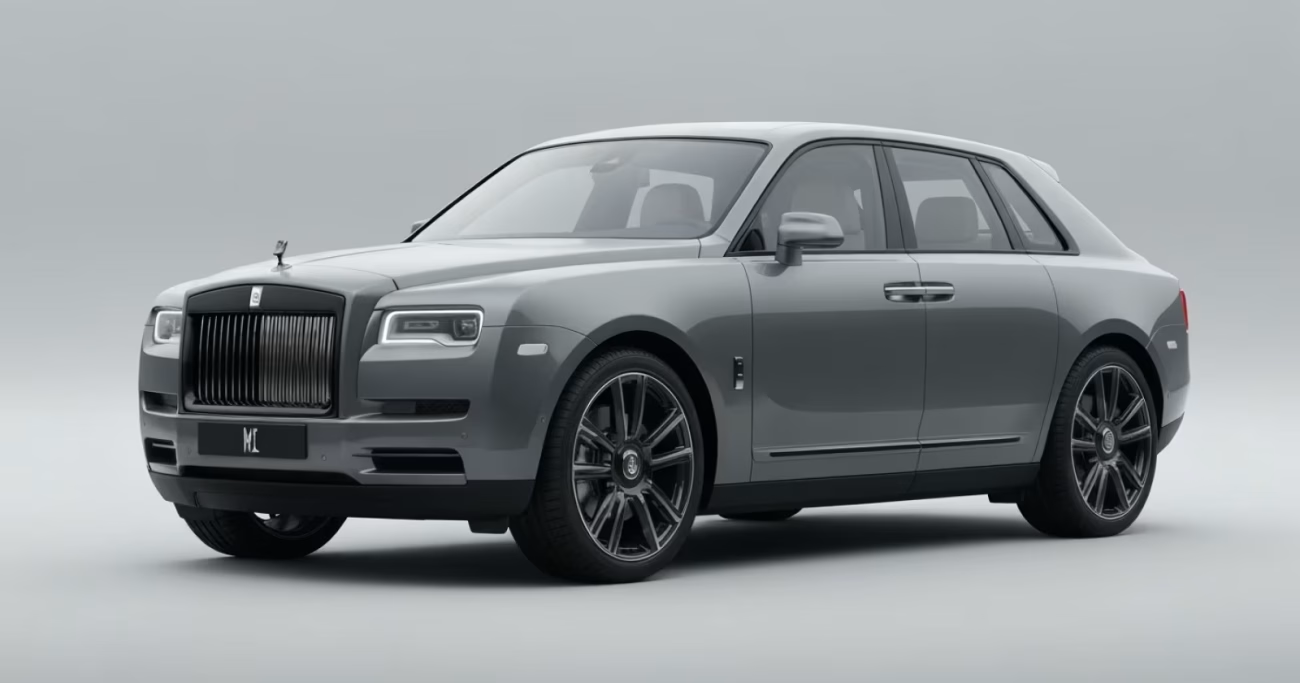
Rolls-Royce just drove a prototype past spy cameras with its front hood cracked open — and what that hood revealed hasn’t been seen on a production car since 1990. I’ve been covering spy shots for years, and this one stopped me cold.
CarBuzz photographers caught the ultra-luxury brand’s second SUV testing in Germany, and the images make one thing unmistakably clear: this is an electric vehicle wearing a piece of automotive history on its nose.
A center-hinge hood in 2026 — and why that’s extraordinary
Most hoods hinge at the rear and swing up toward the windshield. A center-hinge hood, by contrast, splits open from the middle, both panels swinging outward like the cover of a hardback book. It’s theatrical, deliberate, and expensive to engineer properly.
Rolls-Royce last used this design on a front hood with the Phantom VI, which was discontinued in 1990 after fewer than 400 units were produced over 22 years. Before that, the feature was common in the pre-1940s era when massive straight-eight and V16 engines demanded wide-open access. Seeing it reappear on an EV frunk in 2026 is genuinely unexpected.
The frunk Rolls-Royce refuses to call a frunk
Here’s the real story behind that dramatic hood: there’s no engine underneath it. This is a fully electric SUV, which means the center-hinge panel opens to reveal what the rest of the industry calls a frunk — front trunk storage. Rolls-Royce, predictably, will call it something far more dignified.
The brand already uses center-hinged lids on ultra-exclusive models like the Boat Tail, where the feature adds ceremony to accessing the rear storage. The same logic applies here. This isn’t about practicality. It’s about making the act of opening your car feel like an event. When you’re spending enough to buy a condo in a major city, you expect that.
| Detail | Specification |
|---|---|
| Vehicle type | All-electric luxury SUV |
| Hood design | Center-hinge — last seen on production car in 1990 |
| Platform | BMW sixth-generation Neue Klasse electric architecture |
| Primary rival | Upcoming electric Bentley SUV |
| Expected production start | Early 2027 |
| Range/efficiency figures | Not yet disclosed |
| Price expectation | Condo-level — well above any current EV on sale |
BMW’s Neue Klasse platform underneath all that opulence
The new Rolls-Royce electric SUV is expected to ride on BMW’s latest sixth-generation motor and battery systems — the same architecture that launched with the Neue Klasse iX3. That platform brings serious engineering credibility, even if Rolls will bury every trace of its origin under hand-stitched leather and starlight headliners.
What the spy shots also show is a surprisingly low stance for an SUV of this size. The front wheel fills its arch almost completely, and earlier winter testing photos showed the tire pressing hard against the fender. That could indicate a collapsed air suspension on a prototype, or it could hint at a deliberate low-ride character that separates this model from the taller Cullinan. I’d bet on the former, but it’s worth watching.
Bentley should be paying close attention right now
Rolls-Royce is positioning this EV directly against the upcoming electric Bentley SUV. Both brands are chasing the same ultra-wealthy buyer who wants a flagship electric vehicle with no compromises on luxury. The center-hinge hood gives Rolls an immediate visual differentiator — something Bentley simply cannot match without filing its own patents and spending years in development.
The design language stays close to the existing Cullinan. The high roofline, squared-off front fascia, distinctive A-pillars, and taillights all echo the brand’s current aesthetic. That’s a smart call. Rolls-Royce buyers are not looking for a radical departure — they’re looking for familiar excellence with an electric powertrain underneath. The center-hinge hood is the one flourish that says this isn’t simply an electrified Cullinan clone.
What we still don’t know — and why it matters less than you’d think
Official range figures, output numbers, and a confirmed model name are all still absent. Rolls-Royce hasn’t released anything beyond what the spy shots have revealed. For most EVs, the absence of range data would be a red flag. Here, the buyer demographic genuinely cares less about miles-per-charge than about the experience inside the cabin.
Production is expected to begin in early 2027, which means there’s time for full specifications to emerge. What I can say is that based on the Neue Klasse platform’s capability and the Spectre’s existing performance benchmark — the most powerful Rolls-Royce ever built — this new SUV will not disappoint on power. The real question is whether the center-hinge hood makes it into final production intact, or whether engineering and pedestrian safety regulations trim that ambition before the car reaches customers.
If you’re the kind of reader who tracks where ultra-luxury automotive design is heading, this is the prototype to watch in 2026. Bookmark this one, share it with anyone who insists EVs can’t be aspirational, and check back as production details emerge — because Rolls-Royce is clearly building something the market hasn’t seen before.
