
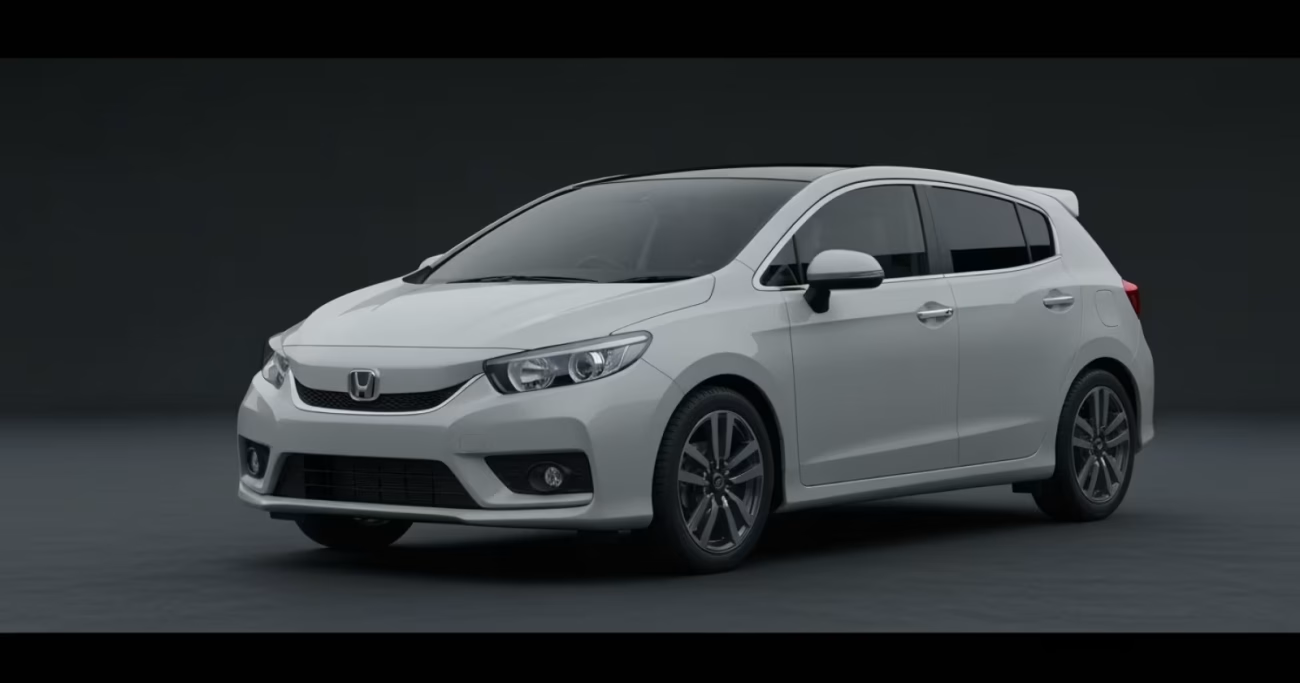
Honda just priced an electric hatchback under £20,000 in the UK — and it comes with fake engine sounds, a simulated gearbox, and a retro body that turns heads. That combination at that price point is something almost nobody saw coming from a mainstream automaker in 2026.
The Super-N is Honda’s most affordable car on sale in the UK right now, undercutting even the Jazz Hybrid. For EV buyers who are tired of soulless white appliances, this one might actually be worth getting excited about.
At a Glance
| Spec | Detail |
|---|---|
| Starting Price (UK) | Under £20,000 (~$26,000) |
| Standard Power | 63 hp (front-wheel drive) |
| Boost Mode Power | 94 hp with simulated 7-speed gearbox |
| City Range | 199 miles |
| Combined Range | 128 miles |
| Design Inspiration | Honda City Turbo II (1980s) |
| Honda Jazz Hybrid Start Price | £28,475 — £8,000+ more expensive |
A $26,000 Electric Honda With Fake Engine Sounds — And It Works
Here’s the catch with most budget EVs: they feel like budget EVs. Flat torque, no drama, no reason to smile. Honda has taken a completely different approach with the Super-N, and the results are genuinely surprising.
When a driver activates Boost Mode, the car’s output jumps from 63 hp to 94 hp, a simulated 7-speed transmission engages, and artificial engine sounds fill the cabin — complete with a fake redline. It sounds gimmicky on paper. But having driven the Japanese-market version ahead of the UK launch, I can tell you the effect is more engaging than expected. The car feels alive in a way that most EVs at triple the price simply don’t.
The Jazz Hybrid Charges £8,000 More — Think About That
Honda’s own Jazz Hybrid starts at £28,475 in the UK. The Super-N comes in at under £20,000. That’s a gap of more than £8,000 within the same brand, for a car that’s arguably more fun to drive and more visually interesting than anything Honda has sold in Britain in years.
The real story here isn’t just the price — it’s what that price signals. Honda has engineered the Super-N specifically for the UK market, retuning the suspension for British road surfaces rather than just importing the Japanese spec unchanged. Michael Doyle, Head of Honda Automobile UK, specifically called out the tailored driving dynamics as a core feature. That’s not the language of a company cutting corners to hit a number. That’s the language of a company that actually wants this car to succeed.
What Honda Isn’t Saying About That 199-Mile Range Figure
The combined range rating sits at 128 miles, which is modest by 2026 standards. Honda’s headline “city mode” figure of 199 miles sounds much better, but that number applies to stop-start urban driving — the kind where regenerative braking recovers the most energy. Real-world motorway driving will land closer to that 128-mile combined figure.
That’s not necessarily a dealbreaker. Honda is positioning this car for urban commuters and city dwellers, and for that use case, 128 to 199 miles covers the vast majority of daily driving. The suspension retune, the compact dimensions, and the retro fender flares all point to a car designed for tight city streets and short hops — not cross-country touring. Know what you’re buying, and this range makes complete sense.
The Retro Design Is More Than a Style Gimmick
The boxy body, the blocky fender flares, the two-tone gloss-black roof — all of it is a deliberate callback to the Honda City Turbo II of the 1980s. That car was a cult icon in Japan, and Honda’s design team has lifted its proportions into a modern electric shell. The result is something that looks genuinely distinctive on a street full of aerodynamic teardrops.
Inside, the cabin keeps things honest. There’s a rectangular digital display that changes graphics when Boost Mode activates, blue ambient lighting that flips to purple under hard acceleration, and physical HVAC buttons that don’t require navigating three menu levels to adjust the temperature. The rear seats are tight — the photos don’t lie — but they do fold flat, which opens up practical cargo space. It’s a city car that admits it’s a city car, and that honesty is refreshing.
How It Stacks Up
| Model | Starting Price | Range (Combined) | Power | Edge |
|---|---|---|---|---|
| Honda Super-N | ~£20,000 | 128 mi / 199 city | 63–94 hp | Price + personality |
| Fiat 500e | ~£22,000 | ~199 mi | 95 hp | Longer range |
| Mini Electric | ~£30,000 | ~145 mi | 181 hp | More power |
| Honda Jazz Hybrid | £28,475 | N/A (hybrid) | 109 hp | Bigger interior |
Why This Matters
- Affordable EVs with personality can expand the market beyond early adopters
- Honda’s UK-specific tuning shows genuine commitment to regional buyers
- No US availability means American buyers are missing a genuinely compelling option
The verdict
The Super-N is the most interesting affordable EV to land in the UK in 2026, full stop. It targets buyers who want something fun and affordable but don’t want to compromise on character. If Honda can move meaningful volume at this price point, it puts real pressure on every rival selling a dull commuter box for more money. The only disappointing news is for American buyers — with no US launch planned, this one stays a European exclusive for now. If demand signals keep building, that could change — and it should.
If you’re based in the UK and considering an EV in the sub-£25,000 bracket, the Super-N deserves a serious look when it goes on sale in July 2026. Book a test drive early — cars with this much buzz at this price don’t stay on forecourts for long.
