
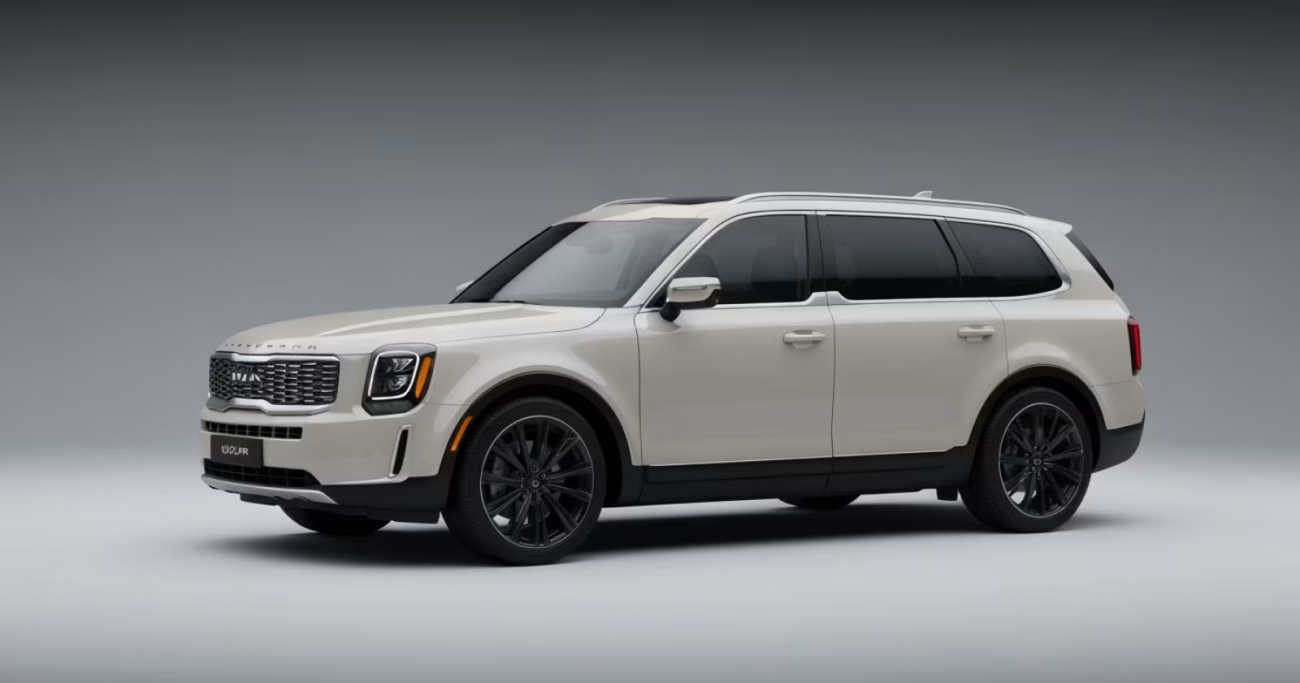
Kia just quietly announced one of the most consequential moves in the midsize SUV segment, and most people haven’t heard about it yet. The Telluride — already one of the best-selling three-row SUVs in America — is getting an extended-range EV variant, and the window for its arrival is closer than you might think.
I’ve been tracking Kia’s US expansion strategy closely, and this EREV announcement isn’t a random product decision. It’s a calculated strike at a very specific kind of buyer: the family hauler shopper who wants electric performance but isn’t ready to cut the cord on a combustion engine entirely. That buyer pool is enormous, and Kia knows it.
Why Kia’s 2030 target is more aggressive than it sounds
At its recent CEO Investor Day conference, Kia laid out a roadmap that should make every domestic automaker uncomfortable. The brand is targeting over 1.02 million annual US sales by 2030, translating to a 6.2% market share. To put that in perspective, Kia sold 852,155 vehicles across all of 2026 — itself a record year for the brand.
That kind of growth doesn’t happen by accident. Kia plans to expand its hybrid lineup from 4 models to 8, with a heavy tilt toward its SUV range. The EREV Telluride sits at the center of that strategy. It’s the bridge product — more capable than a standard hybrid, less intimidating than a pure EV — and it targets exactly the segment where volume is highest.
The Telluride is already selling like it doesn’t need help
Here’s what makes this announcement even more interesting: the Telluride doesn’t need a lifeline. In the most recent reported month alone, it posted 13,306 sales — a 15% year-over-year increase. That’s despite what analysts are calling a potentially turbulent year for the auto industry overall.
Through 2026, US Telluride sales cleared 123,000 units. The year before that, it was comfortably in six figures too. Now, with the 2027 redesign arriving at dealerships, the brand is stacking a fresh generation on top of that momentum. Adding a third powertrain option — the EREV — potentially as early as 2028, is the kind of move that sustains sales curves long after a new model’s initial buzz fades.
What an EREV actually means for Telluride buyers
If you’re unfamiliar with the EREV format, here’s the real story: the wheels are driven entirely by electric motors, pulling power from a battery pack. A smaller internal combustion engine acts as a generator to recharge that battery on the go. You get EV driving feel and efficiency in daily use, with zero range anxiety on longer trips.
Right now, the Telluride lineup spans a 3.8-liter V6 with 291 horsepower in ICE trim, and a 2.5-liter turbocharged four-cylinder hybrid pairing for 329 horsepower. The EREV would sit above both in terms of real-world usability — not necessarily peak output, but the kind of effortless, instant torque delivery that makes hauling a family of five and their gear feel completely different. Think of it as the EV9’s smarter, more accessible sibling.
Ford and Toyota are about to feel this more than they realize
The Telluride EREV announcement puts direct pressure on rivals who haven’t moved as aggressively into electrified three-row territory. Ford’s Explorer is getting hybrid treatment, and Toyota‘s Grand Highlander PHEV exists, but neither brand has committed to a full EREV format for their volume three-row SUVs at this price point. Kia getting there first — even at 2030’s horizon — matters because it sets buyer expectations.
The catch nobody is really talking about is timing risk. A lot can change between now and 2030: tariff landscapes, battery supply chain pressures, and shifting buyer preferences all create variables. But Kia’s track record of executing on announced products — and the Telluride’s consistent sales dominance since its 2019 debut — gives this roadmap more credibility than most.
| Model | Powertrain | Horsepower | Starting Price | EREV Option |
|---|---|---|---|---|
| Kia Telluride (2027) | V6 / Hybrid / EREV (coming) | 291–329 hp (EREV TBD) | $39,190 | Yes — by 2030 |
| Toyota Grand Highlander | PHEV available | 362 hp (PHEV) | ~$43,000 | No |
| Ford Explorer | Hybrid available | 318 hp (hybrid) | ~$39,000 | No |
| Hyundai Palisade | Hybrid announced | ~245 hp | ~$38,000 | No confirmed plans |
At a glance — Kia Telluride EREV by the numbers
Before you write this off as a distant future story, consider the compounding effect of what Kia is building right now. The 2027 Telluride is already landing at dealerships with a fresh design, more tech, and a sharper interior. Hybrid sales are ramping. The EREV announcement is simply the next domino in a lineup that has been methodically constructed since 2019.
I think the 2028 target window for the EREV’s possible early arrival is the number worth watching. If Kia pulls it forward even slightly, it beats every rival to a powertrain format that genuinely solves the EV hesitation problem for mainstream SUV buyers. That’s not a small thing — that’s a market-moving decision.
If you’re shopping a three-row SUV right now, the 2027 Telluride in hybrid form is already worth serious consideration at its base price. But if your purchase timeline has any flexibility, keeping an eye on that EREV announcement could mean getting the version that makes the most sense for the next decade of family driving. Subscribe to updates on the Telluride’s powertrain rollout — this story is going to move fast.
