
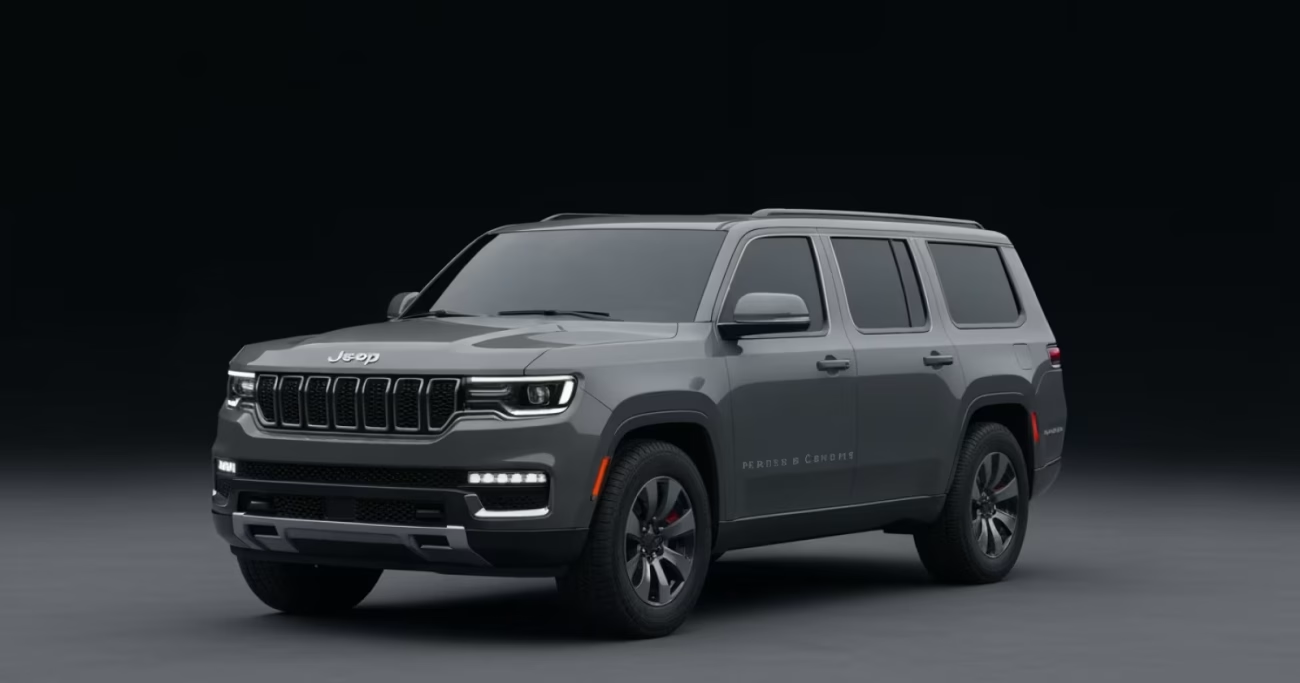
Jeep just admitted, on the record, that quality problems are the only thing standing between you and the most powerful Grand Wagoneer ever built. A 647-horsepower, 500-mile-range SUV is sitting in the wings — and the honest reason it hasn’t arrived yet is one of the most refreshing things a car brand has said in years.
The Grand Wagoneer EREV — Jeep insists on calling it a REEV — was revealed last October alongside the refreshed 2026 Grand Wagoneer lineup. It was supposed to be the first extended-range electric vehicle on American soil. It’s now well into 2026, and it still isn’t here. So I went deep on what Jeep’s own CEO had to say about that delay, and the answer changes how you should feel about buying one.
The spec sheet that makes every rival look nervous
Before we get into the drama, let’s talk about what this machine actually is. The Grand Wagoneer EREV carries a 92 kWh battery pack paired with a 3.6-liter V6 that never touches the wheels — its only job is to recharge that battery on the move. Electric motors at both axles do all the real work, producing 647 horsepower and 620 pound-feet of torque.
Jeep is estimating 500 miles of total range and roughly 150 miles of pure electric driving before the engine ever switches on. That means most owners will never visit a gas station during a typical week. And when the long haul does come — say, pulling a boat across three states — you won’t be white-knuckling a charging map. That combination of numbers is genuinely rare at any price point right now.
| Spec | Detail |
|---|---|
| Powertrain | EREV — 3.6L V6 generator + dual electric motors |
| Battery | 92 kWh |
| Combined Output | 647 hp / 620 lb-ft torque |
| Total Range (est.) | 500 miles |
| EV-Only Range (est.) | ~150 miles |
| Base Grand Wagoneer (ICE) | $65,145 / 420 hp |
| Build Location | Warren Truck Plant, Michigan |
Why Jeep’s CEO saying “quality first” is actually a big deal
Here’s the real story behind the delay. Jeep brand CEO Bob Broderdorf didn’t spin it. He told Mopar Insiders plainly: “REEV is obviously right around the corner,” then immediately followed that with a frank explanation that production quality has to be locked in before they add the complexity of the EREV powertrain. He pointed to the same issue happening with the Cherokee and Recon, both built on the same line in Mexico.
That kind of transparency is not what you usually hear from an automaker sitting on a highly anticipated product. Broderdorf’s logic is sound — rushing a complicated EREV into production before the assembly line is dialed in is exactly how you end up with recalls, angry owners, and a reputation hit that takes years to undo. The fact that Jeep is willing to say “not yet” publicly, rather than ship something broken, is the kind of discipline the brand desperately needed after years of quality headlines.
What Stellantis isn’t hiding about its quality reset
The context here matters. Stellantis CEO Antonio Filosa addressed the quality situation directly on an earnings call earlier this year, describing it as “resetting execution and improving quality management processes to address previous operational issues triggered by past decisions.” That’s a careful way of saying the previous leadership’s wave of engineer layoffs and cost cuts left a mess that is still being cleaned up.
Filosa said thousands of new engineers have already been hired — with more on the way — and that measurable progress is being made on the factory floor. For the Grand Wagoneer specifically, customer deliveries of the standard 2026 model have only just begun rolling out to dealers at the Warren Truck Plant in Michigan. The EREV version slots in after the plant proves it can hit both quality and production-speed targets consistently. It’s a sequence, not a stall.
The one catch that changes the buying timeline for everyone
Here’s the catch: “right around the corner” is doing a lot of work in that sentence. Jeep has given no confirmed on-sale date, no order window, and no pricing for the EREV variant. The standard 2026 Grand Wagoneer starts at $65,145 with a 420-horsepower I6 — so expect the EREV to push meaningfully higher, likely into $80,000-plus territory before any federal incentives are factored in.
For buyers who were circling the 4xe plug-in hybrid before Jeep pulled the plug on that entire lineup, the wait feels especially long. Jeep went from having 2 of the top-selling PHEVs in the country to zero in a matter of days. The Grand Wagoneer EREV is supposed to carry the electric torch for the brand going forward — which means getting it right isn’t optional. A stumble here would set Jeep’s electrification story back by years, not months.
How it stacks up
| Model | Power | EV Range | Total Range | Edge |
|---|---|---|---|---|
| Jeep Grand Wagoneer EREV | 647 hp | ~150 mi | ~500 mi | Range + towing |
| Cadillac Escalade IQ | 750 hp | ~460 mi | ~460 mi | Pure EV luxury |
| BMW XM | 644 hp | ~30 mi | ~560 mi | Performance PHEV |
| Rivian R1S | 835 hp | ~410 mi | ~410 mi | Off-road EV king |
Why this matters
- First American-brand EREV SUV sets a new range benchmark
- Stellantis quality recovery directly controls Jeep’s EV future
- 500-mile range reframes the EV anxiety conversation entirely
The verdict
The Grand Wagoneer EREV is one of the most technically compelling American SUVs announced in this decade — 647 horsepower, 500 miles of range, and a gas engine that never even touches the road. The delay is frustrating, but the reason behind it is actually the right one. If Stellantis genuinely fixes its quality execution, this vehicle could redefine what a large luxury SUV looks like in 2026 and beyond. Buyers who were burned by 4xe reliability complaints should find that patience here is worth it — as long as “right around the corner” doesn’t stretch into next year.
If you’re in the market for a full-size luxury SUV and range anxiety has been the dealbreaker, bookmark this one and set a price alert. When the order books open, they won’t stay open long.
