
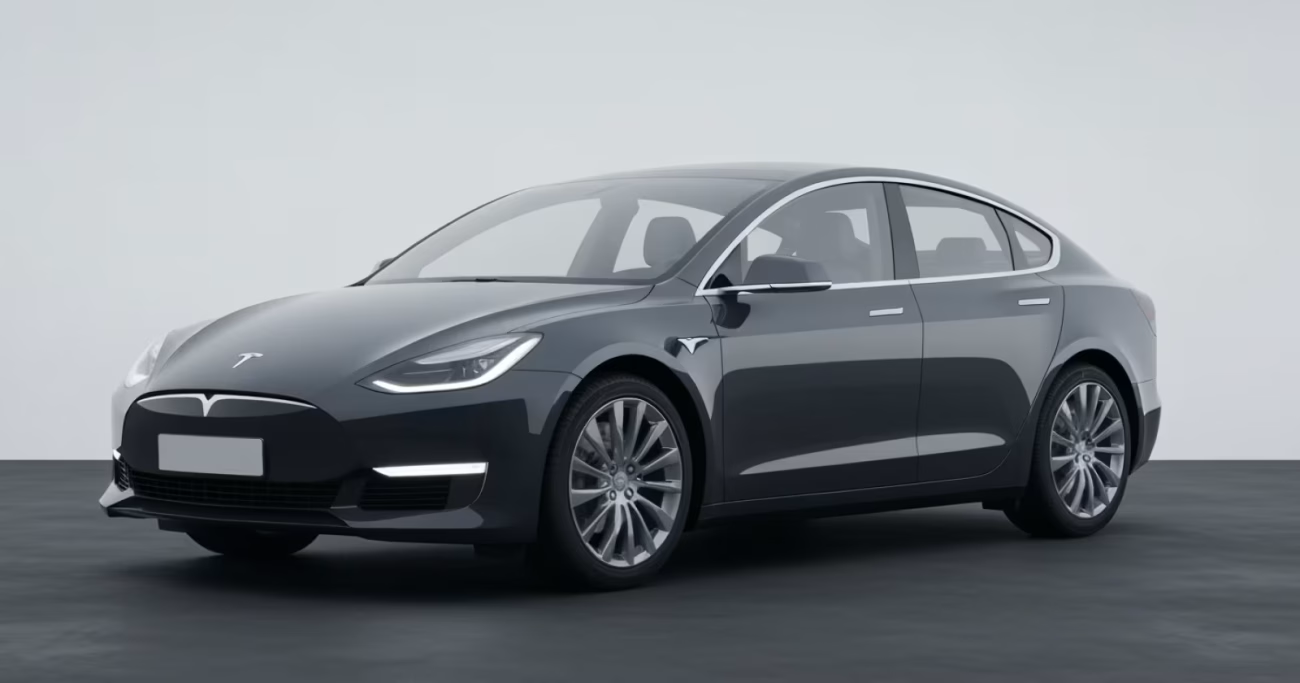
Every few years, Tesla floats the idea of a $25,000 EV and the internet goes wild — then nothing happens. This time, the story isn’t coming from Elon Musk’s Twitter feed. It’s coming from the companies Tesla has already called to discuss building the parts.
That shift in sourcing changes everything about how seriously we should take this. Reuters confirmed multiple supplier contacts, and that kind of conversation doesn’t happen unless someone at Tesla is spending real money on real planning. Here’s what we actually know — and where it could still fall apart.
Why supplier confirmation hits different than a Musk tweet
Musk first announced a $25,000 Tesla back in 2018. He’s repeated the promise so many times it became background noise. Last year, reports emerged that when he told the public the car was still coming, he hadn’t even told his own team inside Tesla.
This report is categorically different. Reuters cited multiple independent supplier sources who said Tesla had reached out to discuss manufacturing processes and part specifications for a new compact crossover. That’s not hype — that’s procurement. Companies don’t have those conversations unless engineering has handed someone a parts list to cost out.
The specs point to something genuinely new, not a stripped Model 3
One of the most persistent criticisms of Tesla’s “budget” strategy has been that the company just removes features from existing models and calls it affordable. The new vehicle described in these reports doesn’t follow that pattern. It’s described as a compact crossover roughly 14 feet long — about 18 inches shorter than a Model Y — which means a clean-sheet platform, not a cost-reduced hand-me-down.
3 sources said production would begin in China, with at least 1 indicating plans to expand manufacturing to the US and Europe. Here’s the catch that almost nobody is highlighting: the vehicle may be designed with and without a steering wheel. That dual configuration gives Tesla the legal flexibility to sell it as a traditional car today while positioning it as a driverless unit the moment regulations catch up. It’s a smart hedge — and it’s the same logic behind the Cybercab concept Musk showed in 2024.
| Detail | What We Know |
|---|---|
| Target price | ~$25,000 |
| Body style | Compact crossover |
| Estimated length | ~14 feet (18 in. shorter than Model Y) |
| Production locations | China confirmed; US + Europe possible |
| Steering wheel | Optional — driverless version planned |
| Development stage | Early — supplier talks just beginning |
| Earliest realistic production | 2027 at the absolute soonest |
Tesla’s sales slide is the real reason this project exists right now
Tesla sold an estimated 1.8 million vehicles in 2023. Last year that number dropped to 1.65 million. Discounted Model 3 and Model Y variants didn’t stop the bleeding, and the company has since announced it’s ending production of both the Model S and Model X with no replacements planned. That’s a shrinking lineup heading into an increasingly competitive market.
The real story here is that Tesla needs volume, and its current price points aren’t delivering it. A genuine $25,000 crossover would open up an entirely new buyer pool — people who want a Tesla but can’t stretch to $40,000-plus. The problem is that Tesla’s track record on delivery timelines is brutal. The Semi took years past its reveal to reach limited production. The new Roadster still hasn’t launched. “Accelerated” in Tesla’s vocabulary apparently means “still in early development 2 years later.”
What Tesla isn’t saying about how far away this actually is
When a company is months from production, its CEO is posting about it constantly. Musk right now is focused almost entirely on AI and humanoid robots. The silence on this compact EV isn’t a good sign for anyone hoping to see it in a showroom before 2027 — or 2028.
The broader affordable EV promise has been broken by nearly every brand. Nissan, GM, Volkswagen — all of them have talked about sub-$30,000 EVs and delivered models that barely scratch that threshold, if at all. The Nissan Leaf and Chevrolet Bolt squeezed in near $30,000, but nothing has landed with a meaningful MSRP well below that mark. If Tesla actually launches a true $25,000 vehicle, it rewrites the category. That’s a massive “if” with a timeline that’s anybody’s guess.
If you’re someone who’s been holding off on going electric because the price never made sense, this is worth watching closely — but don’t cancel your current car payments yet. Follow Tesla’s supplier news and quarterly earnings calls; that’s where the real signals will surface long before any official announcement. When Musk starts talking about this one on social media, that’s when you’ll know production is genuinely close.
