
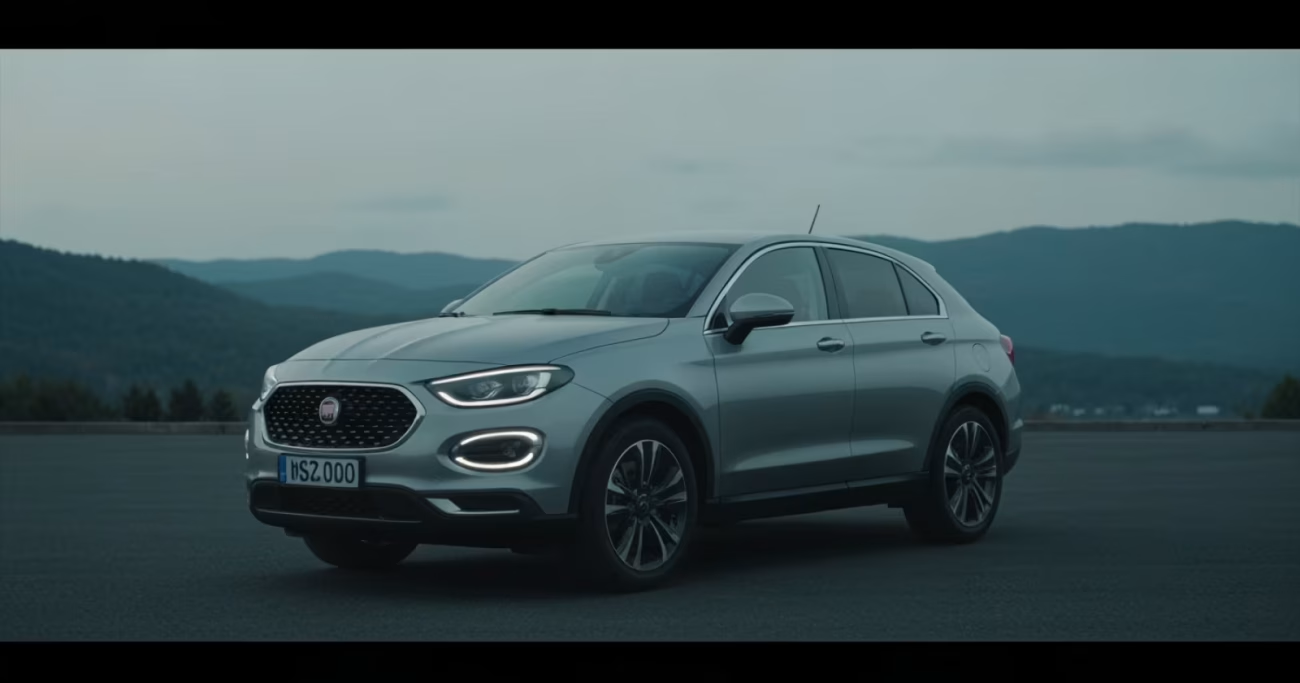
Chrysler may finally be getting the kind of product it has been missing for years. One of its next SUVs is expected to start under $30,000, and it will be based on a fresh Fiat design.
That puts a small European crossover at the center of Chrysler’s US comeback. And it also puts the brand back in the fight against the Dodge Hornet-era problems that hurt Stellantis before.
Fiat’s little SUV is Chrysler’s big reset
I see this as more than a badge swap. Chrysler has been operating with almost no real lineup since the 300 disappeared, and that left dealers without a strong volume product to sell.
The new Arrow and Arrow Cross give the brand two crossovers at once: one more upright and one with a fastback shape. The real story is that Chrysler is not trying to invent a new platform from scratch; it is borrowing one that already exists and repurposing it fast.
That matters because Stellantis needs speed, not another slow promise. The company has already said it wants 60 new models and 50 refreshes globally in just 4 years, and Chrysler cannot afford to wait at the back of the line.
Here’s the catch: sharing a Fiat platform solves the product gap, but it also raises the same old questions about identity. American buyers do not automatically reward clever rebadges, especially when the name on the tailgate is supposed to stand for something stronger.
The Arrow Cross could be the smarter play
The square SUV should have the easier job in the market. It will likely carry more usable cargo space and a more traditional shape, which is exactly what many US buyers still want from a compact crossover.
The faster-looking Arrow Cross may be the one that draws attention, but the upright version sounds like the practical winner. Fiat says these vehicles will be smallish, about 15 feet long, yet styled to look more premium than their size suggests.
That is classic Fiat thinking, and it may be the best news Chrysler has heard in years. The design chief’s message was simple: keep the changes minimal and focus on lighting and branding, because the basic structure already works.
What Chrysler isn’t saying is that this move is also a timing play. If the company can get a competitive SUV into showrooms quickly, it can finally give dealers something fresh while the rest of the portfolio catches up.
Why the Hornet comparison keeps coming back
I keep thinking about the Dodge Hornet because the warning signs are obvious. Fiat-based, Europe-developed, compact in size, and aimed at the same general buyer all sound familiar, and that is not always a compliment in the US market.
The difference this time is urgency. Chrysler is not launching from a position of strength, so even a risky solution can look smart if it brings shoppers back into stores and gives the brand real traffic again.
There is also the pricing angle. At least one Arrow model is expected to start below $30,000, and that instantly makes it more relevant than many newer crossovers that have drifted into uncomfortable territory.
For Chrysler, that lower entry point could be the whole story. A practical customer with some money to spend, but not on something excessive, is exactly who Stellantis says it wants to reach.
What Chrysler still has to prove
I do not think the product idea is the problem. The challenge is whether US buyers will accept a European-built compact crossover as the vehicle that brings Chrysler back to life.
Tariffs, assembly costs, and the lingering memory of badge-engineered experiments all sit in the background here. The platform may be smart, but Chrysler still has to make the case that this is not just another borrowed answer.
| Model | Starting Price | Body Style | Key Edge |
|---|---|---|---|
| Chrysler Arrow | Under $30,000 | Compact crossover | Lowest entry point |
| Chrysler Arrow Cross | Not announced | Crossover-coupe | More style-led design |
| Dodge Hornet | Higher than target Arrow | Compact crossover | Known benchmark, weaker value story |
| Jeep Compass | Under $30,000 before destination | Compact SUV | Current low-price reference point |
The real test is whether these SUVs feel like Chrysler products once they land in showrooms. If the styling, pricing, and packaging all line up, this could be the first useful move Chrysler has made in a long time.
If they miss, it will be another reminder that the brand cannot survive on plans and presentations alone. This launch needs to work because Chrysler does not have much margin for error left.
For me, this is the most important Chrysler story in years. Watch the pricing, watch the timing, and watch whether the Arrow name actually brings people back to the brand. If it does, Chrysler may finally have a path forward.
The verdict: I think the Arrow and Arrow Cross are exactly the kind of fast, practical restart Chrysler needs. They are not perfect, and they carry the same risk that has haunted other Stellantis badge jobs, but the brand needs volume more than purity right now. If Chrysler can launch these SUVs close to the promised price and avoid the Hornet’s mistakes, this could become the turning point dealers have been waiting for.
