
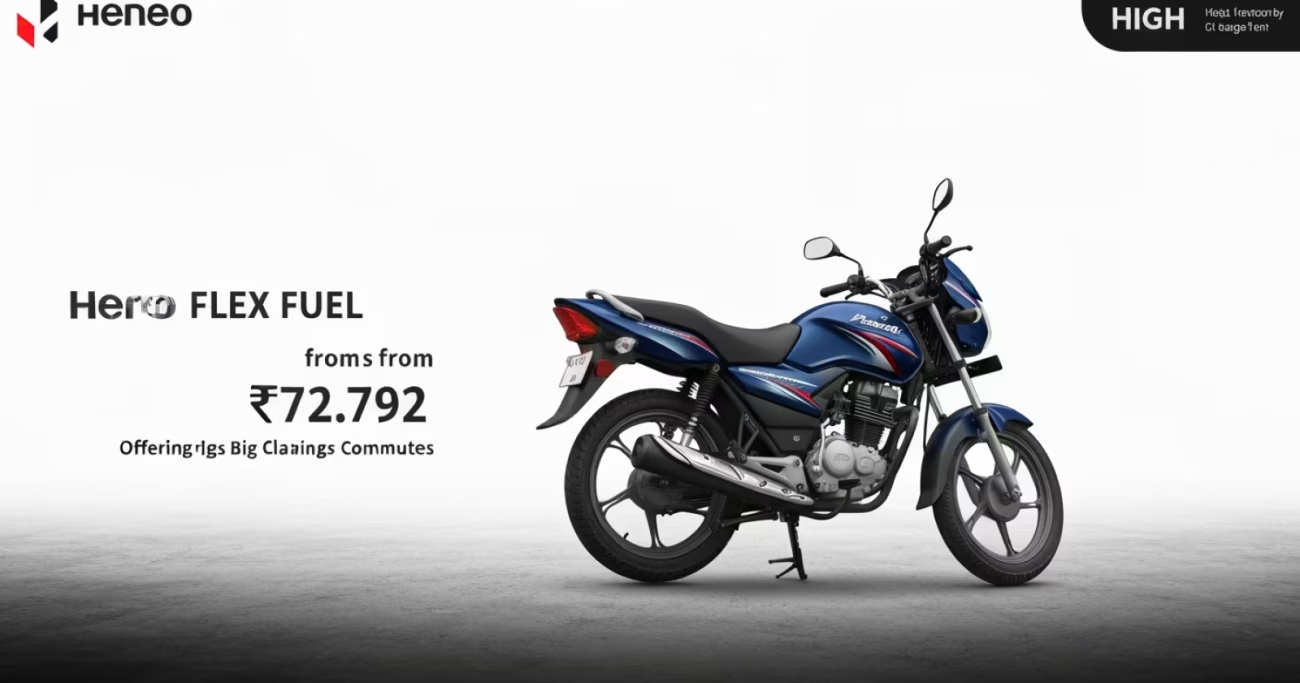
When a commuter bike starts talking the language of ethanol, I pay attention. Hero MotoCorp has just pushed its bestselling nameplates into a new fuel era, and that makes this launch far more interesting than a simple cosmetic update.
I see this as one of the most practical mobility moves in 2026, because it brings flex-fuel tech to motorcycles that millions of Indian riders already know and trust. The real hook is not only the technology, but the fact that it arrives with prices that still sit within everyday commuter reach.
What Hero has put on the road
Hero has launched flex fuel-ready versions of the Splendor+ and the HF Deluxe, and both are designed to run on ethanol-blended fuel from E20 all the way to E85. That matters because it places alternative fuel tech into the heart of India’s highest-volume motorcycle segment, where affordability and simplicity are everything.
The HF Deluxe Flex Fuel is priced at ₹72,792 ex-showroom Delhi, while the Splendor+ Flex Fuel comes in at ₹82,710 ex-showroom Delhi. Hero says the rollout begins in Delhi and select regions of Maharashtra from July 2026, with a broader nationwide expansion expected after that.
Why I think this launch is strategically important
India has been steadily moving toward greater ethanol adoption, and this launch gives that policy push a very visible product story. Instead of asking buyers to wait for future technology in premium garages, Hero is bringing it straight to the working commuter who rides every day, often in heavy city traffic and under real-world conditions.
That is a big deal for me because the Splendor and HF Deluxe are not niche motorcycles. They are mainstream, mass-market, fuel-conscious machines that can influence what a huge number of riders expect from an entry-level bike in the coming years.
Key specs and feature changes
Both motorcycles use the same 97.2cc engine setup, and Hero says the flex-fuel tuning delivers 6.3 kW at 8,000 rpm and 8.3 Nm at 6,000 rpm when running on E85 fuel. In simple terms, the aim is to preserve commuter friendliness while adapting the hardware and calibration for a broader fuel mix.
Hero has also added revised ECU tuning and upgraded fuel system components, which is exactly the sort of behind-the-scenes engineering change I expect in a serious flex-fuel product. The update list is rounded out by tubeless tyres, a side stand engine cut-off, and a new digi-analogue instrument cluster.
| Model | Price | Engine | Fuel compatibility | Notable features |
|---|---|---|---|---|
| HF Deluxe Flex Fuel | ₹72,792 | 97.2cc | E20 to E85 | Digi-analogue cluster, side stand cut-off, tubeless tyres |
| Splendor+ Flex Fuel | ₹82,710 | 97.2cc | E20 to E85 | i3S idle stop-start, digi-analogue cluster, side stand cut-off, tubeless tyres |
How the Splendor+ Flex Fuel stands out
Among the two, the Splendor+ Flex Fuel feels like the more complete package on paper because it gets Hero’s i3S idle stop-start technology. For a commuter used in stop-go urban traffic, that can help the bike feel more efficient and modern without making the ownership experience complicated.
I also like the updated visual treatment. The Black with Lime Yellow graphics give it a fresher, more visible identity, and that matters because commuters today want value, but they also want their daily ride to feel current.
What the HF Deluxe Flex Fuel brings
The HF Deluxe Flex Fuel is the more accessible entry point, and I think that is where this launch could really make noise. At ₹72,792, it becomes a strong conversation starter for riders who want a new bike but are also watching fuel costs and long-term running economics closely.
It gets the same flex-fuel capability, the same revised fuel system, the same safety-focused side stand engine cut-off, and the same new instrumentation theme. For many buyers, that combination will matter more than flashy extras.
My take on the market impact
I do not see this as a one-off product announcement. I see it as Hero opening a fresh category for the commuter market, where fuel flexibility becomes part of the ownership pitch rather than a future concept. If riders start accepting E85-capable motorcycles in large numbers, other manufacturers will have to respond quickly.
That is why this launch feels bigger than two new variants. It signals that flex fuel is no longer being reserved for experimental showcases; it is now arriving where India buys most of its motorcycles.
Why buyers may care in 2026
For everyday Indian riders, the strongest argument is practical: a motorcycle that can work across a wider fuel window may offer more resilience as fuel policy evolves. If ethanol availability expands further, the benefit becomes even more obvious for commuters who want lower dependence on conventional petrol.
I also think this launch will appeal to buyers who like the idea of future-ready technology but still want a simple, familiar motorcycle. Hero has kept the formula conservative enough to feel familiar, yet forward-looking enough to create a genuine talking point.
The bigger industry signal
Hero’s move could easily trigger a broader wave of flex-fuel announcements across the industry. There is already talk of more manufacturers preparing ethanol-compatible products, and that makes this launch a possible starting point rather than a finish line.
If that happens, Indian commuter buyers may soon see flex fuel move from a novelty into a regular purchase consideration. That would be a meaningful shift for a market that has always been sensitive to running cost, reliability, and practical value.
I would keep an eye on how quickly Hero expands availability beyond Delhi and Maharashtra, because that will decide how fast this story turns from a tech headline into a real marketplace trend. If you follow commuter motorcycles or alternative fuels, this is one launch worth watching closely in the coming months.
