
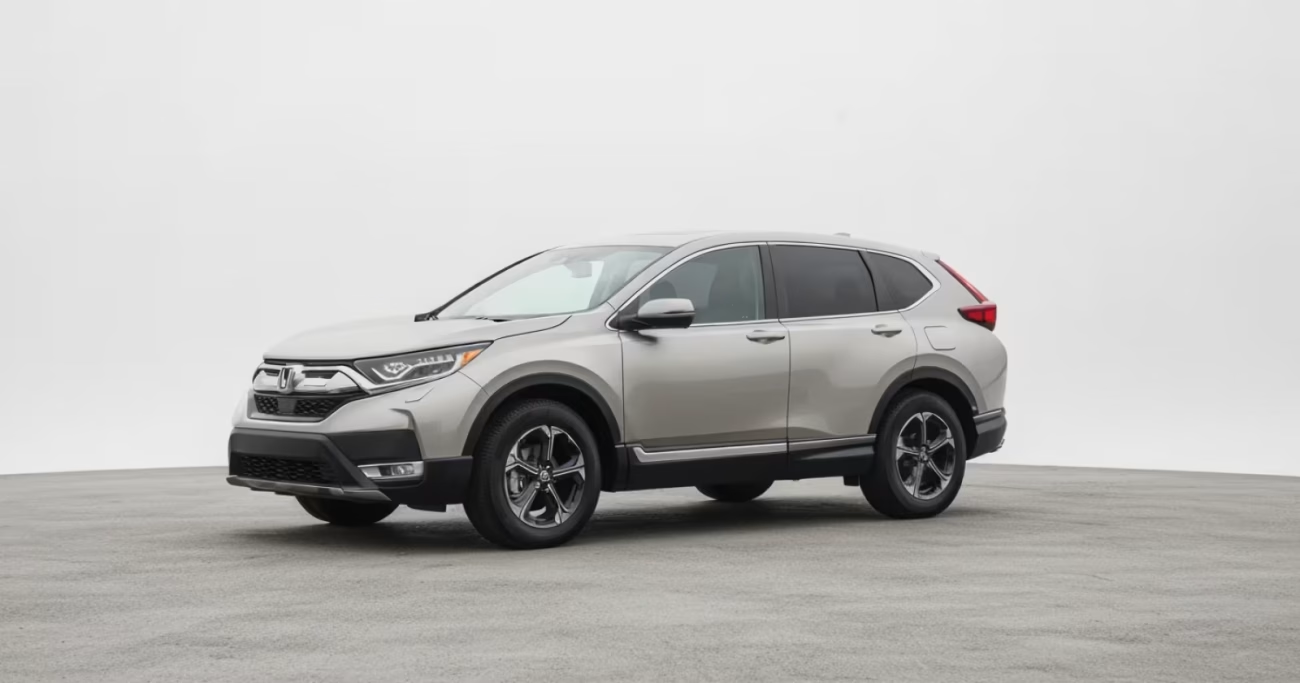
The compact SUV race just flipped in Honda’s favor. In May 2026, the CR-V moved 45,141 units in the U.S. while the RAV4 fell to 33,524.
That is a gap of 11,617 vehicles in a segment Toyota has long dominated. The real story is not just momentum, but how Honda caught buyers at exactly the right moment.
Honda found the opening Toyota left behind
I’m looking at a market where timing matters almost as much as product. Toyota’s redesigned 2026 RAV4 switched to an all-hybrid lineup, but inventory was thin while production shifts worked through North American plants.
Here’s the catch: Honda did not need a dramatic redesign to win the month. It had stock on lots, a lower starting price, and a hybrid mix that matched what buyers wanted right now.
| Spec | Detail |
|---|---|
| May 2026 CR-V sales | 45,141 units |
| May 2026 RAV4 sales | 33,524 units |
| CR-V year-on-year change | Up 19.3% |
| CR-V hybrid share | 24,401 units, 54% of total |
| CR-V starting MSRP | $30,920 |
| RAV4 starting MSRP | $31,900 |
The real story is the hybrid buyer
I keep coming back to the hybrid numbers because they explain a lot. The CR-V hybrid rose 25.7% in May, which tells me Honda is benefiting from buyers who want efficiency without paying a premium for a badge.
What Honda isn’t saying outright is that its lineup now feels perfectly aligned with the market. The CR-V, Accord, and Civic all posted stronger hybrid demand, which suggests the brand has turned affordable electrification into a volume engine.
Pricing is quietly doing damage here
The CR-V’s base price of $30,920 undercuts the RAV4’s $31,900 starting point. That difference is small on paper, but in a price-sensitive segment it matters more than most shoppers admit.
I see a simple message in that spread: Honda is offering more accessible entry pricing while still adding standard tech and upgraded features for 2026. That combination keeps the CR-V feeling like the smarter purchase before the finance office ever gets involved.
Why the TrailSport matters more than it seems
Honda’s new TrailSport Hybrid gives the CR-V a little extra attitude, and that matters in a segment where style often sells the second half of the decision. It is not pretending to be a rock crawler, but it gives buyers a more adventurous look without forcing them into a bigger SUV.
The real story is that Honda is broadening the CR-V’s appeal without breaking the formula that made it work. Affordable, efficient, easy to live with, and now a little tougher-looking, it covers more bases than before.
How it stacks up against the rivals
| Model | Starting Price | Powertrain Mix | May 2026 Sales | Edge |
|---|---|---|---|---|
| Honda CR-V | $30,920 | Gas + hybrid | 45,141 | Price, inventory, momentum |
| Toyota RAV4 | $31,900 | All-hybrid lineup | 33,524 | Long-term brand strength |
| Hyundai Tucson | About $29,000 | Gas + hybrid + PHEV | Not provided | Value breadth |
| Mazda CX-50 | About $30,500 | Gas + hybrid | Not provided | Premium feel |
I would still treat this as a snapshot, not a permanent verdict. Toyota is ramping production from North American sites, and the RAV4 is likely to recover once inventory normalizes.
But June and the rest of 2026 will be shaped by what shoppers can actually buy, not just what looks strongest on a spec sheet. Right now, Honda has the cleaner formula and the clearer sales win.
The bigger implication is that Honda has shown how to steal share in a crowded segment without chasing hype. Affordable hybrids, steady supply, and small but meaningful pricing advantages are enough to move metal at scale.
If I were shopping this class today, I would pay close attention to the CR-V before assuming the RAV4 still owns the lane. The compact SUV throne looks far less secure than it did a few months ago.
That is why this moment matters: Honda is proving that consistency can beat inertia, and the CR-V is the SUV setting the pace in 2026. If this trend holds, Toyota will have to fight harder than ever to win back its own market.
When choosing a family SUV now, I would compare the CR-V first, then decide whether the RAV4’s comeback has already arrived. Until then, Honda holds the advantage, and it is not subtle.
