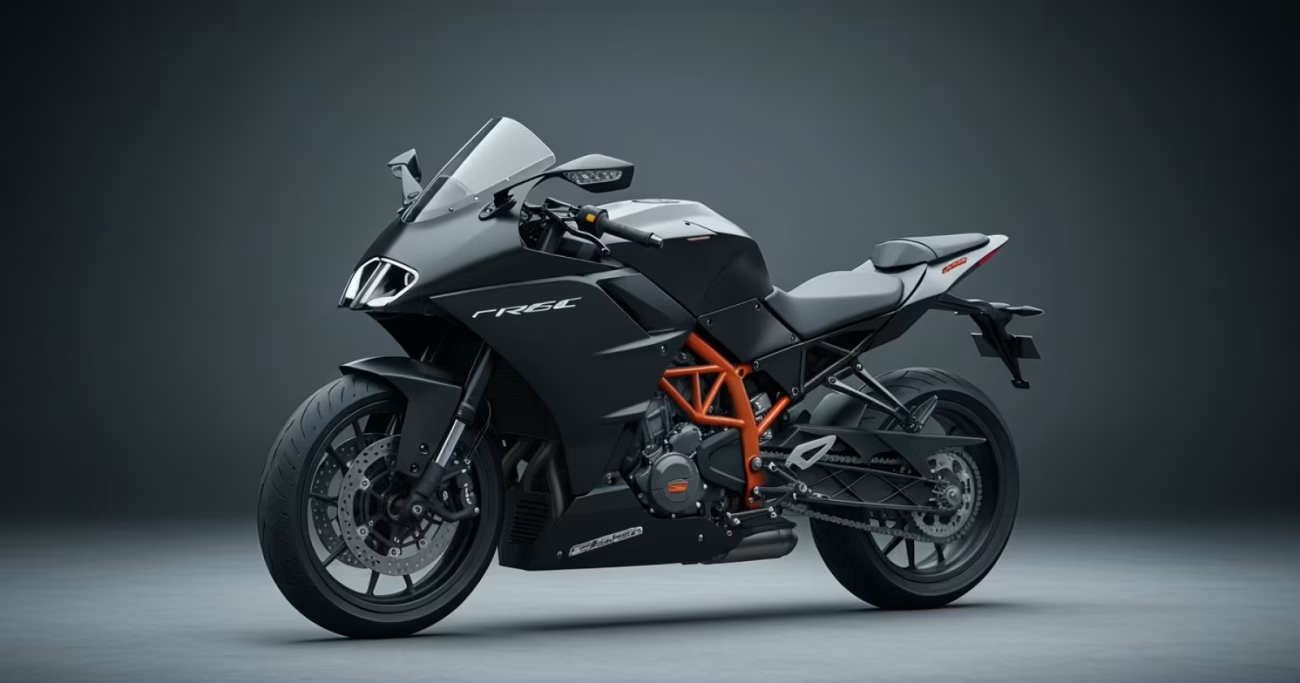
Something big is brewing inside KTM’s engineering lab, and if you’re a sport bike enthusiast in India, you’re going to want to pay very close attention. The orange machine is about to get a heart transplant — and the implications for the entire 400cc segment could be massive.
Manik Nangia, President of Probiking at Bajaj Auto, officially confirmed at the KTM Cup Season 3 finale that the next-generation RC 390 is on its way. The target year? 2027. And the rumored upgrade everyone is talking about? A twin-cylinder engine platform that would completely redefine what this bike stands for.
Why A Twin-Cylinder Changes Everything
Right now, the KTM RC 390 runs a 373.27cc single-cylinder engine making 43.5 PS and 37 Nm of torque. It’s a capable, punchy unit — but it’s also showing its age, especially when you look at what the competition is serving up. The Yamaha R3 runs a parallel-twin. The Kawasaki Ninja 400 runs a parallel-twin. And the Aprilia RS 457 — the newest predator in this segment — runs a twin too.
Going twin-cylinder isn’t just about raw numbers. It’s about refinement, character, and that addictive mid-range pull that makes highway touring and track days genuinely rewarding. KTM clearly recognizes that staying single-cylinder in a twin-dominated sport segment is a positioning risk, not a strength.
I’ll be honest — when I first heard this rumor, I was skeptical. But Nangia’s confirmation at an official KTM event, combined with mentions of new design sketches featuring LED headlights and winglets, makes this feel very real and very close to production intent.
The Wider Platform Play
Here’s where it gets really interesting. Once KTM introduces the twin-cylinder engine with the RC 390, the same platform is expected to roll out across the 390 Duke and 390 Adventure as well. That’s essentially KTM’s entire mid-segment lineup getting a generational upgrade in one strategic sweep.
The trend is already visible elsewhere. BMW‘s F 450 GS and Aprilia’s 457 platform both adopted smaller-displacement twin-cylinder setups recently. KTM — which co-develops hardware with Bajaj Auto — is simply following what the global market is demanding: smoother, more scalable power delivery at accessible price points.
There’s also a strong business logic behind this. TVS and BMW, who share the 310cc twin platform, could potentially introduce a faired sport variant using their upcoming 420cc twin. KTM needs the RC 390 to step up before that window opens.
The 350cc Strategy Running Parallel
Alongside the premium twin-cylinder push, KTM is simultaneously developing a new 350cc engine for a separate tier of bikes. This isn’t a contradiction — it’s smart portfolio engineering. In India, the GST structure creates a very meaningful price cliff at the 350cc boundary.
Bikes under 350cc attract 18% GST, while bikes above 350cc are taxed at a steep 40%. That’s not a small gap — that’s a market-defining difference in the on-road price a customer ultimately pays. By developing a dedicated sub-350cc platform, KTM and Bajaj can keep entry-level 390cc replacements tax-efficient, while the twin-cylinder premium models cater to performance buyers who are willing to pay for the experience.
Triumph is reportedly following a similar playbook with its Bajaj-co-developed lineup. Smart money, smart engineering.
What We Know About The Design
Nangia mentioned that he has personally seen basic design sketches of the next-gen RC 390 — though he was careful not to reveal much. What he did confirm: new LED headlights and winglets are part of the visual story. That tells me KTM is going for a sharper, more aerodynamically aggressive look, likely inspired by the RC 8C and their MotoGP visual language.
In its current form, the RC 390 already has a respectable hardware list — 43mm WP APEX USD forks, a 10-step adjustable WP APEX monoshock, 320mm front disc, Cornering ABS, MTC, Quickshifter+, and a TFT display. The next-gen bike will build on all of this, not strip it back.
Current RC 390 vs What’s Coming — Quick Comparison
| Specification | Current RC 390 (2026) | Next-Gen RC 390 (Expected 2027) |
|---|---|---|
| Engine | 373.27cc Single-Cylinder | Twin-Cylinder (displacement TBC) |
| Power Output | 43.5 PS | Higher (TBC) |
| Torque | 37 Nm | Higher (TBC) |
| Headlights | LED | New-Gen LED (confirmed) |
| Winglets | No | Yes (confirmed in sketch) |
| Expected Launch | On Sale Now | 2027 |
| Key Rivals | Yamaha R3, Ninja 400 | Aprilia RS 457, Ninja 400, Yamaha R3 |
Should You Wait Or Buy Now?
This is the question I know every RC 390 prospect is wrestling with right now. The current bike is genuinely excellent — the 373cc motor is rev-happy, the chassis is sharp, and the electronics package punches well above its price. If you need a sport bike today, the current RC 390 still makes a compelling case.
But if you can hold on through 2026 and into 2027, you may well be rewarded with a fundamentally more sophisticated machine — one that finally answers the twin-cylinder challenge from Yamaha, Kawasaki, and Aprilia on their own terms. That’s not a small upgrade. That’s a generational leap.
I’m genuinely excited about where KTM is taking this. The RC 390 has always been the track-focused weapon in their lineup, and a twin-cylinder heart could make it properly dangerous in the best possible way. Follow us closely over the next year — spy shots, spec leaks, and price estimates are coming, and you won’t want to miss a single one.
