
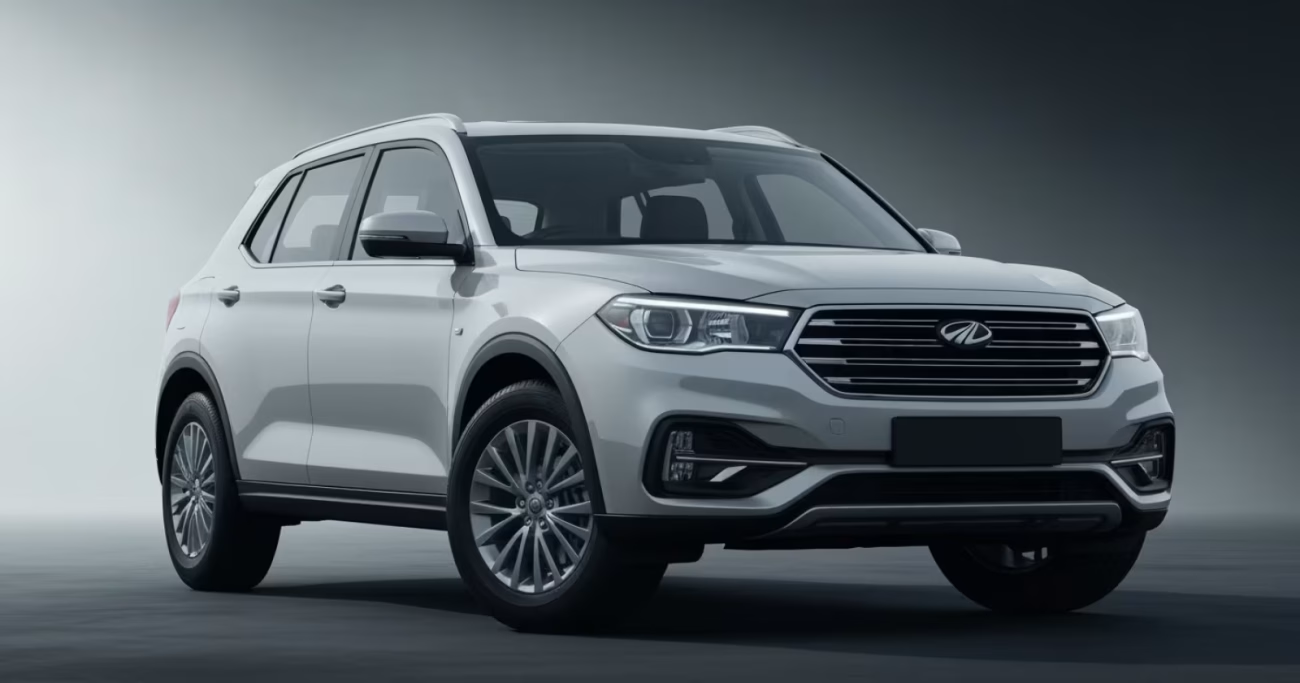
I’m looking at a sales update that says far more than a simple monthly tally. It points to a brand still pulling hard on SUVs, while its three-wheeler business is suddenly becoming impossible to ignore.
The headline number is impressive, but the real story is the mix underneath it. Mahindra has managed to keep its utility vehicles in the spotlight, even as supply-side pressure continues to hang over the broader portfolio.
SUV demand keeps the volume engine running
In May 2026, I saw Mahindra post total vehicle sales of 99,636 units including exports, which is a 20% jump year on year. That is a strong result in any market, but what stands out for me is the 58,021 domestic utility vehicles it moved in India.
That domestic SUV and UV tally is up 11% from the same month last year. Mahindra’s passenger vehicle story is now almost entirely a utility vehicle story, and that matters because it shows how tightly the brand has aligned itself with the Indian SUV market.
Including exports, total SUV sales reached 59,573 units in the month. For me, that reinforces how Mahindra is not just surviving in the segment, it is still expanding its footprint despite the obvious pressure points in supply.
Three-wheelers deliver the sharpest surprise
If I had to pick the single biggest shock in this update, it would be the three-wheeler performance. Mahindra sold 12,536 three-wheelers in May 2026, including electric variants, and that is an eye-catching 89% rise over the 6,635 units sold in May 2026.
That growth rate is not a small bounce. It suggests that the brand’s commercial and urban mobility push is finding serious traction, especially in areas where fleet operators, last-mile transport buyers, and EV-friendly usage patterns matter most.
For the April-May 2026 period, three-wheeler sales stood at 22,435 units, up 85% from 12,105 units in the same period last year. I read that as a strong early-FY27 signal that the segment could remain one of Mahindra’s most underrated growth engines.
Commercial vehicles add breadth to the performance
The commercial vehicle side also gave Mahindra a healthy lift. Light commercial vehicles below 2 tonnes rose 35% to 3,490 units, while the 2T–3.5T category grew 16% to 20,589 units.
That matters because it tells me the growth is not coming from just one pocket of the market. The brand is seeing strength across categories, which helps support its broader business momentum even if some supply bottlenecks remain in place.
For the first two months of FY27, domestic passenger vehicle sales reached 1,14,352 units. That is a 9% rise over 1,04,761 units in the same period last year, and it keeps Mahindra on a positive track right at the start of the financial year.
Exports stay in the green too
I also think the export number deserves more attention than it may get at first glance. Mahindra shipped 5,000 units in May 2026, up 37% from 3,646 units a year earlier.
On a year-to-date basis, exports touched 9,970 units during April-May 2026, which is 42% higher than the 7,027 units recorded in the same period of FY26. That kind of growth suggests the brand is keeping a healthy international pipeline while its domestic demand remains strong.
| Category | May 2026 | YoY Growth |
|---|---|---|
| Total vehicle sales including exports | 99,636 | 20% |
| Domestic utility vehicle sales | 58,021 | 11% |
| Total SUV sales including exports | 59,573 | Not specified |
| Three-wheelers including EVs | 12,536 | 89% |
| Total exports | 5,000 | 37% |
What the numbers say about Mahindra right now
When I step back, the picture is pretty clear. Mahindra is leaning heavily on the UV market, but it is also building momentum in commercial vehicles, three-wheelers, and exports at the same time.
That is a useful combination because it gives the company more than one growth lever. If one area gets constrained by supply chain issues or softer demand, the others can still keep the monthly narrative positive.
At the same time, the company has been honest about the challenge it faces. Demand remains strong, but manpower shortages at select suppliers are still creating supply constraints, which means not every pocket of demand can be fully converted into sales immediately.
Why I think this matters for Indian buyers
For Indian buyers, this update is a reminder of how deeply SUVs have reshaped the market. Mahindra’s numbers show that the UV formula is still working, especially in a country where tough road presence, practical cabin space, and high-riding stance continue to influence purchase decisions.
It also shows that Mahindra is not a one-trick story anymore. The three-wheeler surge, the commercial vehicle growth, and the export momentum all point toward a business that is becoming broader and more resilient.
From where I sit, the most interesting part is not just the 58,021 SUV tally. It is the fact that Mahindra is managing this kind of growth while still dealing with supply-side friction, which makes the performance feel more earned than inflated.
If you follow the Indian auto market closely, I think this is one of those updates worth bookmarking. Keep watching Mahindra’s SUV demand, three-wheeler pace, and supply situation, because the next few months could tell us even more about how strong this momentum really is.
