
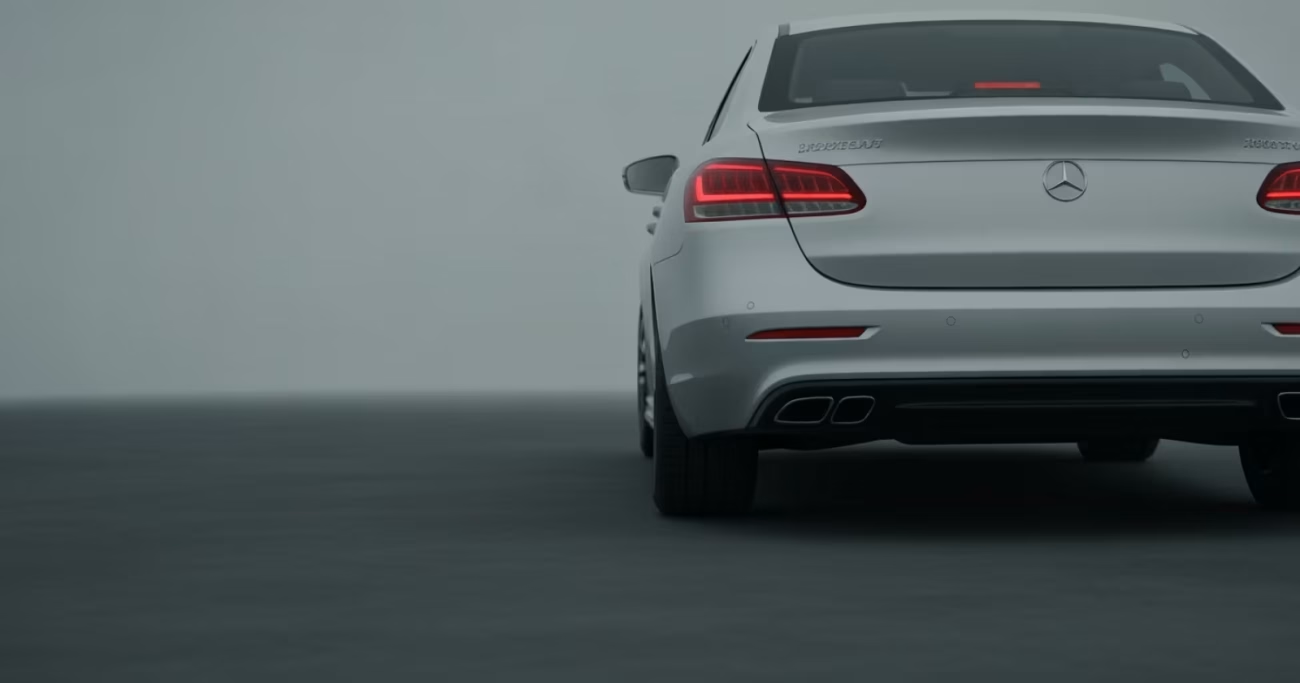
Mercedes-Benz has spent decades engineering some of the most advanced vehicles on the planet, but its latest patent might be the most gloriously over-engineered solution to a problem every car owner quietly hates. We’re talking about mud. Specifically, the kind that creeps up your door panel after a wet commute and makes your pristine paint look like you drove through a swamp.
Filed with the German Patent and Trademark Office and uncovered by CarBuzz, the patent describes a set of actively adjustable mudflaps — panels mounted on hinges at the fender that physically move to redirect road spray away from the car’s bodywork. It sounds simple. The execution is anything but.
Why Mercedes using 4 sensors on a mudflap changes the conversation
Here’s what makes this patent genuinely fascinating. Traditional mudguards are fixed in place — they sit at a static angle and deflect whatever debris happens to come their way. They work reasonably well, but a fixed panel can’t account for cornering, varying road conditions, or vehicles equipped with rear-axle steering, which changes the spray pattern entirely.
Mercedes’ solution involves a pivoting panel that receives input from up to 4 different data sources: steering angle sensors, rain sensors, onboard cameras, and GPS monitoring road conditions in real time. The system processes all of that information to determine the optimal angle for the flap at any given moment. That’s more sensor integration than some entry-level driver assistance systems from a decade ago — deployed entirely to redirect mud.
The real story behind how the moving panel actually works
The patent outlines 3 separate methods for physically actuating the mudflap. Mercedes describes a hydraulic strut, an electric motor, and a direct mechanical connection to the vehicle’s steering linkage as possible control mechanisms. Filing multiple actuation methods is standard patent practice — it gives the company flexibility to implement whichever approach suits a specific platform best.
The goal, according to the filing, is to position the flap in “an extended position to protect a door handle or other vehicle structures from the spray pattern of a tire.” Mercedes specifically calls out cornering as a key scenario, noting the system delivers “improved protection against dirt, snow, and stone chips, especially when cornering and in vehicles with rear-axle steering.” That last detail is telling — Mercedes’ rear-axle steering tech is spreading across more of its lineup, and the spray dynamics at the rear wheels become significantly more complex when those wheels are actively turning.
What Mercedes isn’t saying about the cost and complexity trade-off
I find myself genuinely torn on this one. On one hand, the logic is sound. Premium Mercedes-Benz owners are already absorbing higher purchase prices, higher insurance premiums, and steeper maintenance costs than average car buyers. Protecting paint — especially on a vehicle that might cost $80,000 or more — has real financial value. Stone chips and paint damage aren’t just cosmetic nuisances; they’re rust vectors and resale value destroyers.
On the other hand, here’s the catch: every additional moving component on a vehicle is another potential failure point. A hydraulic strut or electric motor mounted at the wheel arch is exposed to the exact conditions it’s designed to fight — water, grit, road salt, and thermal cycling. The irony of a mud-protection system that could itself be damaged by mud isn’t lost on anyone. Adding GPS and camera integration to a mudflap also means software dependencies, and anyone who has watched modern vehicle tech age ungracefully knows that complexity doesn’t always age well.
| Feature | Traditional Mudflap | Mercedes Active Mud Guard |
|---|---|---|
| Position | Fixed, static | Actively adjustable via hinge |
| Sensor Input | None | Steering angle, rain, camera, GPS |
| Actuation Method | None | Hydraulic, electric motor, or steering linkage |
| Cornering Coverage | Limited | Optimized in real time |
| Rear-Axle Steering Support | No | Yes, explicitly addressed |
| Production Confirmed | N/A | No — patent filing only |
The one catch nobody is talking about with this patent
Patent filings are not production promises. Mercedes-Benz, like every automaker, files patents constantly — many of which never reach a showroom floor. The German Patent and Trademark Office filing is a mechanism to protect intellectual property, not a product announcement. The active mud guard concept could sit in a filing cabinet indefinitely, get folded into a future platform, or inspire a simplified version that strips out some of the sensor complexity.
What the filing does confirm is that Mercedes engineers are thinking seriously about active aerodynamic components beyond the traditional spoilers and air curtains. Most active aero exists to manage downforce or drag — deploying the same philosophy toward paint protection is a genuinely fresh application. If the technology does eventually reach production, I’d expect to see it first on something like an AMG flagship or an EV platform where the software architecture to support it already exists. The real question isn’t whether it can be built — it’s whether buyers will pay for it, and whether it will still work reliably after 5 years and 60,000 miles of road exposure.
If you’re the kind of driver who genuinely cares about keeping a luxury vehicle’s paint in showroom condition — and plenty of Mercedes owners absolutely are — this is a patent worth tracking. Follow the story, share it with fellow enthusiasts, and keep an eye on what Mercedes reveals at upcoming auto shows. The line between clever engineering and elegant overkill has never been more interesting to watch.
