
The luxury EV just got a sharper personality
I look at this update and immediately see Mercedes trying to make its flagship electric sedan feel fresher, smarter, and even more indulgent. The big surprise is not only the styling tweak, but also the way the brand has pushed range and charging performance much further than before.
For me, that is exactly the kind of shift that makes an EV feel genuinely premium in 2026. It is no longer just about silent speed; it is about how far it can go, how quickly it can recover energy, and how dramatic the cabin experience feels every time I step inside.
Design changes keep the coupe-like stance intact
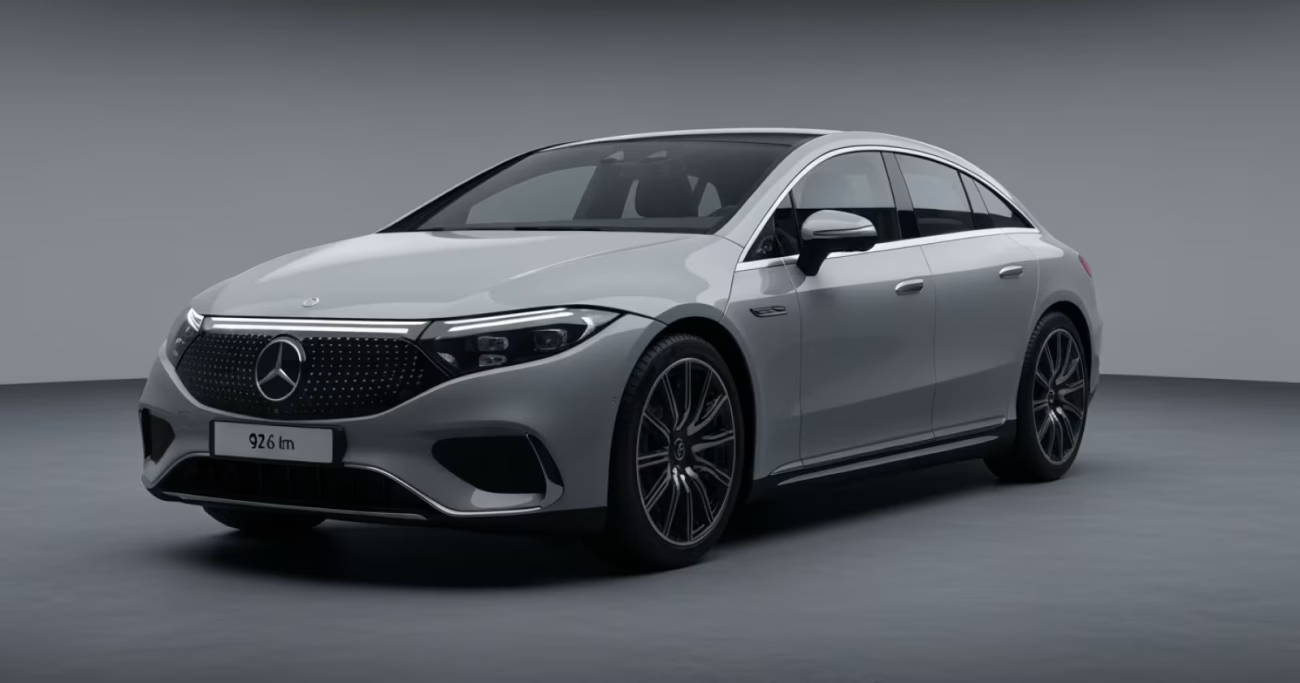
The facelift stays true to the low-slung, aerodynamic profile that has always defined this car. I still see that sleek coupe-like shape, but the front end now looks more assertive with a revised grille, illuminated Mercedes stars, and updated Digital Light headlights.
Those headlights are not just for show either, because Mercedes says they can project light up to 600 metres. At the rear, the new bumper, more pronounced diffuser, and revised LED signature make the car look cleaner and more expensive, while the duck-tail spoiler adds a subtle performance touch.
In India, this kind of design matters because luxury EV buyers often want road presence without losing elegance. I think Mercedes has balanced those priorities well here, especially for a car that will likely be seen at high-end residences, premium offices, and five-star hotel driveways.
The cabin is still the main event
Inside, the EQS facelift continues to lean hard into opulence. The materials are still expected to be rich, the fit and finish remain deeply premium, and the whole ambience feels built to impress anyone who sits in it, not just the driver.
What really grabs my attention is the optional yoke-style steering wheel with steer-by-wire. That change alone gives the cabin a futuristic feel and opens up a clear view of the digital cockpit, which is exactly the kind of tech flex Mercedes wants in its flagship EV.
The Hyperscreen layout carries over, and I think that remains one of the most theatrical interiors in the segment. Three large displays sit under one glass panel, with the driver display, co-driver entertainment screen, and central touchscreen working together on the latest MB.OS software.
There is also support for OTA updates and an AI-enabled MBUX Virtual Assistant. Rear passengers are not ignored either, because the brand has added two 13.1-inch screens for entertainment, which makes the car feel properly chauffeur-friendly for wealthy urban buyers.
| Key update | What changes | Why it matters |
|---|---|---|
| Range | Up to 926 km | Massively reduces range anxiety |
| Battery | 112 kWh to 122 kWh | Supports long-distance luxury travel |
| Charging | 350 kW DC fast charging | Adds 320 km in 10 minutes |
| Power | 367 bhp to 585 bhp | Wide performance spread across variants |
| Architecture | 800V platform update | Enables better efficiency and charging |
Range and charging are the real headline acts
If I ignore the cabin for a moment, the powertrain upgrade is probably the biggest story here. Mercedes has moved to an updated 800V architecture and reworked the drive units, which is what helps the EQS facelift reach up to 926 km on a single charge in EQS 450+ form.
That figure is the kind of number that immediately changes the conversation around premium EVs. Even though real-world conditions will always be different, a headline range like that gives this sedan a serious advantage in the luxury space.
The battery options now span 112 kWh to 122 kWh, while output ranges from 367 bhp to 585 bhp depending on the version. EQS 500 4MATIC and EQS 580 4MATIC retain all-wheel drive, while the rear axle now gets a 2-speed gearbox for better flexibility at different speeds.
Charging capability also looks very impressive. With 350 kW DC fast charging, Mercedes claims the car can add 320 km of range in just 10 minutes, which is exactly the sort of spec that makes long highway journeys feel far less intimidating.
Tech and comfort are pushed even further
Mercedes has not stopped at range and charging. The facelift also gets revised driver assistance systems with features such as diagonal parking assist, evasive steering support, and lane keep assistance, all of which make the car feel even more advanced in traffic-heavy environments.
There are smaller but meaningful comfort touches too, like HEPA filters and heated front seatbelts. Those details tell me Mercedes is still chasing the kind of quiet, pampered experience that luxury buyers expect when they spend this much money on an electric flagship.
The air suspension has also been updated to use cloud inputs and data shared by other cars. That is the sort of invisible intelligence that can make the ride feel smoother, smarter, and more adaptive on bad roads or changing surfaces.
What this means for India
For India, the timing is still the big unknown. Mercedes-Benz is expected to bring this facelift to our market sometime in 2027, and if that happens, it will enter a space where the luxury EV conversation is getting much more serious.
I can already see the appeal for affluent Indian buyers who want a flagship EV for city use, airport runs, and long highway escapes between metros. The EQS facelift has the kind of range, comfort, and tech story that can stand out in a market where premium EVs are no longer just novelty purchases.
It also matters that this car does not feel like a simple battery swap job. The design tweaks, cabin upgrades, steer-by-wire yoke, improved charging speed, and the promise of near-1,000 km range all combine to make it feel like a meaningful step forward rather than a routine refresh.
My take on the facelift
I see this as Mercedes doubling down on the idea that a flagship EV should feel futuristic without losing its luxury identity. The EQS facelift looks more polished, sounds more capable, and gives the brand a stronger technical story to tell against rival premium EVs.
For me, the 926 km figure is the biggest crowd-puller, but the yoke steering and Hyperscreen cabin are what make the package memorable. If Mercedes prices and positions it well for India, this could become one of the most talked-about luxury EVs in the market.
If you follow premium electric cars the way I do, keep this one on your radar and watch how Mercedes times the India launch. I would definitely pay attention the moment the brand starts talking about local bookings, because this facelift could reset expectations for flagship EVs in 2027.
