
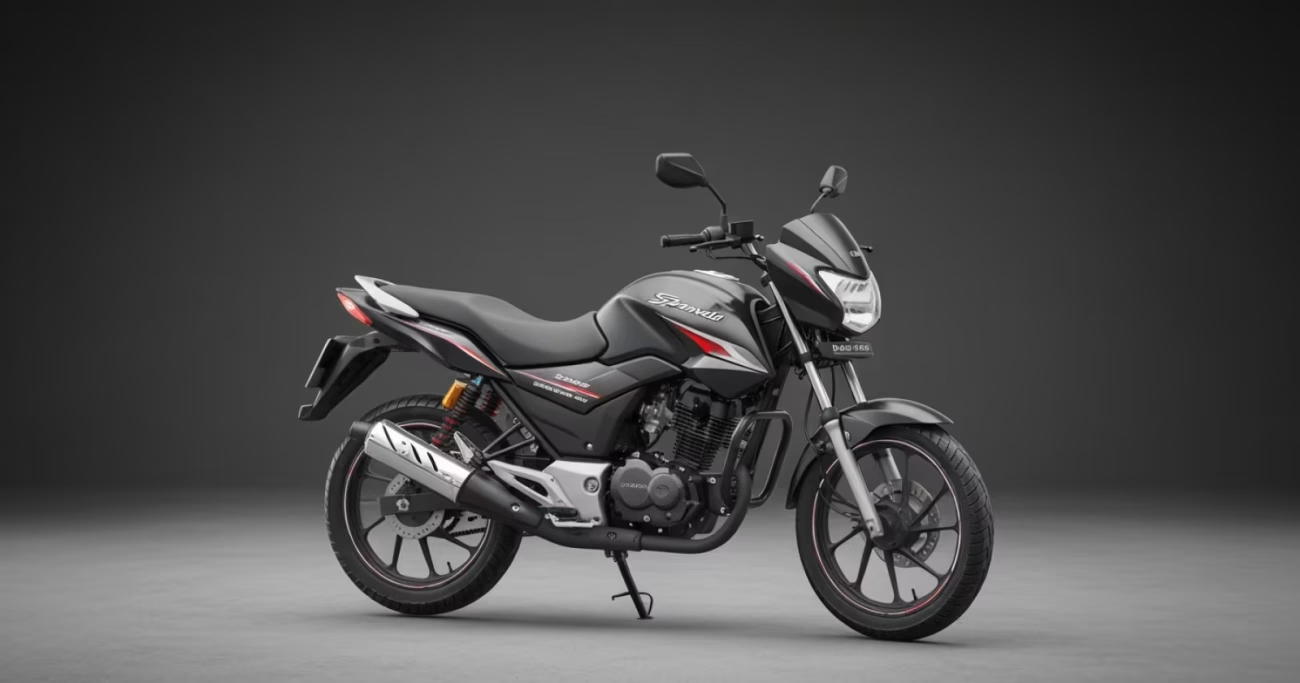
India’s most familiar commuter bike may be about to enter a completely new fuel era. If Hero gets this right, the humble daily-use motorcycle could become one of the biggest symbols of India’s ethanol push.
I have seen plenty of “future fuel” concepts come and go, but this one feels different because it is linked to a motorcycle family that already lives in lakhs of Indian homes. Hero MotoCorp is preparing to launch its first E85 flex-fuel bike on 3 June, and the big question is whether the production model will wear the Splendor badge or the HF Deluxe name.
Why Hero’s E85 Bike Matters So Much
For most buyers, flex fuel still sounds like a technical term. In simple words, an E85-compatible motorcycle can run on petrol blended with a much higher percentage of ethanol, up to 85% ethanol and 15% petrol in the blend.
That matters because India is already moving fast with ethanol blending. E20 fuel is now widely available, and the next step is a bigger flex-fuel ecosystem where vehicles can safely accept different ethanol-petrol blends without owners worrying about engine damage.
This is why I feel Hero’s move is important. A flex-fuel system makes more sense for mass-market motorcycles than asking customers to remember which blend their bike supports. If the bike can adapt to higher ethanol content, it becomes safer for long-term ownership in a changing fuel policy environment.
Splendor Or HF Deluxe: Which Name Makes More Sense
Hero has not officially confirmed whether the new E85 bike will be based on the Splendor or HF Deluxe. However, both names make strong business sense because they are among Hero’s core commuter products and share a practical, cost-focused identity.
The Splendor, in particular, would be the headline-grabbing choice. It has been one of India’s bestselling motorcycles for years, and its image is built around low running cost, reliability and simple maintenance. Adding flex-fuel ability to such a familiar model could instantly make ethanol technology feel less experimental.
The HF Deluxe is also a strong candidate because Hero has already displayed a flex-fuel prototype based on that platform at Bharat Mobility Global Expo. If Hero chooses HF Deluxe for the first production E85 model, it may be because the company has already done major development work around that commuter package.
| Key Point | What We Know |
|---|---|
| Launch date | 3 June |
| Expected model family | Hero Splendor or HF Deluxe |
| Fuel compatibility | E85 ethanol-petrol blend expected |
| Market position | Mass-market commuter motorcycle |
| Possible cost impact | ₹4,000 to ₹7,000 higher production cost |
| Current GST reference | Petrol bikes under 350cc attract 18% GST |
What Could Change For Daily Riders
The biggest benefit for regular riders is peace of mind. Today, many engines are designed around a specific fuel blend. When blending norms move upward, older vehicles may not always be fully compatible with the new fuel mix.
A proper flex-fuel motorcycle reduces that concern. It can detect and manage different ethanol-petrol blends, making the bike more future-ready as India pushes deeper into renewable fuel usage.
For a commuter buyer, the buying decision is rarely about headline horsepower. It is about fuel cost, service cost, resale value and trust. If Hero can explain E85 in a simple way at showrooms, this bike could appeal strongly to riders who want a familiar motorcycle with future-ready fuel support.
Price And GST Will Decide The Real Impact
This is where things get interesting. Flex-fuel hardware is not free, and industry estimates suggest that 100cc to 125cc commuter motorcycles could become costlier to produce by around ₹4,000 to ₹7,000.
That may not sound huge on a premium bike, but in the commuter segment, every few thousand rupees matters. Hero’s challenge will be to keep the final price attractive enough for rural buyers, city office-goers, delivery riders and small business users.
There is also a policy angle. At present, petrol motorcycles under 350cc attract 18% GST, while electric two-wheelers get a much lower 5% GST. Since ethanol is renewable and supports India’s fuel self-reliance, I would not be surprised if the industry pushes for tax relief on flex-fuel bikes too.
If GST support arrives, the E85 commuter segment could become much more serious. Without it, brands may still launch flex-fuel bikes, but the price gap may slow down mass adoption.
India’s Ethanol Push Is Getting Bigger
This launch is not happening in isolation. India wants to reduce dependence on imported oil, and ethanol blending is one of the most practical routes because it can use domestic agricultural resources while lowering the pressure on crude imports.
Maruti Suzuki is also expected to bring an E100 flex-fuel car on 5 June, which shows that the movement is not limited to two-wheelers. Passenger cars, commuter bikes and possibly even larger motorcycles are moving in the same direction.
The larger context is clear to me. Energy security has become just as important as emissions reduction. Flex fuel gives India another option alongside electric vehicles, CNG, hybrids and other cleaner technologies.
Other Bike Brands Are Already Watching
Hero may be taking the spotlight now, but it is not the only two-wheeler manufacturer exploring this space. Honda had already launched the CB300F flex-fuel model earlier, although that motorcycle was later discontinued.
Royal Enfield is also believed to be working on ethanol-compatible versions of its existing bikes, with a Classic 350 test mule reportedly spotted with E85 marking. That is important because it shows flex fuel may not remain limited to entry-level commuters.
TVS has shown a Raider 125 flex-fuel model, while Suzuki is looking at multiple greener routes including flex fuel, CNG and electric two-wheelers. In short, the industry is preparing for a market where fuel choice becomes a major selling point.
Why Hero Has A Big Advantage
Hero’s biggest strength is not just technology. It is reach. The company has deep showroom and service penetration across India, especially in small towns and rural markets where commuter motorcycles dominate.
If Hero launches an E85 bike based on a trusted name, the company can make flex fuel feel normal very quickly. A rider who may hesitate to buy an unfamiliar new technology could still trust it if it comes in a Splendor-like package.
I also think Hero has timing on its side. Fuel prices remain a sensitive topic for Indian families, and any technology that promises lower dependence on petrol will naturally attract attention. Even if ethanol pricing and availability vary by region, the long-term direction is hard to ignore.
What I Will Be Watching On Launch Day
The most important detail will be the exact model name. If it is the Splendor, Hero will get maximum attention because that badge carries massive emotional and practical value in India.
The second detail will be pricing. A small premium may be accepted if buyers understand the long-term benefit, but a steep jump could make commuters wait and watch.
The third detail will be fuel compatibility clarity. Hero needs to clearly explain whether the bike supports blends up to E85, how the engine management system handles ethanol variation, and whether maintenance intervals change in any way.
I will also look for warranty communication. For new fuel technology to succeed in India, buyers need confidence that the engine, fuel lines, tank, injectors and related components are built for ethanol use over years, not just for a launch headline.
A Small Bike With A Big Signal
This upcoming Hero launch may look like a simple commuter motorcycle update, but I see it as a much bigger signal. India’s two-wheeler market is too large for any fuel transition to happen without bikes like Splendor and HF Deluxe playing a central role.
If Hero prices it sensibly and explains the benefits clearly, this E85 commuter could become the model that brings flex fuel from policy discussions into everyday Indian traffic. It may not be flashy, but it could be genuinely important.
If you are planning to buy a new commuter bike soon, I would wait for the 3 June announcement before making a final decision. Watch the price, warranty and fuel compatibility details closely, because this could be the start of a new chapter for budget motorcycles in India.
