
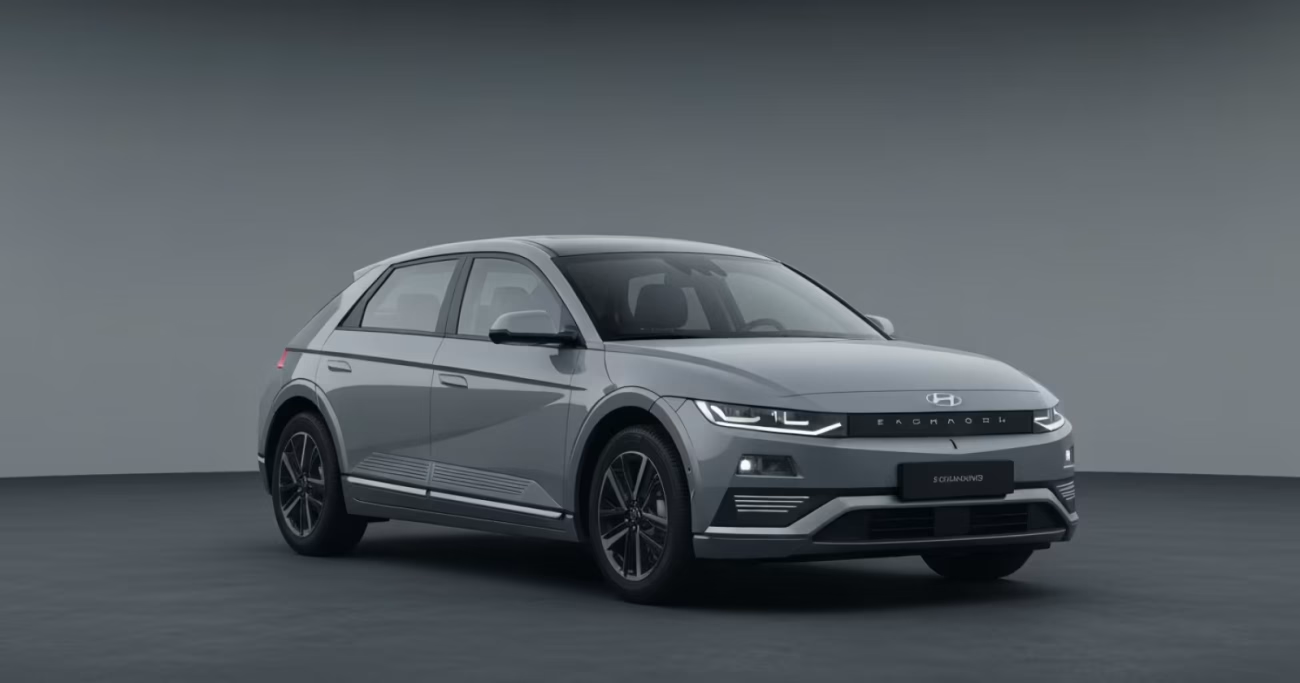
Hyundai just posted 18,395 Ioniq 5 sales in 2026 so far without the federal $7,500 EV tax credit. That is the kind of number rivals were hoping would collapse after incentives faded. Instead, Hyundai says it is not backing off even slightly.
| Spec | Detail |
|---|---|
| Ioniq 5 YTD sales | 18,395 units in 2026 |
| May 2026 sales | 5,002 units, up 28% year over year |
| Ioniq 9 May growth | 1,145 units, up 1,225% year over year |
| Tax credit context | Sales climbed without the $7,500 federal incentive |
| Hyundai hybrid growth | Hybrids up 90% year to date |
| Hyundai’s stance | “We don’t want to give up an inch.” |
Why Hyundai’s EV momentum is the real story
The Ioniq 9 grabbed the biggest percentage headlines, but the Ioniq 5 is the more important signal. I see a mature EV model growing after the federal credit disappeared, and that changes the conversation around demand.
Here’s the catch: the Ioniq 9’s giant jumps came from a tiny early base. The Ioniq 5, by contrast, is already established, already familiar, and still rising. That is what makes Hyundai’s latest sales report feel more durable than a short-term spike.
What Hyundai isn’t saying about incentives
Hyundai North America CEO Randy Parker kept the messaging simple: the company is pushing marketing, advertising, and a refusal to surrender ground. I read that as a direct answer to the market’s post-subsidy anxiety. Hyundai is acting like demand still exists if the product and pricing are right.
And pricing matters more than ever. Hyundai has been advertising up to $8,750 in incentives on some EVs, and it recently added a cheaper Ioniq 5 trim. The real story is not just sales volume; it is how Hyundai is using factory-backed discounts to keep showroom traffic moving.
The one catch nobody is talking about
Gas prices may be helping, and that part is easy to overlook. When fuel costs climb, the value case for an EV gets stronger even without a federal credit. That creates a market tailwind Hyundai can lean into while others wait for policy to save the day.
There is also a broader portfolio effect here. Hyundai’s hybrids are up 90% year to date, with the Sonata Hybrid up 250% and the Tucson Hybrid up 10%. I think that matters because it shows Hyundai is not betting only on battery power; it is building a sales bridge across multiple electrified lanes.
Why Hyundai’s factory plan changes the race
Hyundai is also preparing to add hybrid production at its Georgia plant, where the Ioniq 5 is built. That tells me the company expects demand to stay mixed, not neatly sorted into pure EV or gas-only buyers. It is hedging intelligently while still pushing EVs hard.
Extended-range EVs are also coming to the US next year, which could give Hyundai another way to keep shoppers inside its electrified ecosystem. I see that as the next pressure point for rivals such as Toyota and the rest of the mainstream pack. Hyundai is not just selling one strong EV; it is building a broader answer to the market’s uncertainty.
How it stacks up
| Model | 2026 YTD Sales | May 2026 Sales | Growth Signal | Edge |
|---|---|---|---|---|
| Hyundai Ioniq 5 | 18,395 | 5,002 | Up 16% YTD | Still growing without the federal credit |
| Hyundai Ioniq 9 | 4,001 | 1,145 | Up 1,225% year over year | Biggest percentage surge |
| Tesla Model Y | Not in source | Not in source | Market benchmark | Scale, but Hyundai is closing the perception gap |
| Kia EV6 | Not in source | Not in source | Same segment rival | Hyundai’s incentives and lineup breadth look stronger right now |
Why this matters
Hyundai is proving EV demand can survive without a federal crutch.
Hybrids and EVs together are becoming the safer sales strategy.
Rivals now have to beat value, not just technology.
The verdict Hyundai’s latest numbers are a warning shot to every automaker still waiting for incentives to rescue EV adoption. The Ioniq 5 is the clearest proof that a well-priced, well-supported electric model can still grow in 2026. I expect Hyundai’s mix of EVs, hybrids, and coming range-extended products to keep pressure on rivals through the rest of the year. The company is not retreating, and the sales data says that strategy is working.
If this is the kind of market shift you follow, keep watching Hyundai’s next move closely. The next sales report could tell us even more about how far the EV rebound can go without government help.
