
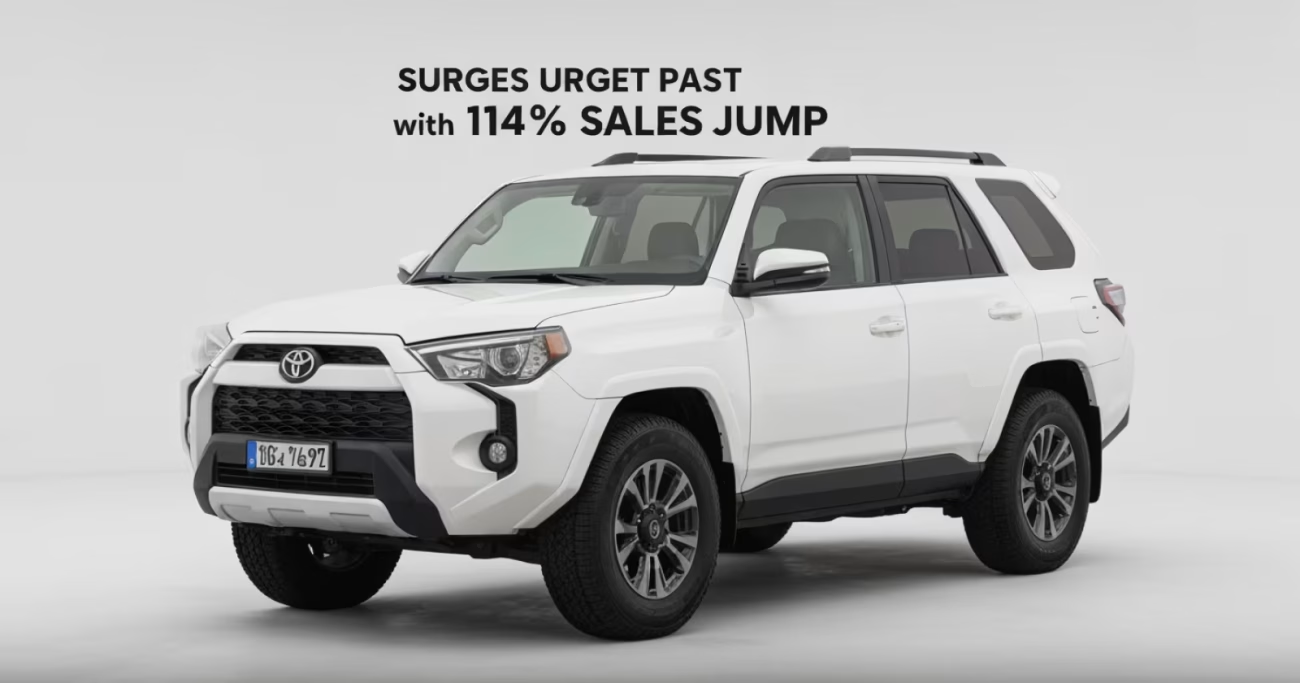
The Toyota SUV story flipped fast in May 2026. The RAV4 is still the nameplate everyone knows, but the 4Runner is the one making noise.
That shift matters because Toyota’s best-known crossover fell sharply while a tougher, less mass-market SUV posted a huge surge. The real story is not just one model slipping; it is how Toyota kept overall sales steady anyway.
RAV4 is down, and that changes the tone
The RAV4 still sells in huge numbers, but May showed how badly a supply problem can distort a bestseller. Toyota moved 33,542 RAV4s last month, down 26% year over year, even after earlier launches were already driving a full-year decline of 40%.
Here’s the catch: this is not demand collapsing, it is production catching up slowly. Toyota says U.S. output is now online and the plug-in hybrid version is in production, which should help the recovery accelerate through the second half of 2026.
4Runner is the SUV stealing attention
The 4Runner is doing the opposite of the RAV4 right now. Sales jumped 114% in May to 14,166 units, and year-to-date volume is up 144.6%, which is a stunning turnaround for a nameplate that used to live more quietly inside Toyota’s truck lineup.
The real story is the hybrid split. Toyota says 4Runner hybrid sales rose 196.6% last month, and that lines up with the market’s appetite for electrified SUVs at a time when fuel prices remain high. If there is a surprise in Toyota’s portfolio, this is it.
Toyota’s lineup is being rescued elsewhere
What Toyota isn’t saying out loud is that the brand needed multiple models to offset the RAV4 stumble. The all-new C-HR EV delivered 1,509 sales in its first real month, the bZ reached 2,646, and the Crown Signia added another 2,208.
That mix helped Toyota keep its SUV total at 91,268, only down 1.7% from a year ago. For a company leaning harder into hybrids and EVs, more than 60% of May sales coming from electrified models is the number that signals where the brand is headed next.
Camry is quietly outrunning everything
The biggest twist is not even in the SUV lane. The Camry sold 35,797 units in May, up 14.2%, and that puts it ahead of every Toyota passenger car and even ahead of the RAV4 right now.
That is the part many shoppers miss. Toyota’s sedan that people keep saying is fading is actually acting like the brand’s current volume leader, while the company’s biggest SUV works through a reset. For a mass-market automaker, that balance is rare and telling.
| Model | May 2026 Sales | YoY Change | Biggest Edge |
|---|---|---|---|
| Toyota 4Runner | 14,166 | +114% | Fastest breakout among Toyota SUVs |
| Toyota RAV4 | 33,542 | -26% | Still the volume anchor, despite the dip |
| Toyota Camry | 35,797 | +14.2% | Best-selling Toyota in America right now |
| Toyota Grand Highlander | About 14,000+ | Steady | Nearly matched by the 4Runner |
| Toyota Mirai | 23 | +283% | Largest percentage gain, smallest volume |
The one catch nobody is talking about
All of this growth sits inside a brand that still sold 845,441 vehicles through the first five months, only slightly below last year’s pace. That means Toyota is not losing its footing; it is simply shifting where the volume comes from.
The catch is that the RAV4 still has the crown to defend. It may be down, but the production ramp and PHEV rollout give it a real chance to recover. The 4Runner, though, has already proved that Toyota’s next phase does not belong to one SUV alone.
The verdict Toyota’s May numbers are a reminder that dominance can move around inside one brand very quickly. I see the 4Runner as the clearest signal of where Toyota’s SUV demand is headed, especially with hybrid buyers chasing efficiency without giving up image. The RAV4 should recover, but the 4Runner’s surge shows Toyota has more than one model capable of carrying the spotlight in 2026. If Toyota keeps supply flowing, this lineup shakeup is only getting started. Track the numbers now, because the SUV hierarchy is still in motion.
