
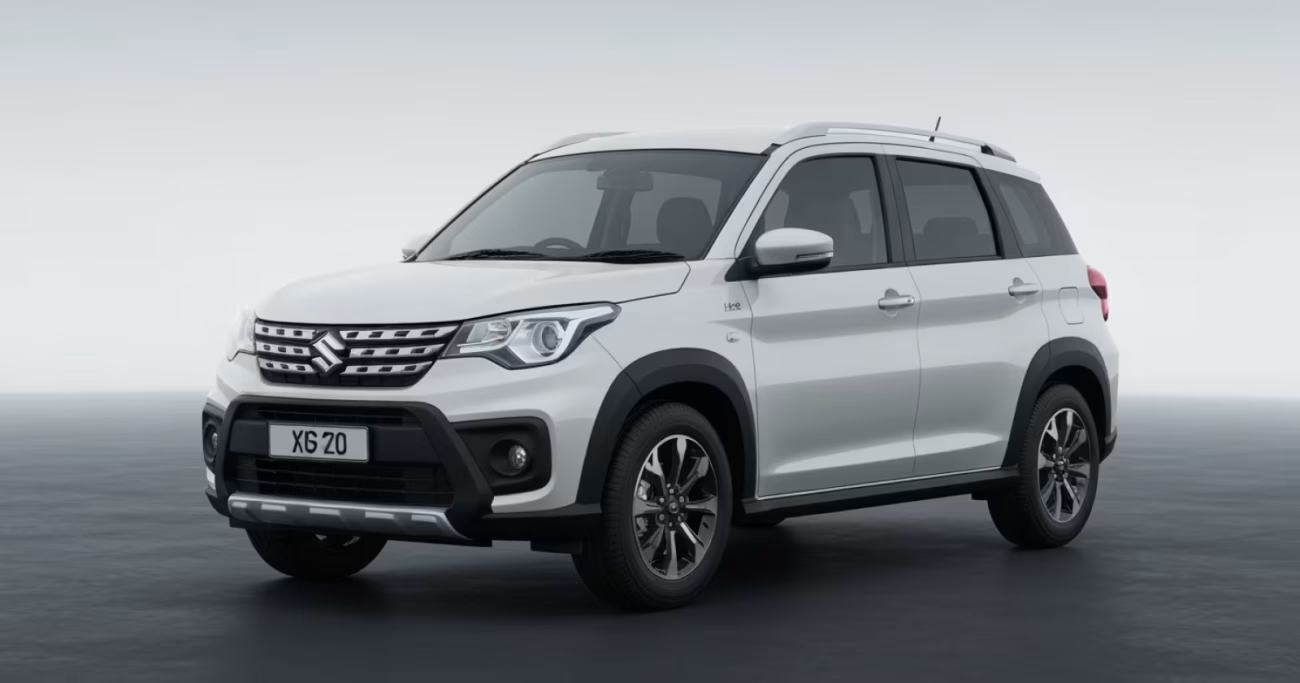
I’m looking at this new Suzuki MPV test mule and the first thing that grabs me is how much the nose has changed. The bigger question is not the facelift itself, but whether this fresh face will eventually show up on the India-spec Maruti XL6.
The spy shots have created that exact kind of curiosity that works so well for Indian auto readers. A familiar model gets a sharper front end, the rear stays mostly untouched, and suddenly the whole discussion shifts to whether Maruti will bring the update here or keep it limited to ASEAN markets.
What I can see in the facelifted XL7
From the outside, the update looks concentrated at the front and the wheels. The most obvious change is the new grille treatment, which now appears to stretch across the fascia in a more unified way than before. It has a blacked-out finish, a thick centre element for the number plate, and a silver faux skid plate below it that gives the MPV a slightly tougher look.
I also notice chrome detailing near the top portion of the grille, creating a connected-lamp style visual effect. That may split opinion, because some buyers will like the modern styling trick while others may find it a bit busy. The headlamps themselves look familiar and seem to be carried over, while the fog lamp area appears slimmer and more refined.
At the sides, the alloy wheel design seems updated too. Depending on the trim, the finish may be black or a black-and-chrome dual-tone style, which should help the vehicle look a little more premium without changing its core shape. This is the kind of update that matters in showrooms, because small styling changes can make a familiar MPV feel newer very quickly.
Rear design stays familiar
At the back, the facelift seems far more conservative. The tail lamps look largely the same, though the smoked effect gives them a sportier character. The chrome strip on the tailgate also appears to have been removed, which actually makes the rear look cleaner in my view.
The rear bumper seems to be carried over almost unchanged. That tells me Suzuki has chosen to focus its attention on the face and the first impression, rather than spending too much on a full-body redesign. For a family-oriented MPV, that approach makes sense because most buyers care more about seating, practicality and value than dramatic styling overhauls.
Why India buyers are watching closely
This is where the story becomes interesting for India. Maruti Suzuki already sells the Ertiga and XL6 here, and both were updated silently in 2026 with changes aimed at improving comfort for third-row occupants. The XL7 is effectively the 7-seater cousin of the XL6 in ASEAN markets, so any design movement on the XL7 naturally raises the possibility of a related update for the India-spec sibling.
I think that is why this spy sighting is drawing so much attention. The XL6 already shares its design language with the XL7, so a facelift in Vietnam or Indonesia can easily become a talking point in India. Even if the update never comes here in the same form, it still hints at the direction Suzuki wants to take with its MPV family.
Powertrain looks unchanged for now
Mechanically, there does not seem to be a big surprise. The same 1.5-litre naturally aspirated petrol engine with mild-hybrid support is expected to continue. That is not a bad thing, because this powertrain already fits the MPV brief well enough for city commuting, school runs, airport duty and relaxed highway trips.
For Indian buyers, consistency can be a strength. In an MPV, smoothness and efficiency often matter more than outright performance, especially when the vehicle is used in full family mode. If Suzuki keeps the engine package unchanged, the facelift will likely be about style, equipment and market freshness rather than a major technical shift.
What this means for Maruti XL6
I would not jump straight to a confirmed India launch, because the source itself does not establish that. Still, the timing and the shared platform logic make this a development worth tracking closely. If Suzuki gives the XL7 a stronger grille, cleaner rear details and a richer cabin update, Maruti may not want the XL6 to look too old in comparison for long.
The most likely outcome, in my opinion, is influence rather than direct carryover. Maruti often watches what works in overseas Suzuki models and then adapts the ideas to Indian conditions and price expectations. That means the XL6 could borrow design cues or feature upgrades later, even if the exact facelift shown here stays overseas for the moment.
| Key area | Current XL7 / XL6 link | Facelift change spotted |
|---|---|---|
| Front fascia | Split grille treatment | Single larger grille look with black finish |
| Headlamps | LED setup carried over | No major change visible |
| Fog lamp section | Conventional housing | Slimmer, sleeker new housing |
| Alloy wheels | Existing wheel design | Fresh dual-tone style expected |
| Rear styling | Simple MPV tail design | Smoked tail lamps, less chrome |
| Powertrain | 1.5-litre petrol mild-hybrid | Likely carried forward |
My take on the spy shot buzz
As an Indian auto watcher, I find this kind of facelift news genuinely useful because it shows where the segment is headed without waiting for a full reveal. The XL7 has always been important as the seven-seat version of the XL6 formula, and a smarter face can keep it relevant in markets that are becoming more design-conscious.
For India, the real headline is not just whether the XL7 gets updated. It is whether Maruti chooses to refresh the XL6 with similar styling cues, because that would keep the MPV competitive against buyers who are increasingly comparing value, cabin freshness and overall road presence in the showroom.
I’ll be watching this one closely, and if you follow MPV updates the same way I do, this is exactly the kind of story worth keeping on your radar. If Maruti brings even part of this facelift thinking to the XL6, it could be one of the more meaningful quiet updates in the segment, so stay alert for the next round of spy shots and official clues.
