
About 1 million buyers have been pushed out of the new-car market since the start of the decade. The pressure is coming from higher prices, higher rates, and a lot less patience from shoppers.
That is forcing more people into used cars, longer loans, and smaller budgets than the industry seems ready to admit. The real story is not just that new cars are expensive. It is that affordability is now reshaping what gets built, sold, and financed.
Prices finally broke the new-car ceiling
The average transaction price for a new vehicle topped $50,000 in 2026, and that changes the entire market. Once prices cross that line, the buyer pool shrinks fast, especially for families already dealing with inflation and high fuel costs.
Here’s the catch: automakers do not all suffer the same way. The more profitable trucks and SUVs keep the lights on, while entry-level cars get pushed aside. That is why cheap nameplates disappear even when shoppers keep asking for them.
Cheap cars are vanishing on purpose
Models like the Nissan Versa, Honda Fit, and Kia Soul have been dropped or pushed out of the spotlight, and the effect is immediate. New-car shoppers are being nudged into higher trims, bigger vehicles, and monthly payments that feel far less manageable.
What automakers are not saying loudly is that selling fewer expensive vehicles can make more money than selling a lot of low-margin economy cars. Ford and General Motors have built huge profit engines around this idea, and it helps explain why affordability keeps slipping away from showroom floors.
Long loans are hiding the real pain
Nearly a third of all auto loans now stretch to 72 months or more, according to Experian. That may lower the monthly payment, but it also means buyers are carrying debt longer and paying more interest over time.
Subprime financing has also climbed to 15.75% of new-vehicle loans, up from 14.4% last year. That is the kind of shift that should make anyone remember 2008, when too many buyers were stretched thin and the market paid for it later.
| Spec | Detail |
|---|---|
| Average new-car price | More than $50,000 in 2026 |
| Shoppers removed from market | About 1,000,000 since the start of the decade |
| 72-month loans | Nearly 1/3 of new auto financing |
| Subprime share | 15.75% of new-vehicle loans |
| Ford profit mix | About 90% of global profit from F-Series |
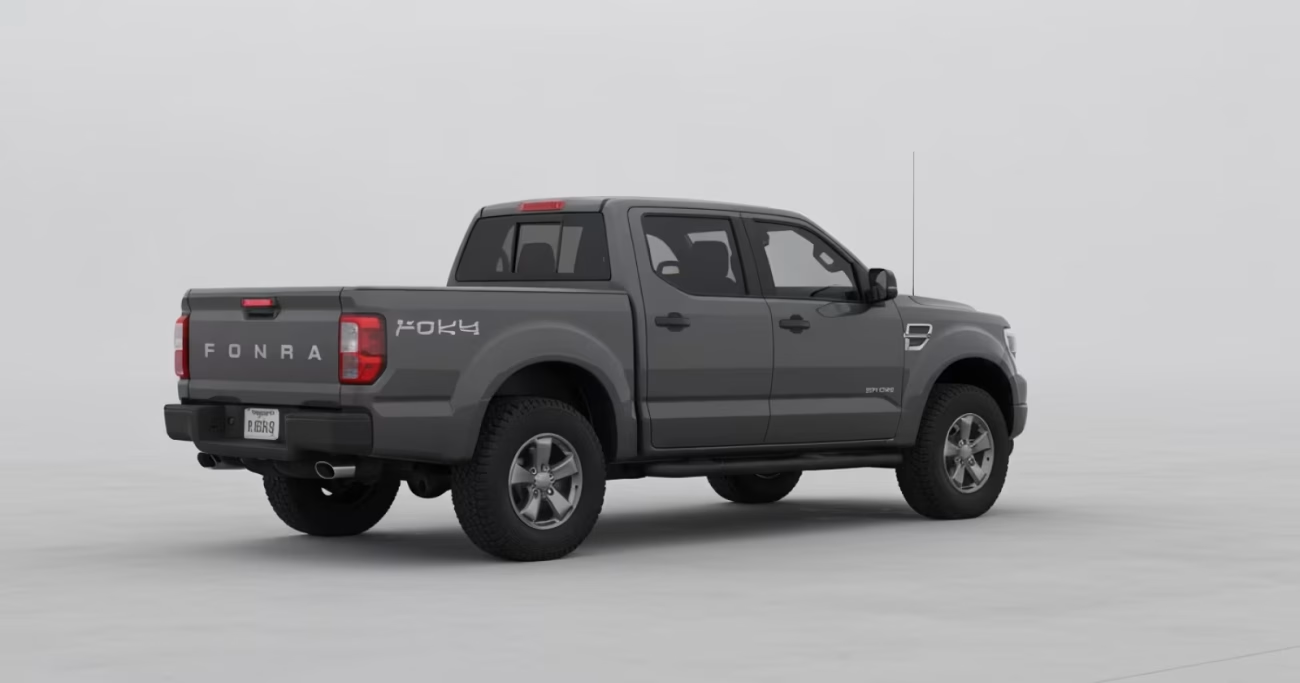
| Low-cost pickup target | Ford’s rumored $30,000 electric truck platform |
The best value now sits in plain sight
The good news is that some deals still exist, but they are getting harder to find. The Hyundai Elantra and Kia K4 can still be had for roughly $25,000 to $30,000, and both offer far more equipment than their prices suggest.
For shoppers who need more space, the Mitsubishi Outlander and Kia Sorento remain relatively accessible three-row choices. The Honda Civic hybrid also stands out because it blends strong fuel economy with a cabin that feels much larger than the badge suggests.
Why Ford’s next move matters most
Ford’s brand strategy is the clearest symbol of where the industry is headed. If a company can make about 90% of its global profit from F-Series sales, it has little incentive to chase bargain pricing unless the payoff is obvious.
That is why Ford’s reported push toward a universal electric platform and a possible $30,000 pickup matters so much. If it arrives, it could pull other automakers back toward affordability. If it does not, the market keeps drifting toward bigger payments, fewer first-time buyers, and more used-car traffic.
The verdict is simple: this is no longer just a pricing story, it is a structural warning for the entire auto industry. Shoppers who need a car in 2026 should shop with hard limits, compare financing as carefully as sticker price, and treat long loans as a cost, not a convenience. Affordability is now the real battleground, and the brands that ignore it will lose the next generation of buyers.
