
A small British firm just charged $570,000 for a restomod based on a car most people can barely remember, and the waiting list is already filling up. Before you call that insane, listen to the engine — because it might actually change your mind.
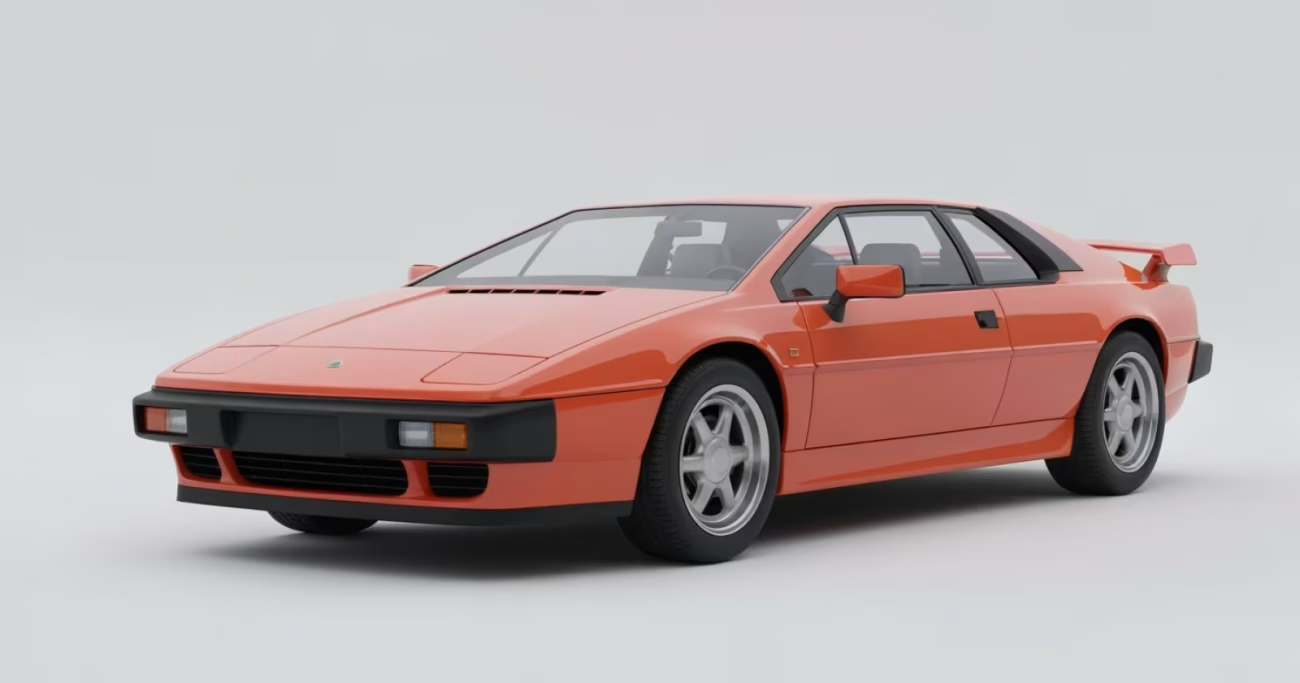
Encor Design has officially unveiled its Lotus Esprit Series 1, a limited run of just 50 cars built on the bones of the 1994 Lotus Esprit S4 but wearing bodywork that channels the razor-edged 1975 original. I’ve followed restomods for years, and this one genuinely stopped me in my tracks the moment that exhaust note clip hit social media.
The price that makes Ferrari look like a bargain — almost
At £430,000 (roughly $570,000 at current exchange rates), the Encor Series 1 costs more than two brand-new Ferrari Romas combined. A Roma starts at around $279,000 in the US, which means you could park two of Maranello’s grand tourers in your garage and still have change left over for a decent track day fund.
And here’s the part that doesn’t show up in the brochure: that $570,000 figure doesn’t even include the donor car. Buyers need to hand over a Series 4 Lotus Esprit V8 before production can begin. So the real cost of entry is considerably higher once you factor in sourcing a late-nineties British sports car in acceptable condition.
That’s a brutal ask. But Encor isn’t targeting bargain hunters — it’s targeting 50 people globally who want something no amount of Ferrari money can actually buy.
A twin-turbo V8 that refuses to sound forced
The engine is the real story here. Encor uses the same 3.5-liter twin-turbocharged V8 found in the flagship Series 4 Esprit, internally known as the Type 918. It has been extensively upgraded with new turbochargers, pistons, and injectors, pushing output to 400 hp at 6,200 rpm and 350 lb-ft of torque at 5,000 rpm.
What makes it remarkable is the sound. A short clip shared by Encor on social media reveals a deep, burbling exhaust note that genuinely mimics a naturally aspirated V8. That’s not easy to achieve with forced induction — most turbo engines lose character at low revs, trading soul for efficiency. This one doesn’t. At high revs, the payoff is reportedly even more intoxicating.
A new ECU manages the engine alongside electronic throttle-body control, which sharpens response without killing the organic feel. It’s a careful balance, and from everything I’ve heard so far, Encor appears to have nailed it.
| Spec | Detail |
|---|---|
| Engine | 3.5-liter twin-turbo V8 (Type 918) |
| Power output | 400 hp at 6,200 rpm |
| Torque | 350 lb-ft (474 Nm) at 5,000 rpm |
| 0–60 mph | 4.0 seconds |
| Top speed | 175 mph (281 km/h) |
| Kerb weight | 2,645 lbs (1,200 kg) |
| Power-to-weight ratio | 333 hp per tonne |
| Production run | 50 cars total |
| Starting price | £430,000 (~$570,000) |
| Transmission | Five-speed manual, rear-wheel drive |
Analog hardware in a world drowning in driver aids
Encor made a deliberate choice to keep this car honest. The five-speed manual gearbox retains parts of the original Lotus casing but has been substantially reworked internally for greater strength and durability. There’s no paddle-shift option, no dual-clutch alternative — just a proper third pedal and a gear lever that connects you directly to the drivetrain.
Hydraulically assisted steering preserves road feel in a way that most modern electric setups simply cannot replicate. AP Racing supplies the brakes. A reworked suspension setup, revised anti-roll bars, and a limited-slip differential round out the chassis package. Every component decision points toward driver involvement over lap times.
Carbon fiber bodywork across the entire car keeps that kerb weight at 1,200 kg, which is extraordinary for a machine with this level of refinement. The Giugiaro-designed silhouette of the original 1975 S1 has been preserved, making this one of the most visually faithful restomods I’ve seen from any boutique builder anywhere in the world.
Why 50 units isn’t a marketing trick — it’s the point
Exclusivity at this price point isn’t a limitation, it’s the product. Encor chose the Series 4 platform specifically because its chassis offers a more advanced foundation than the original S1’s structure, while still being close enough in lineage to justify the Series 1 name. It’s an honest engineering decision, not just a nostalgia play.
With only 50 cars ever being built, each one becomes a documented artifact. Ferrari builds tens of thousands of cars annually. Encor will build 50 of these — ever. That scarcity has a real market value that extends well beyond the sticker price, particularly for collectors who’ve watched restomods from Singer, Emory, and Kimera appreciate significantly after delivery.
The debut in December 2026 generated immediate attention, and given the exhaust clip’s reception online, Encor has clearly built something the enthusiast community is prepared to take seriously — price tag and all.
If you’re a collector who values analog driving experiences, proper manual transmissions, and genuine rarity over badge prestige, the Series 1 deserves a spot on your shortlist. Reach out to Encor directly and get your name on record — 50 units disappears faster than you’d expect when the word-of-mouth machine gets moving on something this good.
