
Something genuinely unexpected just rolled onto the stage at the New York Auto Show — and it wasn’t from Ford or Jeep. Hyundai has officially pulled the wraps off the Boulder concept, a proper boxy, body-on-frame off-road SUV that looks like it’s been waiting to exist for a very long time.
Hyundai Finally Goes Ladder-Frame
I’ll be honest — I never expected Hyundai to go down this road. The Korean giant has built its entire global reputation on monocoque platforms, smooth crossovers, and refined sedans. The last time the brand actually produced a proper ladder-frame vehicle was the Terracan, which was discontinued so long ago that most buyers have completely forgotten it existed.
Now, in 2026, Hyundai is taking a very different swing. The brand is developing a brand-new ladder-frame platform from scratch. The plan is ambitious — launch a pickup truck by 2030, followed by a full-fledged SUV built on the same architecture. The Boulder concept you’re seeing today is the design blueprint for both of those future vehicles, and it is a seriously strong preview.
A Design Language Called ‘Art of Steel’
The Boulder concept is built around what Hyundai is calling its ‘Art of Steel’ design language. Looking at the images, that name makes complete sense. This thing is boxy, upright, and unapologetically rugged — exactly what you want from a proper off-roader.
Up front, you get vertically-stacked split headlights paired with a distinctive 12-hole grille that integrates LED lighting directly into its structure. The SUV rides on enormous 37-inch tyres that push out well beyond the wide fenders, giving it serious visual muscle. Around back, rear suicide doors, a power drop-down rear window, and a dual-hinged side-opening tailgate make every angle interesting. Add a dedicated roof rack with versatile storage and safari-style roof windows, and the Boulder concept feels like something built for people who actually use their 4x4s.
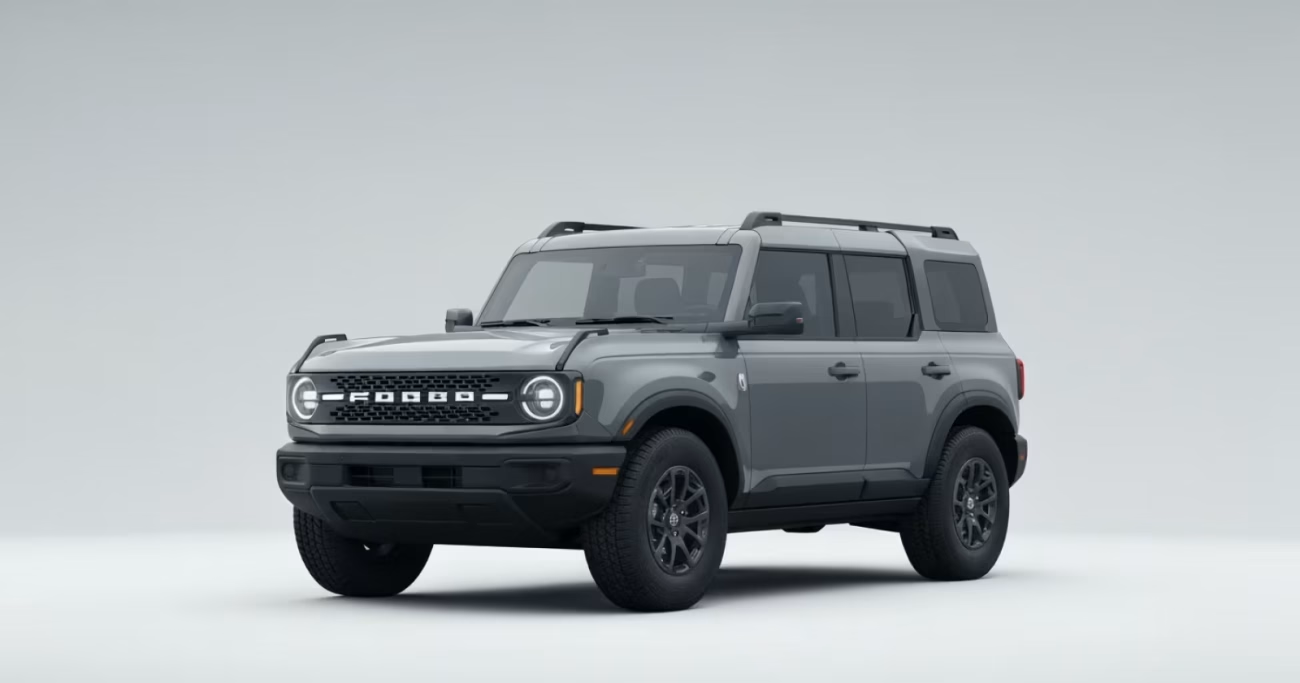
Yes, you can spot traces of the Ford Bronco in the headlight treatment, hints of Jeep Wrangler in the proportions, and a faint echo of the Land Rover Defender in the stance. But the Boulder holds its own identity throughout — it doesn’t feel derivative. It feels like Hyundai’s genuine interpretation of what a boxy off-roader should be in 2026.
Inside — Neo-Retro With a Purposeful Twist
The interior is where the Boulder concept genuinely surprises me. Instead of a single oversized touchscreen dominating the dashboard the way most modern vehicles do it, Hyundai went with four smaller, dedicated mini displays spread across the cabin. It’s a refreshing choice — more purposeful, more functional, more honest about what a working off-roader actually needs.
The cabin features a neo-retro steering wheel, ambient lighting, a multi-layered dashboard with generous storage cutouts, and a large, satisfying gear selector. The elevated centre console creates a clear cockpit-style separation between driver and passenger. Dual-tone leatherette seats and a full-width display mounted along the lower windscreen round out the interior. And here’s the best part — physical buttons and knobs are all over this thing. In 2026. Genuinely refreshing.
Key Specs and Features at a Glance
| Feature | Detail |
|---|---|
| Platform | New Hyundai Ladder-Frame Architecture |
| Tyre Size | 37-inch off-road tyres |
| Headlights | Vertically-stacked split LEDs |
| Grille | 12-hole design with integrated LEDs |
| Doors | Rear suicide doors + dual-hinged tailgate |
| Interior Displays | Four mini screens instead of one large screen |
| Roof | Safari-style windows + dedicated roof rack |
| Design Language | Art of Steel |
| Pickup Launch Target | 2030 |
| Key Rivals | Ford Bronco, Jeep Wrangler, Toyota 4Runner |
Built in America — A Very Smart Strategy
This is where the Boulder story gets strategically interesting. Hyundai has committed to developing the entire ladder-frame platform and both future vehicles — the pickup and the SUV — completely in the United States. Design, engineering, production: all American. Even the steel will be sourced locally within the US.
This isn’t just optics for patriotic buyers, though it will certainly appeal to them. It’s a calculated move to sidestep tariff-related cost risks that have made the US market complicated for overseas manufacturers. By building domestically, Hyundai removes that uncertainty entirely. The pickup will go after Toyota Tacoma, Ford Ranger, and Chevrolet Colorado. The Boulder SUV will take on Ford Bronco, Jeep Wrangler, and Toyota 4Runner. That is a formidable competitive grid, and Hyundai looks ready to take it seriously.
What Could This Mean for India?
Right now, the Boulder concept is a US-market story through and through. The platform is being designed and produced on American soil, and there are no India launch plans on the table. But as someone who follows this market closely, I see the broader signal clearly.
India has a genuine and growing appetite for real off-road SUVs — Mahindra Thar, Force Gurkha, and the upcoming Jeep Wrangler competitors have proven that. The body-on-frame segment here is no longer a niche. If Hyundai ever decides to bring a derivative of this platform to India, even as a long-horizon product, it would shake up a segment currently dominated entirely by Mahindra. That is not a small thing. Concepts like the Boulder almost always turn into production reality — it is just a matter of time and market appetite.
Keep your eyes on this one. When Hyundai starts dropping concept cars this polished, a production version is never far behind. Subscribe to our updates now so you don’t miss the moment this moves from concept stage to confirmed reality — because when it does, it will be one of the biggest off-road launches in recent memory.
