
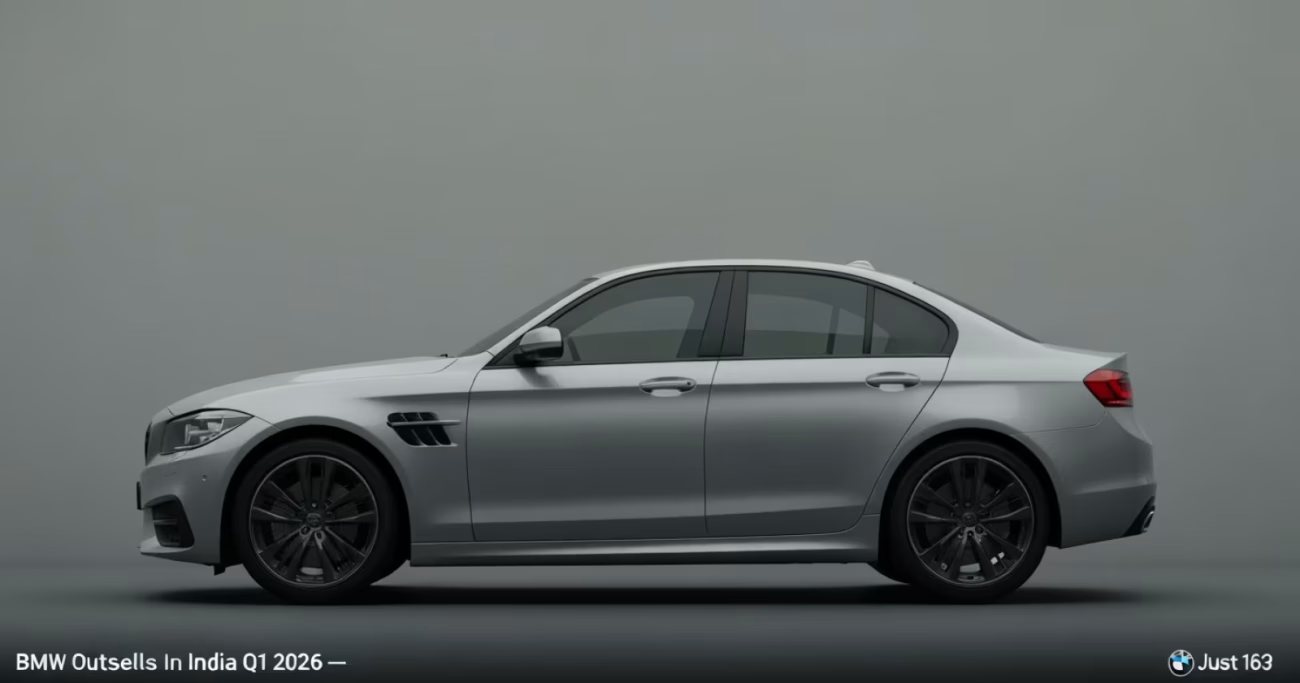
Eighty-three units. That is the paper-thin margin separating India’s top two luxury car brands in the first quarter of 2026 — and it tells an absolutely riveting story about where the premium segment is headed. For the first time in recent memory, VAHAN retail registration data has BMW India sitting above Mercedes-Benz India in a full quarterly count, and honestly, I did not see this happening so soon.
Before we dive deep, let me be clear about the numbers we are working with. These figures come from VAHAN, India’s official vehicle registration database, which tracks actual customer deliveries rather than the wholesale dispatch numbers that manufacturers typically announce. The two datasets can — and often do — tell very different stories. So keep that distinction in mind as you read on.
BMW Takes The Q1 2026 Retail Crown
According to VAHAN data for January through March 2026, BMW India registered 4,944 units, narrowly ahead of Mercedes-Benz India’s 4,861 units. It is a lead of just 83 cars across a full quarter — but a lead nonetheless. For a brand that has spent years chasing Mercedes-Benz in the Indian market, this is not a small moment. This is a landmark.
Breaking it down month by month, BMW posted 2,040 units in January, dipped to 1,284 units in February — which is traditionally a softer month across segments — and then bounced back with 1,620 units in March. Mercedes-Benz followed a somewhat flatter pattern, recording 1,923 units, 1,475 units and 1,463 units across the same three months. BMW’s January spike and March recovery appear to be the decisive factors in its quarterly lead.
Where JLR, Volvo And Porsche Stand
The rest of India’s luxury car leaderboard in Q1 2026 is fairly predictable, though Jaguar Land Rover India deserves a special mention for holding third spot with 1,470 units. JLR has been on a consistent upward trajectory, driven largely by the Defender and Range Rover Sport, and these numbers reflect that momentum well.
Volvo Car India took fourth with 438 units, maintaining its quiet but steady presence in the upper-premium space. Porsche India rounded out the top five at 147 units — niche, as expected, but showing that India’s appetite for hyper-premium product is real and growing.
| Brand | Jan 2026 | Feb 2026 | Mar 2026 | Q1 2026 Total |
|---|---|---|---|---|
| BMW India | 2,040 | 1,284 | 1,620 | 4,944 |
| Mercedes-Benz India | 1,923 | 1,475 | 1,463 | 4,861 |
| Jaguar Land Rover India | — | — | — | 1,470 |
| Volvo Car India | — | — | — | 438 |
| Porsche India | — | — | — | 147 |
How BMW Closed A 4,500-Unit Gap In Five Years
What makes this Q1 2026 result even more remarkable is the journey behind it. Five years ago, in 2021, Mercedes-Benz outsold BMW in India by over 3,000 units on an annual basis. That gap actually widened to 4,554 units in 2022, which looked quite discouraging for BMW at the time. I remember writing about Mercedes-Benz’s seemingly unassailable hold on the Indian luxury market back then.
But something shifted. BMW kept pushing — aggressively expanding its SUV lineup, leaning hard into electrification with models like the iX and i4, and ensuring a steady stream of new product introductions that kept showroom traffic high. By 2026, the annual gap had collapsed to just 1,736 units. And now, in Q1 2026, BMW has crossed the line first. This is not luck. This is a five-year product and retail strategy playing out exactly as intended.
Global Trend Now Mirroring India
Here is the global context that makes this even more interesting. BMW already overtook Mercedes-Benz worldwide to become the best-selling luxury car brand globally. India was the one major market where that trend had not yet materialised — until now, at least on a quarterly retail basis. Whether this Q1 result signals a permanent shift or a temporary blip will depend on what both brands do across the remaining quarters of 2026.
Mercedes-Benz is far from done. The three-pointed star continues to hold significant advantages in wholesale infrastructure, dealer network depth and brand recall among first-time luxury car buyers in India. In many cities outside the top metros, a Mercedes-Benz is still the default aspirational choice. BMW needs to sustain this retail momentum consistently, not just in one quarter, to write a new chapter in India’s luxury car story.
Retail vs Wholesale — Why Both Numbers Matter
I want to address this distinction one more time because it genuinely matters to how you interpret this data. VAHAN retail figures tell you how many cars are actually being handed over to customers. Wholesale dispatch figures tell you how many cars are being pushed from manufacturers to dealerships. In a fast-growing market like India, the two can diverge significantly — especially when inventory build-up or festive season stocking is involved.
So while BMW India leads in Q1 2026 retail numbers, Mercedes-Benz could very well show a different picture in its own reported wholesale dispatches. Neither number is wrong — they are simply measuring different things. What I find genuinely exciting about the VAHAN data is that it is closest to the ground truth of actual consumer demand at the retail level. And right now, that data says BMW is India’s most-delivered luxury car brand for the quarter.
If you are in the market for a luxury car in 2026, now is genuinely one of the best times to walk into both a BMW and a Mercedes-Benz showroom, compare what each brand is offering at your price point, and let them compete for your business. The rivalry is at its sharpest, deals are being negotiated hard, and newer models from both brands are arriving with impressive feature lists. Do not sit on the fence — book a test drive this weekend and feel the difference yourself.
