
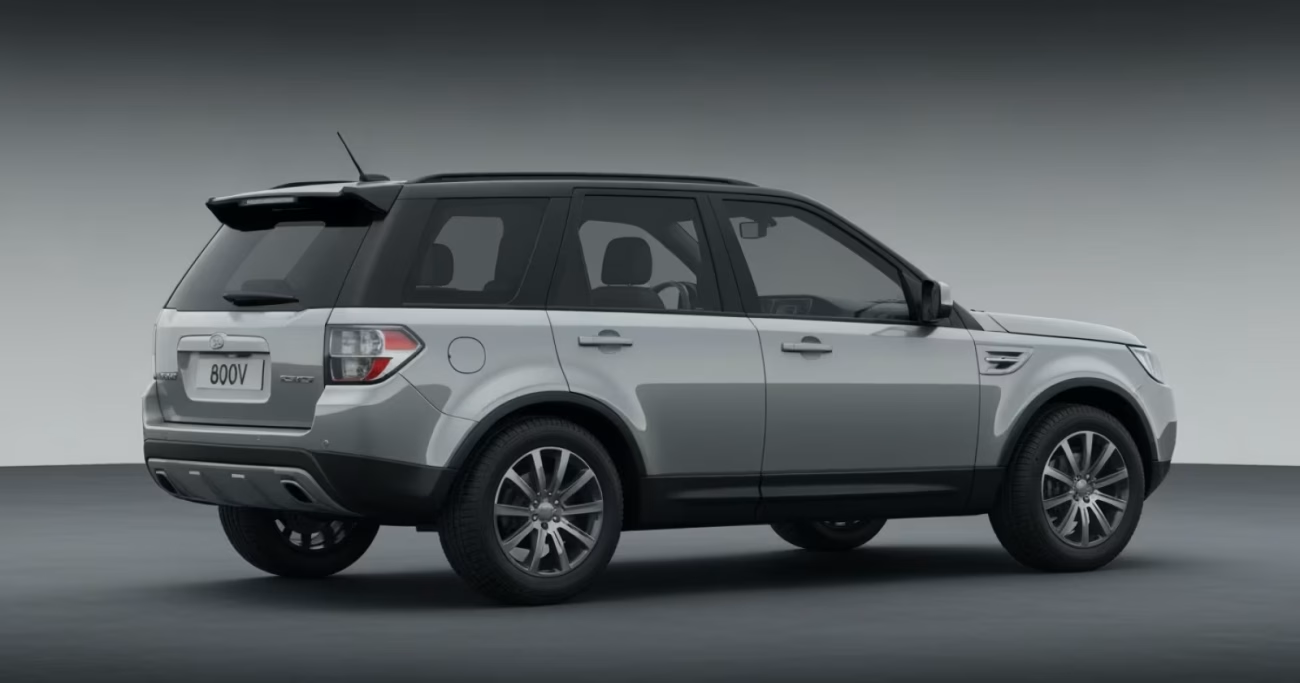
A name that millions of SUV buyers grew up loving has just made one of the most unexpected comebacks in recent automotive history. Freelander is no longer a Land Rover — it is now its own standalone brand, and it has arrived with serious electric firepower that the premium SUV world needs to pay attention to.
I have been following this story closely, and what Chery and JLR have pulled off here feels genuinely significant. This is not a badge-engineered rebirth. This is a full brand relaunch with a clear identity, a flexible EV platform and an aggressive product rollout plan that could shake up the premium electrified SUV space globally — including, eventually, India.
The Freelander Name Has a New Owner Now
Here is the backstory that makes this so interesting. Freelander originally debuted in 1997 as Land Rover’s entry-level SUV. It sold well across markets before Land Rover eventually phased it out. The name then sat dormant for years. Now, under the Chery-JLR joint venture, it has been revived — not as a Land Rover product, but as an entirely independent premium brand focused exclusively on new energy vehicles.
The new Freelander lineup is described as blending British design heritage with Chinese EV technology. That combination sounds bold on paper, but the first reveal suggests both partners are playing to their genuine strengths. JLR brings the design language and off-road credibility. Chery brings cutting-edge EV engineering and manufacturing scale. Together, they have produced something that looks very different from anything either company has done alone.
Concept 97 Is the Blueprint — and It Looks Properly Rugged
The first production model has been previewed by a concept called the Concept 97 — a direct nod to the original Freelander’s 1997 launch year. I appreciate that kind of intentional storytelling from a brand. The concept is a boxy, high-riding off-roader with a stance that clearly draws inspiration from the Defender, featuring diagonal pillar architecture, pixel-style LED lighting clusters and prominent skid plates that signal genuine off-road intent.
The production version is expected to stay remarkably close to this concept. The most notable change will be conventional doors replacing the concept’s reverse-opening units — a practical concession for real-world use. Everything else, from the rugged proportions to the aggressive lighting signature, is expected to carry over largely intact.
Three Powertrains, One 800V Platform
What sets the new Freelander apart technically is its flexible 800V electrical architecture. This platform supports three distinct powertrain configurations — a fully electric BEV version, a plug-in hybrid PHEV and a range-extender EREV setup. That kind of flexibility is genuinely rare at this price point and gives Freelander a strong argument for multiple global markets simultaneously.
The 800V architecture means faster charging speeds and more efficient power delivery compared to older 400V platforms. For buyers who are range-anxious, the EREV option — which uses a petrol engine purely as a generator — effectively removes that concern entirely while still offering an electric-first driving experience.
| Specification | Details |
|---|---|
| Platform | 800V Electrical Architecture |
| Powertrain Options | BEV (Full Electric), PHEV, EREV |
| Seating | 3-Row, 6-Seat (2+2+2 Layout) |
| Display | Pillar-to-Pillar Setup + Large Central Touchscreen |
| Chipset | Qualcomm Snapdragon |
| ADAS System | Huawei Qiankun with LiDAR |
| Manufacturing | CJLR Plant, Changshu, China |
| Concept Name | Concept 97 (referencing 1997 launch year) |
| Planned Models | Up to 6 models over 5 years |
| First Export Market | Europe |
A Cabin That Goes All-In on Technology
Inside, Freelander has clearly positioned this SUV for buyers who want the full tech experience. The dashboard features a pillar-to-pillar display setup that runs the full width of the cabin — a layout that has become the benchmark for premium EVs globally. A large central touchscreen handles most controls, supported by a high-mounted centre console that frees up floor space.
The Qualcomm Snapdragon chipset powers the infotainment and connectivity suite, while Huawei’s Qiankun ADAS system — which includes LiDAR — handles advanced driver assistance. Rear passengers get their own entertainment screens, and premium upholstery rounds out the cabin. The 2+2+2 three-row layout means this is clearly targeting family buyers who want a premium EV that also works for school runs and long drives.
Made in China, But Built for the World
Production happens at the CJLR facility in Changshu, China — the same plant that currently builds the Discovery Sport and Range Rover Evoque for the Chinese market. Freelander will eventually replace those models at the facility. More importantly, the brand has confirmed that global export models will be specifically engineered for each market, not simply adapted from Chinese-spec vehicles. Europe is confirmed as an early export target.
For India, no formal timeline exists yet. But given the rapid growth of the premium EV SUV segment here — with rivals like the Tata Harrier EV and Mahindra BE 6 already competing fiercely — a brand carrying JLR’s DNA and an 800V platform would have a very genuine market opportunity. The three-powertrain flexibility also means Freelander could choose to enter India with a PHEV or EREV first, reducing range anxiety concerns on Indian highways where charging infrastructure is still developing.
Six Models in Five Years — This Brand Is Serious
Freelander has an aggressive product plan in place — up to six models launched over five years, with a new model arriving approximately every six months. That cadence matches the pace of Chinese EV brands that have disrupted global markets rapidly. The first production model will be a mid-size SUV closely based on the Concept 97, targeting that sweet spot between genuine off-road capability and daily urban usability.
I think what excites me most about this brand is its clarity of purpose. Freelander is not trying to be Land Rover. It is not competing with Range Rover. It has its own identity — rugged, electric, tech-forward — and that focus gives it a stronger foundation than many revival attempts we have seen in recent years.
If you are someone who has been waiting for a premium electric SUV that looks genuinely tough, seats six and comes with multiple powertrain options, Freelander deserves a spot on your radar right now. Follow the brand closely, because this is one story that is going to move fast — and the India chapter could arrive sooner than you expect.
