
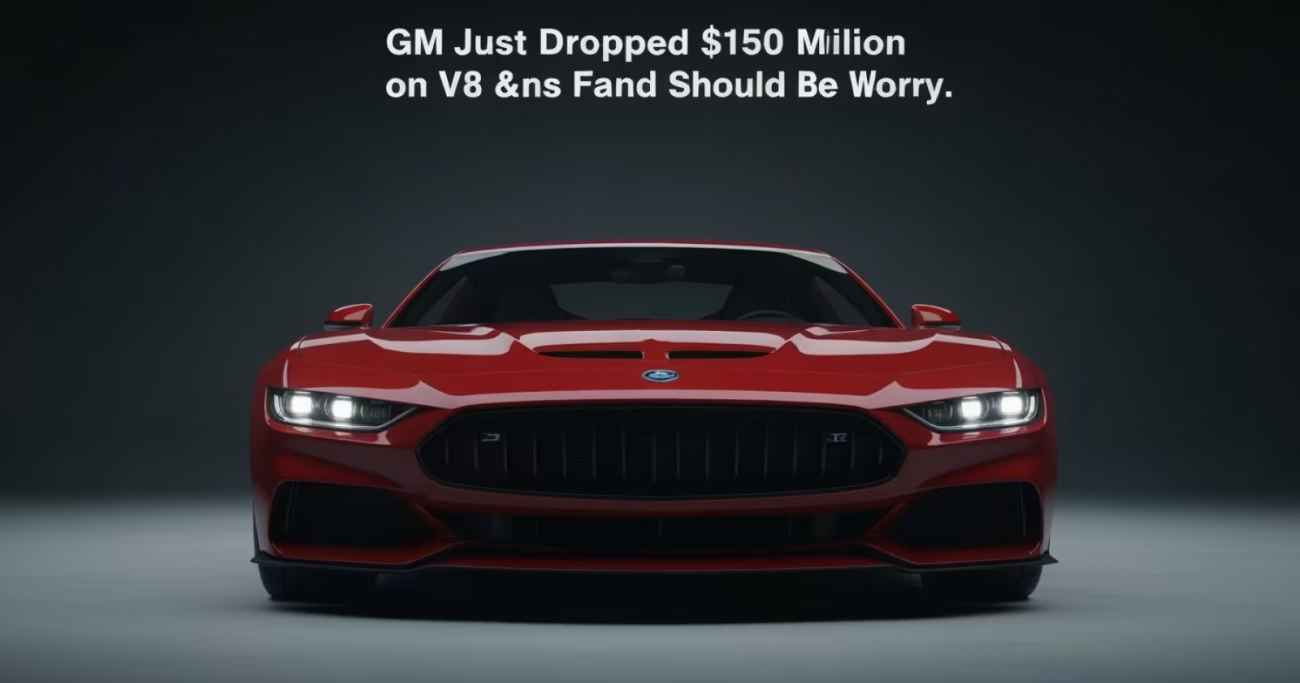
Not long ago, General Motors was telling the world it was done with gasoline engines. Now it’s dropping $150 million to build more of them — and the numbers behind this move are genuinely staggering.
GM’s Saginaw, Michigan facility is being retooled to cast all-new engine blocks and cylinder heads for the next-generation small-block V8, and those engines are headed straight into the 2027 Chevrolet Silverado 1500 and 2027 GMC Sierra 1500. This isn’t a hedge. This is a full commitment.
A $650 million bet that V8s are far from dead
The $150 million Saginaw investment doesn’t exist in isolation. GM has already spent $500 million upgrading its engine plant in nearby Flint, Michigan — the same facility now producing the new LS6 V8 for the Corvette Grand Sport. Add it up and you’re looking at $650 million poured into small-block V8 infrastructure in a single region.
That’s a remarkable number for an automaker that was once publicly committed to an all-electric future. The real story here is what changed: the market didn’t follow the mandate. Consumers kept buying trucks with V8s, and GM is smart enough to follow the money rather than a press release.
The 6.7-liter LS6 could embarrass Ram and match Ford without a turbo
The new sixth-generation small-block debuted in the 2027 Corvette Grand Sport as the LS6 — 6.7 liters, 535 horsepower, 520 pound-feet of torque. That’s the high-performance version. The truck-spec engine will be tuned differently, but the architecture is the same.
Based on how GM historically detuned its Corvette engines for truck duty, a reasonable projection puts the truck-spec 6.7-liter around 450 horsepower and over 500 pound-feet of torque. That would beat Ram’s standard-output Hurricane inline-six at 420 horsepower and match Ford’s top EcoBoost F-150 at 450 horsepower — except GM does it without turbo lag, without an intercooler, and with the kind of low-end grunt that pushrod V8s have always delivered on demand.
| Model | Engine | Horsepower | Torque | Forced Induction |
|---|---|---|---|---|
| 2027 Silverado 1500 (projected) | 6.7L V8 (Gen VI) | ~450 hp | 500+ lb-ft | No |
| 2027 Corvette Grand Sport | 6.7L LS6 V8 | 535 hp | 520 lb-ft | No |
| Ram 1500 RHO | 3.0L Hurricane I6 (HO) | 550 hp | 583 lb-ft | Twin-turbo |
| Ford F-150 | 3.5L EcoBoost V6 | 450 hp | 510 lb-ft | Twin-turbo |
| Current Silverado 6.2L V8 | 6.2L V8 (Gen V) | 420 hp | 460 lb-ft | No |
What GM isn’t saying about the current 6.2-liter’s problems
Here’s the catch that makes this investment even more urgent for GM: the current 6.2-liter V8 in Silverado and Sierra trucks has documented reliability concerns. Owners have reported issues that have quietly damaged the reputation of GM’s premium truck engine option.
GM isn’t loudly advertising that the new 6.7-liter is partly a corrective measure — but the timing speaks for itself. Swapping in a completely new engine architecture while simultaneously refreshing the truck lineup lets GM reset the narrative without ever having to say “we fixed a problem.” That’s a savvy move, but buyers deserved a cleaner solution sooner.
Why the Saginaw plant’s future says everything about the truck wars
Saginaw is GM’s third-oldest active facility in the United States, running more than 300 employees across three shifts. Plant Director John Lancaster stated plainly that “the plant is well-positioned for the future” — and this investment backs that claim with real capital, not just talking points.
The castings produced in Saginaw ship to Flint for final engine assembly, and some completed V8s then travel 37 miles to GM’s Lake Orion plant, which has been significantly underutilized for years and is now being prepared for 2027 Silverado and Sierra production. That’s an entire regional supply chain being reactivated around a single engine family — one that GM was supposedly moving away from just a few years ago.
Six generations in, the small-block refuses to quit
The GM small-block V8 first appeared in 1955. It hit 100 million units produced 15 years ago. The fifth-generation version is still running in current Corvettes, Silverados, Sierras, and multiple SUVs as you read this. And now a sixth generation is being born — for trucks that will carry the brand well into the next decade.
That’s a lineage few engines in automotive history can match. The new 6.7-liter architecture didn’t appear overnight — it’s the result of generations of refinement, combined with modern materials and manufacturing precision that the 1955 original could never have imagined. GM is betting that displacement, simplicity, and heritage still beat turbochargers and complexity when it comes to American full-size truck buyers. Given the sales numbers those trucks consistently produce, that bet looks very safe.
If you’re in the market for a 2027 Silverado or Sierra, this is the news you’ve been waiting for. The engine under the hood is being completely rethought, built in Michigan, and engineered to outrun the competition on pure mechanical terms. Keep a close eye on GM’s truck reveal later this year — because when those horsepower numbers drop officially, the conversation in the truck segment is going to shift fast.
