
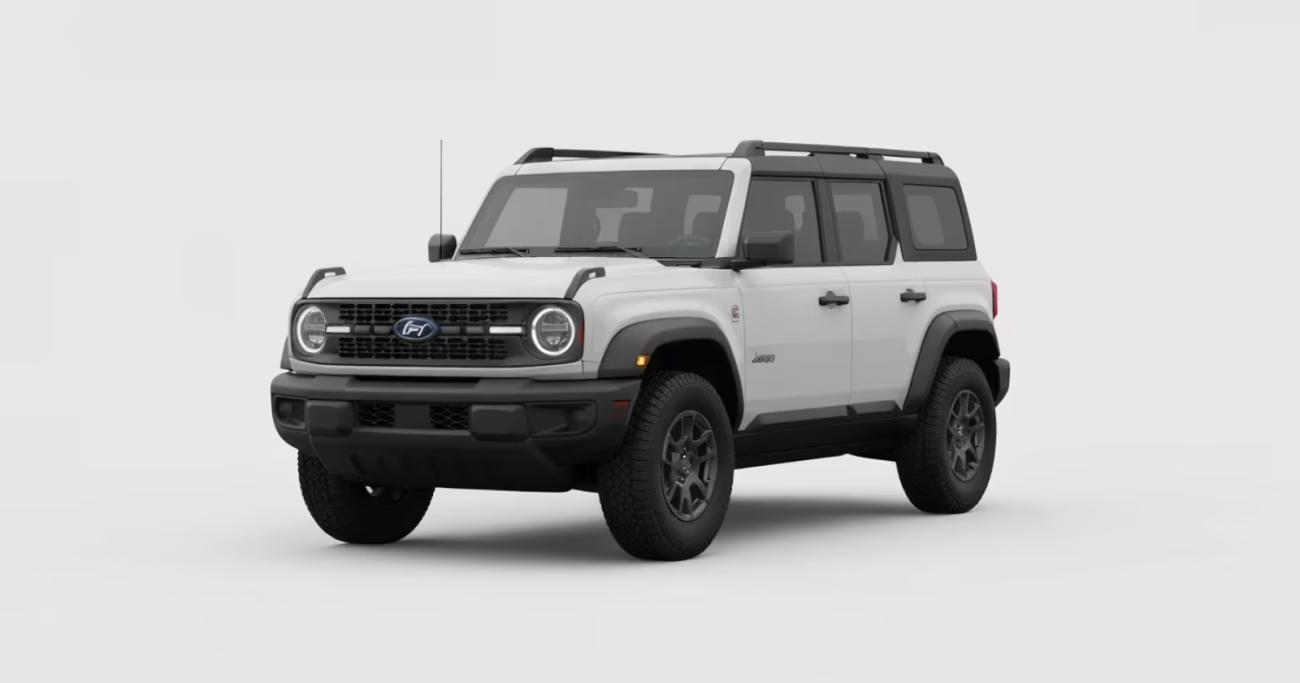
Hyundai just pulled off something most of us never expected — a brutally boxy, ladder-frame SUV concept that stands toe-to-toe with American off-road legends. If you thought Hyundai only made sleek city cars, the Boulder Concept is here to completely change your mind.
Unveiled at the New York Auto Show, the Boulder Concept is not just a design exercise. It is a direct signal that Hyundai is serious about taking on the Ford Bronco, Jeep Wrangler, and Toyota 4Runner in one of the toughest segments in the automotive world. Let me break down everything that makes this thing so exciting.
Why This Is A Massive Moment For Hyundai
Hyundai has almost always stuck to monocoque platforms — the kind of construction you find in everyday sedans and soft-roaders. Their last proper ladder-frame vehicle was the Terracan, and that was discontinued long ago. Now, Hyundai is building an entirely new ladder-frame platform from scratch, and the Boulder Concept is the world’s first look at what that platform will produce.
This is not a small decision. Ladder-frame construction is what gives vehicles like the Wrangler and Bronco their legendary off-road capability and rugged identity. By going this route, Hyundai is signalling that it wants a genuine piece of that hardcore off-road market — not just a crossover SUV dressed up to look tough.
Design That Turns Heads Without Copying Anyone
Yes, you will notice echoes of the Ford Bronco in the Boulder’s boxy silhouette. There are also hints of the Jeep Wrangler and even the Land Rover Defender when you look at its proportions. But Hyundai has done something clever here — they have taken familiar visual cues and twisted them into something that feels uniquely theirs.
Hyundai calls it the “Art of Steel” design language, and it suits the Boulder perfectly. The front fascia features vertically-stacked split headlights that look aggressive and modern at the same time. The 12-hole grille integrates LED lighting directly into its pattern, giving it a signature face that you would recognise from a distance. The Boulder rides on massive 37-inch tires that push out beyond the wide fenders, giving it that aggressive, planted stance that every serious off-roader dreams about.
Other design highlights include rear suicide doors, a power drop-down rear window, and a dual-hinged side-opening tailgate. There is a dedicated roof rack with versatile storage, and safari-style roof windows that bring in sweeping views of the sky above. For anyone who loves overlanding and adventure drives, these features are genuinely exciting.
Interior That Blends Retro Cool With Modern Tech
Here is where Hyundai surprises you. Instead of following every other modern SUV by slapping in one massive touchscreen, the Boulder Concept uses four smaller mini displays. It feels more purposeful, more driver-focused, and honestly more interesting than the giant slabs of glass we have all gotten used to.
The neo-retro steering wheel is a standout piece. The multi-layered dashboard comes loaded with physical buttons and knobs — something that feels refreshingly practical in an era of over-digitalisation. The elevated centre console draws a clear boundary between the driver and passenger zones, which adds to the cockpit-like feel inside.
Dual-tone leatherette seats, ambient lighting, generous storage spaces, and a large gear selector round out an interior that feels built for adventure, not just commuting. There is even a full-width display along the lower windscreen. This interior has genuine personality, and I am here for it.
Key Specs And Rivals At A Glance
| Feature | Hyundai Boulder Concept | Ford Bronco | Jeep Wrangler |
|---|---|---|---|
| Platform | New Hyundai Ladder-Frame | Ladder-Frame (Ford) | Ladder-Frame (Stellantis) |
| Tire Size | 37-inch (concept) | Up to 35-inch | Up to 37-inch |
| Rear Doors | Suicide Doors | Conventional / Removable | Conventional / Removable |
| Tailgate | Dual-Hinged Side-Opening | Split / Swing | Full-Width Swing |
| Display Setup | 4 Mini Displays | Single Large Screen | Single Screen |
| Steel Origin | US-Sourced | US-Sourced | US-Sourced |
| Expected Production | Post-2030 | Available Now | Available Now |
Built In America, For America — But With Global Eyes Watching
Hyundai has confirmed that the entire ladder-frame platform, along with all vehicles based on it, will be developed, engineered, and manufactured in the United States. Even the steel used in construction will be locally sourced from American suppliers. This is a deliberate move to appeal to patriotic American buyers while also giving Hyundai a strong shield against the tariff pressures that have been affecting the global auto industry.
The production roadmap is ambitious. Hyundai’s new ladder-frame pickup truck — which will share design DNA with the Boulder Concept — is planned for launch in 2030. The SUV version will follow after that. The pickup will compete against the Toyota Tacoma, Ford Ranger, and Chevrolet Colorado, while the Boulder SUV will go after the Bronco, Wrangler, and Toyota 4Runner.
What This Means For Indian Auto Enthusiasts
Now, if you are reading this from India and wondering whether the Boulder will ever reach our shores — that is a fair question. Right now, Hyundai has positioned this specifically for the American market. But global concepts like these often shape the direction of brands worldwide. We have seen Hyundai India become far bolder in its designs over the years, and a rugged ladder-frame SUV from Hyundai in India would be a serious Mahindra Thar and Force Gurkha challenger someday. It is worth watching closely.
Even if the Boulder never lands in India, it tells us something powerful: Hyundai is willing to take risks, break from its comfort zone, and go after categories it has never touched before. That kind of ambition is worth celebrating.
If you love bold, rugged SUVs and want to stay ahead of every big reveal before it hits Indian showrooms, bookmark this page right now and drop your thoughts in the comments below — would you buy a Hyundai Boulder if it came to India?
