
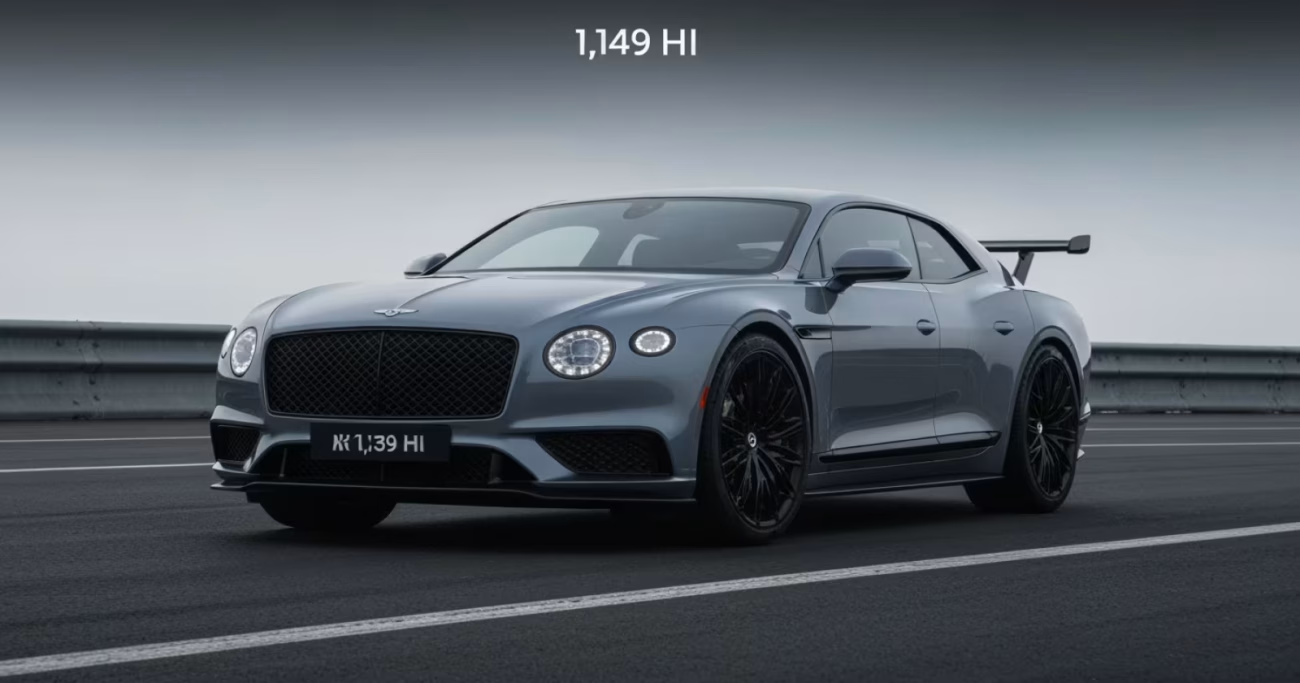
The next Bentley SUV has moved from disguised mule to near-production hardware. It is also showing up at the Nürburgring with enough speed to make the camouflage look almost unnecessary.
That matters because this is Bentley’s first EV, and the brand is treating it like a statement model. The real story is not just size or style, but how much Porsche DNA sits under the skin.
Why this electric Bentley changes the brand equation
I see this SUV as Bentley’s most important launch in years. The brand has spent years protecting its luxury image, but an all-electric entry changes the way that image has to be delivered.
Here’s the catch: Bentley is calling it an urban SUV, not a trail-ready brute. That means the mission is city access, status, and speed, with less emphasis on off-road theater than the bigger Bentayga.
The sub-200-inch length is the detail that tells the whole story. It puts the SUV in a class where it should be easier to live with in Europe, while still feeling substantial enough to wear a Bentley badge with confidence.
What Bentley isn’t saying out loud is that this size target is also strategic. It keeps the model just under the footprint that starts to feel awkward in dense city centers, which is exactly where many luxury buyers now spend most of their time.
Porsche is the rival hiding in plain sight
The real competitor here is Porsche, even if Bentley never says it directly. The new SUV is expected to ride on the same PPE platform as the electric Cayenne and Macan, which makes this a sibling showdown as much as a market launch.
That is where things get interesting. Porsche has already shown how far this architecture can go, and Bentley appears ready to borrow the strongest parts of that formula without losing its own identity.
There’s another layer here that makes the comparison unavoidable. Porsche’s electric development has shifted in places, with gas models returning to the plan for some nameplates, while Bentley is still pushing ahead with this EV without clear signs of a combustion backup.
That commitment makes the SUV feel more consequential. It is not just a luxury crossover with a battery pack; it is a signal that Bentley still believes an electric future can carry the full weight of the brand.
The Nürburgring testing tells a louder story
The latest spy shots show a vehicle that is already well beyond the awkward prototype phase. The headlamps look production ready, the body surfacing is cleaner, and even the cabin details are starting to peek through the disguise.
Here’s the catch: the pattern-camouflage may still be loud, but the shape underneath is now familiar enough to read clearly. The SUV looks like it belongs in the Bentley family, which is exactly what a first EV from the brand needs to do.
Inside, the details suggest Bentley is still leaning into its traditional luxury cues. Solid-looking switchgear, a thick steering wheel, and touches of brightwork all point to a cabin that is meant to feel expensive even before the screen count is considered.
That old-world feel is important, because many electric luxury SUVs chase minimalism so aggressively that they lose personality. Bentley seems to be aiming for the opposite: modern power wrapped in unmistakable craftsmanship.
Fast charging could be the surprise weapon
The strongest hardware clue may be the charging setup. The prototype appears to have two charge doors, one on each rear fender, which matches a Porsche-style solution for convenient AC and DC use.
That matters because the expected numbers are serious. The related Cayenne EV is said to offer up to 1,139 hp, roughly 370 miles of WLTP range, and 10% to 80% charging in under 16 minutes, and this Bentley is expected to land in the same neighborhood.
If those figures hold, the SUV will not just be quick for a Bentley. It could become one of the most capable luxury EV crossovers on sale, with performance and charging speed doing as much work as the badge itself.
What Bentley isn’t saying yet is how much of that performance will be available across the lineup. But if the company is willing to go this far on a smaller SUV, the brand’s electric future suddenly looks far more aggressive than cautious.
| Model | Power | Range | Charging | Edge |
|---|---|---|---|---|
| Bentley Barnato EV | Expected near 1,139 hp | Expected around 370 miles WLTP | Expected 10% to 80% in under 16 minutes | Luxury badge with top-tier speed |
| Porsche Cayenne EV | Up to 1,139 hp | Around 370 miles WLTP | Under 16 minutes | Benchmark sibling platform |
| Porsche Macan EV | Lower than Cayenne | About 360 miles WLTP | Fast DC capability | Smaller, established rival |
| BMW iX | Up to 610 hp | About 380 miles WLTP | Roughly 35 minutes | Strong range, less power |
That table shows why this Bentley matters beyond one launch cycle. The brand is moving into a market where buyers expect both opulence and impossible-looking numbers, and this SUV appears built to answer that demand directly.
The sharper takeaway is that Bentley is not treating EVs like compliance machines. It is aiming for a car that can be parked in Mayfair, driven hard at speed, and still recharge fast enough to feel normal instead of annoying.
For enthusiasts, this is the kind of prototype worth watching closely. For industry watchers, it is a reminder that the luxury EV race is no longer about who arrives first, but who arrives with the most convincing package.
My verdict is simple: Bentley’s smaller electric SUV looks like the brand’s most important new model in years. If the production version keeps this pace, this platform could become Bentley’s blueprint for the next decade. Anyone tracking luxury EVs should pay attention now, because this one looks ready to change expectations.
If you follow premium EVs, keep this model on your radar and watch how Bentley finalizes the power, range, and cabin details over the next reveal cycle. This is the kind of launch that can reset the conversation fast.
