
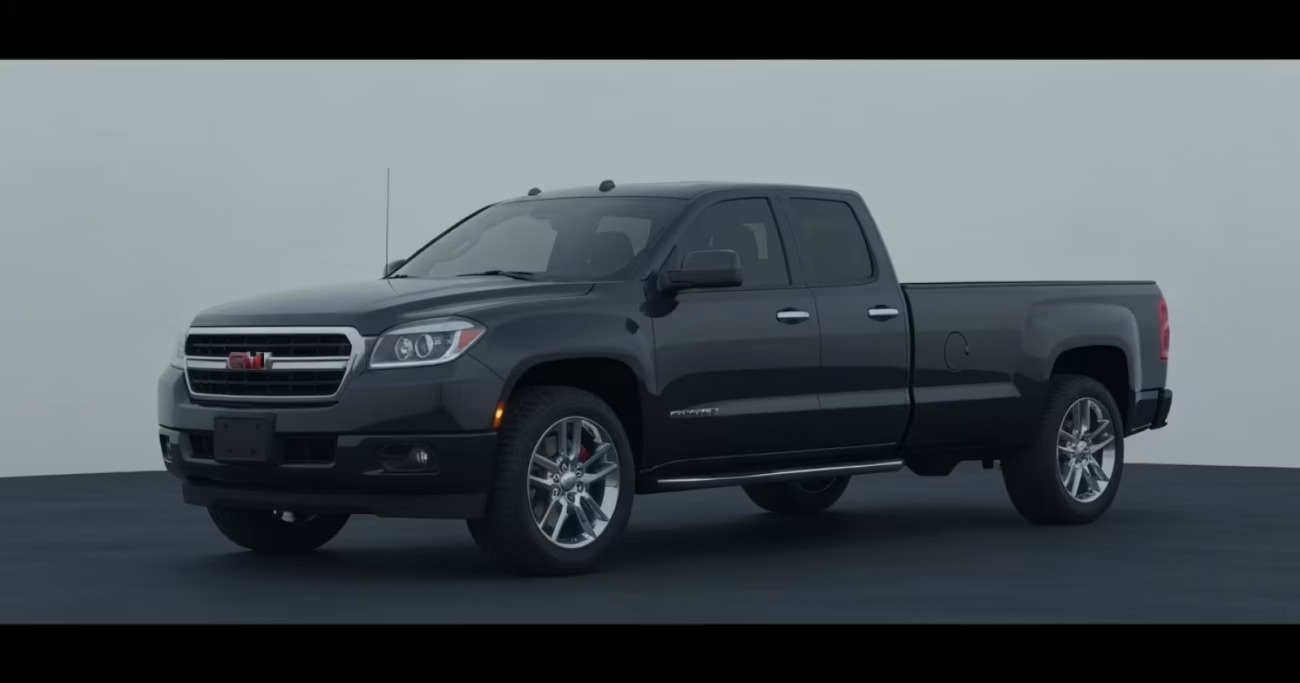
GM just dropped a brand-new 6.7-liter V8 into the Corvette — and then quietly drew a line in the sand between its sports car and its trucks. If a new report is right, the next-generation Silverado and Sierra will top out at 6.6 liters, not the 6.7 that’s already turning heads under Corvette hoods.
That 0.1-liter gap sounds tiny. But the story behind it reveals a lot about how GM is managing its engine lineup, its marketing strategy, and what truck buyers will actually get when the next generation arrives.
The Corvette got 6.7 liters — trucks reportedly won’t
When Chevrolet launched the new LS6 engine alongside the C8 Corvette Grand Sport, it marked the first entry in GM’s sixth-generation small-block V8 family. The 6.7-liter, 409-cubic-inch unit was a genuine surprise — because the plan all along was a 6.6-liter engine.
Mike Kociba, assistant chief engineer for the Small Block, confirmed this directly. He said the Gen 6 architecture was originally designed as a 6.6, but engineers discovered that adding just 2 millimeters to the stroke unlocked more performance without any drawbacks. Virtual testing via computer-assisted design tools made it possible to validate that change before cutting a single piece of metal. The Corvette got the upgrade. The trucks, according to reports, did not.
Why 6.6 liters still makes perfect sense for truck buyers
A GM press release stated that the LS6 “raises the bar for performance thanks to engine architecture upgrades that will soon benefit other V8-powered Chevrolets.” GM Authority read between the lines and concluded that while trucks will share the Gen 6 architecture, they’ll use different internals — a different crankshaft, different pistons — landing at 6.6 liters instead of 6.7.
That 6.6-liter figure works out to almost exactly 400 cubic inches — a number with its own historical weight. The original 1970 GM 400 cubic-inch engine appeared in countless trucks of that era. The new one checks in at 400.6 cubic inches, which isn’t an accident. Meanwhile, dealer leaks have also pointed to a second engine in the lineup: a 5.7-liter unit that would replace the outgoing 5.3-liter, giving GM a clean two-engine V8 story for its full-size truck range.
| Spec | Corvette LS6 | Truck Gen 6 V8 (reported) |
|---|---|---|
| Displacement | 6.7L (409 ci) | 6.6L (400 ci) |
| Generation | Gen 6 Small-Block | Gen 6 Small-Block |
| Replaces | 6.2L LT6 | 6.2L (light-duty) |
| Block material | Aluminum | Expected aluminum |
| Expected application | 2027 Corvette | 2027 Silverado / Sierra |
| Companion engine | N/A | 5.7L (replaces 5.3L) |
The real reason bigger engines are making a comeback
I know what you’re thinking — why is GM going bigger in an era obsessed with turbocharged four-cylinders and electrification? The answer turns out to be rooted in real-world emissions testing, not nostalgia. Turbocharged engines sip fuel at idle, but the moment you ask for full power, they need every drop of fuel that output demands. There’s no free lunch. And turbocharged engines often require premium fuel to hit their rated power figures.
Larger naturally aspirated engines with modern engine management systems can run on leaner air-fuel mixtures more of the time, which cuts NOx emissions and improves real-world fuel consumption. They also produce more torque lower in the rev range, meaning a heavy truck can pull a load without hammering the throttle. Mazda’s new 2.5-liter Skyactiv Z engine follows this same logic. GM is applying it at a much larger scale, across millions of trucks.
The marketing math GM is quietly running behind the scenes
Here’s the part that doesn’t make the press releases: keeping the Corvette at 6.7 liters and the trucks at 6.6 liters gives GM’s marketing teams a clean separation story. The Corvette gets its own exclusive displacement — one that nostalgic buyers will immediately connect to the 409 immortalized by the Beach Boys in 1962. The trucks get their own 400-cubic-inch legacy to lean on.
There’s also a practical benefit buried in that separation. GM’s heavy-duty Silverado HD and Sierra HD already use a 6.6-liter gas V8 — an iron-block unit tuned for durability and towing, not performance. If the new light-duty truck engine were also 6.7 liters, that would mean the HD’s engine was actually smaller than the half-ton’s. That’s not a conversation any truck brand wants to have in a dealership. Keeping the light-duty at 6.6 avoids the whole problem.
What truck buyers should actually expect at launch
Power numbers for the new truck engines haven’t been confirmed, and GM isn’t making any promises yet. What’s realistic is that the Gen 6 architecture brings efficiency improvements, not necessarily a horsepower war with Ford or Ram. If GM pairs these engines with hybrid assistance — similar to Ram’s e-Torque mild-hybrid system — the combination of bigger displacement and electrified torque fill could genuinely improve both towing performance and fuel economy at the same time.
The 2027 Silverado is the most likely launch vehicle for the new engine family, and spy photos of a camouflaged Silverado WT have already surfaced. I’d keep a close eye on GM’s announcements through 2026, because the engine story is just one piece of what appears to be a significant generational overhaul for America’s best-selling full-size truck lineup.
If you’re in the market for a new full-size truck and the engine under the hood matters to you, now is the time to start paying attention. Watch for official GM announcements on the Gen 6 small-block lineup — and if you’ve been holding off on a new truck purchase, the 2027 model year might be worth the wait.
