
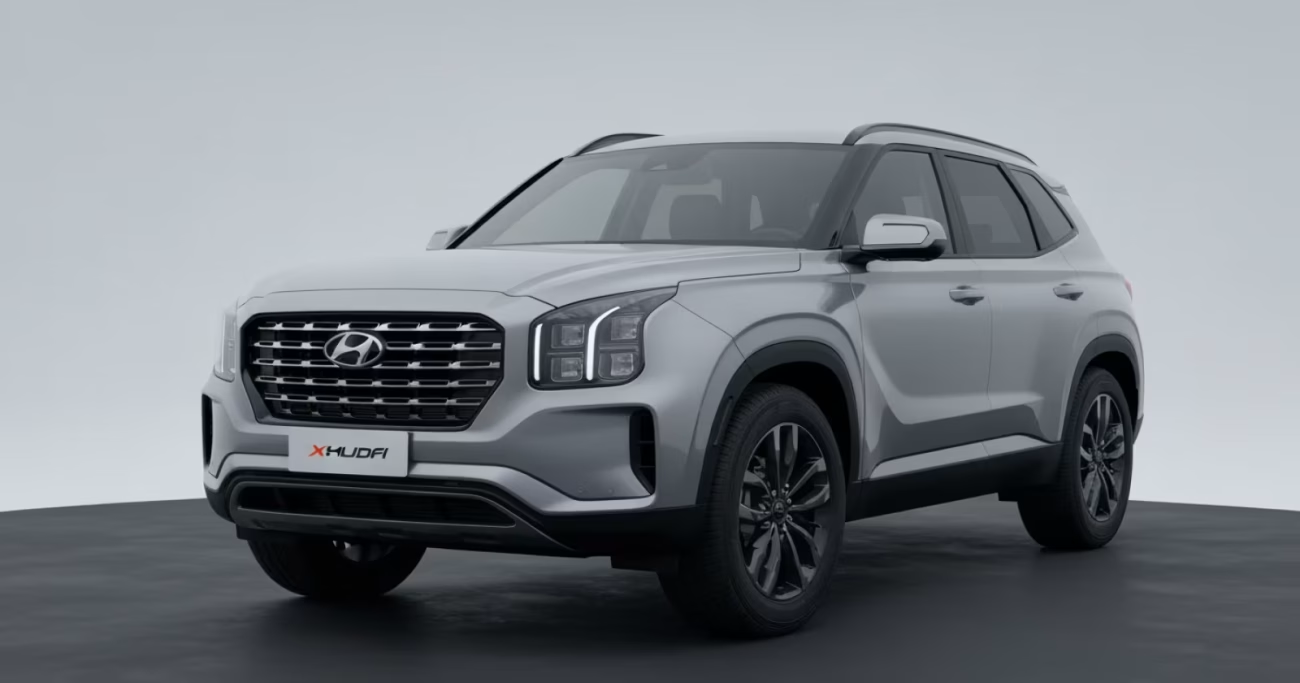
The biggest Hyundai SUV with an off-road badge is being described as having “a little bit of N” in its personality. That is not the same as turning it into a full performance machine, and that distinction is the real story.
Hyundai is using the Palisade XRT Pro to push its rugged image further, while keeping it comfortable enough for long family drives. The result lands somewhere between soft-roader and enthusiast bait.
Why Hyundai’s off-road plan matters now
I see this as more than a trim-level update. Hyundai is signaling that it wants its XRT Pro models to matter more, while also expanding the N Performance name into more of the lineup.
That matters because the brand is no longer treating off-road styling as decoration. The Palisade XRT Pro brings 1 extra inch of ground clearance, all-terrain tires, and a limited-slip rear differential, which gives it real hardware instead of just extra cladding.
Here’s the catch: Hyundai is not chasing hardcore rock crawling. The company is aiming at the kind of driving most owners actually do, including dirt, gravel, and rough back roads where comfort still matters.
That is why the Palisade’s unibody layout suddenly becomes part of the pitch rather than a weakness. Hyundai is saying that a big SUV can still feel playful on loose surfaces without pretending to be a ladder-frame truck.
The real story is gravel-road speed
What Hyundai is not saying outright is that this SUV is built for a very specific kind of “off-road.” Tim Rogers, Hyundai’s product planning manager in Australia, pointed to high-speed off-road driving as the sweet spot.
That is a smarter target than the fantasy of extreme trail duty. For many families, the hardest terrain is a long, washboard gravel road to a cottage, campsite, or remote property, and that is where the Palisade XRT Pro’s tuning is meant to shine.
The Australian suspension tune is a key part of the package, and that local setup tells me Hyundai is tailoring the SUV for real-world use, not brochure heroics. The model is meant to feel more controlled and more enjoyable when the surface gets broken up.
Here’s the catch again: Hyundai still knows it cannot beat body-on-frame rivals in the roughest conditions. The Palisade XRT Pro is not trying to out-climb a Toyota Prado or a Ford Everest in the hardest terrain, and that honesty makes the positioning stronger.
Hyundai borrows from N without pretending
The phrase “a little bit of N” sounds like marketing, but there is logic behind it. Hyundai says its performance-car experience influences how it tunes regular vehicles, and that means steering, balance, and confidence can carry over into an SUV like this.
I think that is the real story. The best performance brands do not only build halo cars; they teach the rest of the lineup how to feel better from behind the wheel, even when the focus is family hauling and road-trip comfort.
Rogers’ comparison to ladder-frame rivals is revealing because it frames the Palisade as the fun choice, not the toughest one. That is a different kind of value, and it could help Hyundai win buyers who want their three-row SUV to feel less truck-like and more polished.
In that sense, the Palisade XRT Pro is closer to an attitude shift than a spec-sheet war. Hyundai is betting that drivers care as much about how an SUV behaves on rough roads as they do about how it looks in a parking lot.
The one catch nobody is talking about
The biggest limitation is also the most obvious one: this is still a monocoque SUV, not a body-on-frame bruiser. That means the Palisade can be tuned for loose surfaces and long-distance dirt-road use, but it will never be the tool for serious bush work.
That does not make it a weaker product. It makes it a more realistic one, especially for buyers who want capability without giving up ride quality, cabin comfort, or everyday manners.
| Model | Drivetrain Type | Off-Road Focus | Edge |
|---|---|---|---|
| Hyundai Palisade XRT Pro | Monocoque | Gravel roads, light trails | Best balance of comfort and capability |
| Toyota Prado | Body-on-frame | Serious off-road use | Stronger for extreme terrain |
| Ford Everest | Body-on-frame | Hard-core off-road duty | Built for tougher terrain |
| BMW X1 | Monocoque | Light all-road use | Shows why refined handling matters |
For Hyundai, the upside is bigger than one trim level. If the XRT Pro formula works, it could give the brand a clearer identity in a segment where many SUVs look adventurous but drive like ordinary crossovers.
I would watch this closely, because the Palisade XRT Pro feels like a test case for a broader strategy. If Hyundai can make a three-row family SUV more fun on rough roads, the next step could be even more interesting.
The verdict is that Hyundai has found a clever middle ground. The Palisade XRT Pro is not pretending to be a trail monster, and that honesty makes its off-road story easier to believe. For family buyers who spend real time on gravel or broken pavement, it could be one of the most interesting large SUVs in the lineup. Hyundai is building capability with character, and that combination is exactly where the market is headed.
If this kind of SUV matters to the way you drive, keep an eye on where Hyundai takes XRT Pro next. I expect this strategy to spread, and I expect more buyers to notice that comfort and confidence do not have to be opposites.
