
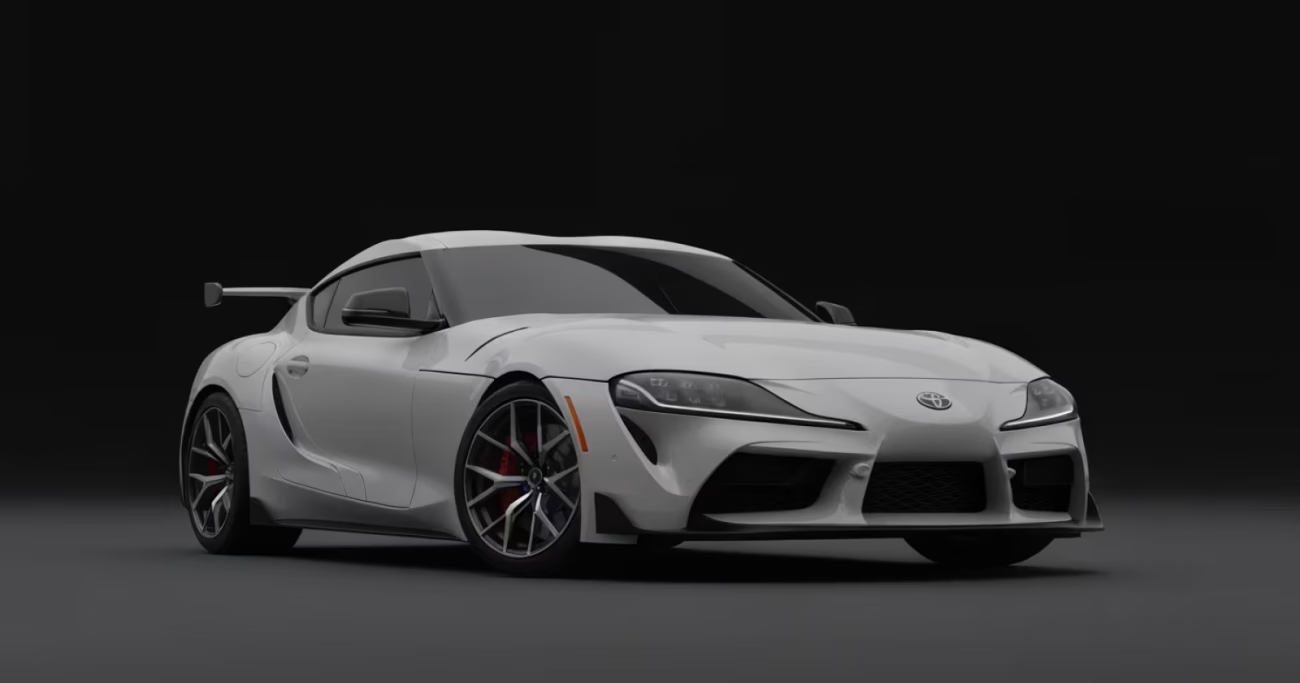
The last Toyota GR Supra is moving faster than expected. In May alone, 404 cars found buyers in the US, even after production ended in March.
That is not how most outgoing sports coupes finish. The real story is a late surge, not a quiet fade.
Final-year demand is refusing to fade
I keep seeing the same pattern with end-of-life sports cars: interest cools, inventory lingers, and the market moves on. The Supra is breaking that script.
Toyota’s 2026 sales through May hit 1,667 units, up 80.6% from the same stretch in 2026. For a coupe with no back seat and limited cargo space, that is a serious finish.
| Spec | Detail |
|---|---|
| May 2026 US sales | 404 units |
| Year-to-date 2026 sales | 1,667 units |
| 2026 starting price | $58,300 |
| 3.0 engine output | 382 hp |
| Top trim price | $69,350 |
| Production status | Ended in March 2026 |
| Interesting twist | Sales rose after production ended |
What Toyota isn’t saying about demand
Here’s the catch: a sales spike after production ends usually means one thing, and it is not mystery demand alone. Dealers often sharpen incentives when the clock runs out, and buyers who waited finally move.
That said, the Supra still has real pull. The car survived the noise around its BMW Z4 roots, the lack of a manual early on, and years of “is it really a Toyota?” debate.
BMW charges more meaningfully for less drama
The Supra’s biggest rival story is really about the BMW Z4 relationship beneath the skin. Toyota borrowed the platform and inline-six, but gave the coupe its own shape and identity.
That separation matters. The Supra looks and feels like a Toyota sports car in the showroom, while the Z4 plays the open-top roadster role. For enthusiasts, the Toyota is the sharper bargain if they want the hardtop experience and a 6-speed manual in 2026.
The one catch nobody is talking about
The final-year price starts at $58,300, and that is before destination. The 3.0 Premium lands at $61,450, while the MkV Final Edition reaches $69,350, which pushes the car firmly into serious-enthusiast money.
Here’s the catch: even at that price, the Supra is still outselling the old A80 Mk IV on a modern-market basis. Through May, cumulative fifth-generation sales reached 30,440 units, far beyond the roughly 12,000 North American sales of the fourth generation.
Heritage numbers still favor the underdog
The Supra name carries two separate truths at once. The Mk IV became a legend in tuning culture, but the older A60 was the true volume giant with 114,459 North American sales between 1982 and 1985.
That puts the current car in perspective. It is not the most important Supra ever built, but it may end up as one of the most commercially successful modern Toyota sports cars, which is a different kind of win.
How it stacks up
| Model | Starting Price | Horsepower | Body Style | Edge |
|---|---|---|---|---|
| Toyota GR Supra | $58,300 | 382 hp | Coupe | Manual option and stronger sales momentum |
| BMW Z4 M40i | About $67,000 | 382 hp | Roadster | Open-top feel, but less coupe credibility |
| Toyota GR Corolla | Around $40,000 | 300 hp | Hatchback | Lower price, but not as special |
| Chevrolet Corvette Stingray | About $70,000 | 490 hp | Coupe | More power, but a bigger leap in cost and size |
Why this matters to enthusiasts and Toyota
The Supra shows that sports coupes can still have a market if they stay desirable, scarce, and emotionally clear. That is a lesson plenty of brands have forgotten.
It also proves Toyota can keep a halo car alive without making it mass-market. The formula is niche, expensive, and enough to matter.
For enthusiasts, this is the kind of exit that deserves attention. I would watch dealer stock now, because the best surviving examples may not stay on lots for long.
If the Supra has been on the edge of extinction in your mind, this sales run says otherwise. It is finishing like a car with something left to prove, and that makes the final chapter worth following closely.
