
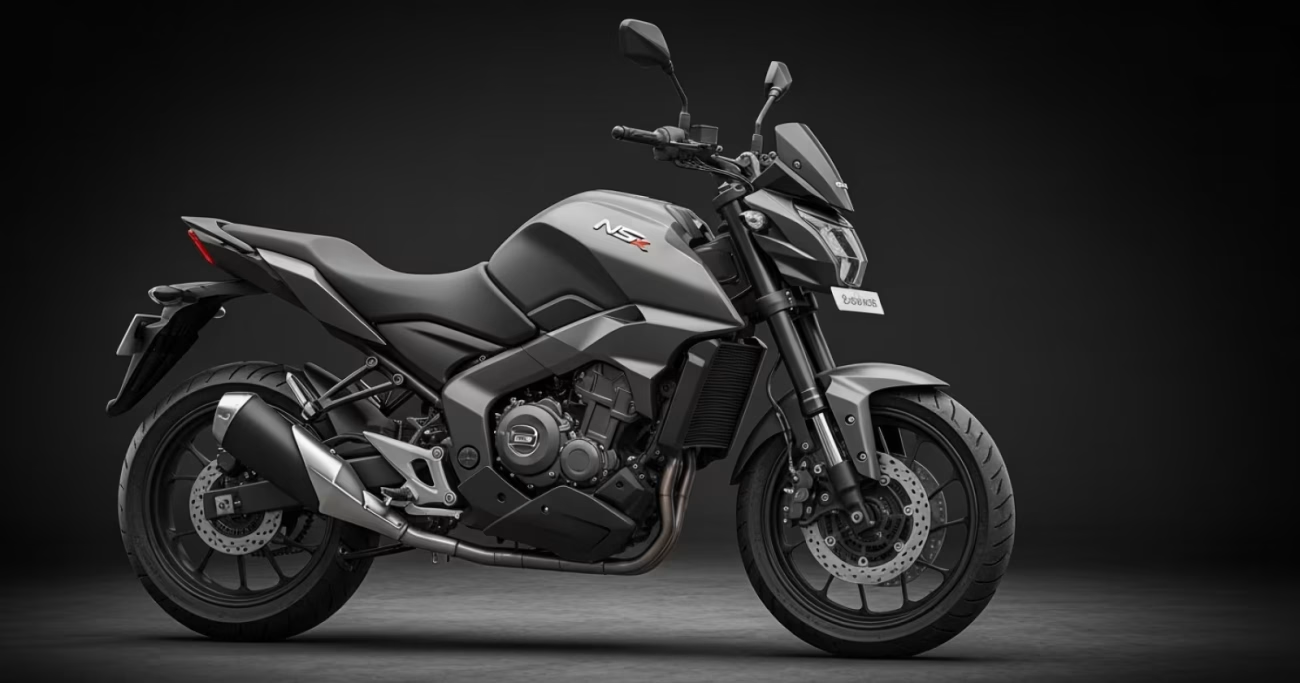
Something quietly significant is happening at Bajaj dealerships right now, and if you’ve been tracking the NS400Z, this is the update you didn’t see coming. The bike most people know as a 373cc naked streetfighter has just arrived at showrooms wearing a brand-new engine — and the reason behind the change is pure government-mandated tax math.
I’ve been following the GST 2.0 fallout closely, and this is one of the most interesting moves I’ve seen a manufacturer make in response to it. Let me break it all down for you.
The GST 2.0 Engine Game — Why Bajaj Shrunk the Displacement
When the Indian Government rolled out GST 2.0 reforms, motorcycles with engine displacement above 350cc got slapped with a 40% tax bracket. Bikes displacing 350cc or below, on the other hand, now attract just 18% GST. That’s a massive 22-percentage-point gap — and no manufacturer worth its salt was going to ignore it.
Bajaj’s response? Trim the Pulsar NS400Z’s engine from 373.27cc down to 349.13cc, effectively sliding the bike under the 350cc threshold and into the cheaper tax bracket. The same treatment has been applied to the Dominar 400. It’s a technically elegant solution to a regulatory challenge, even if the name “NS400Z” now carries a slight irony.
The ₹400 Price Cut No One Was Expecting
Here’s where things get a little anticlimactic — and I’ll be upfront about it. When I first heard about the engine downsize triggered by a tax reform, my brain immediately jumped to “significant price drop.” The reality? Leaked ex-showroom pricing puts the 2026 Bajaj Pulsar NS400Z at ₹1,93,500 — down from ₹1,93,900. That’s a saving of ₹400. Not ₹4,000. Not ₹40,000. Four. Hundred. Rupees.
Manufacturers absorb and redistribute cost changes through margins, component revisions, and logistics. But for a buyer who read “GST bracket drop from 40% to 18%” and walked into a dealership expecting a leaner sticker price, this will be a moment of mild disappointment. The bike still delivers excellent value — it’s just that the tax windfall didn’t reach your wallet the way you hoped it would.
What Actually Changed Under the Engine Cover
Bajaj achieved the displacement reduction by cutting the stroke from 60mm down to 56.1mm, while keeping the bore unchanged at 89mm. The result is a 349.13cc single-cylinder liquid-cooled unit. In terms of output, the new engine produces 40.6 PS of peak power and 33.2 Nm of peak torque — a reduction of 2.4 PS and 1.8 Nm compared to the previous model’s 43 PS at 9000 RPM and 35 Nm at 7500 RPM.
The 6-speed gearbox, slipper clutch, and electronic throttle control are all carried over unchanged. In city traffic or on everyday commutes, I genuinely doubt most riders will feel that 2.4 PS gap. On an open highway stretch, a purist might notice — but it’s far from a deal-breaker.
Spec Sheet: 2026 Bajaj Pulsar NS400Z (Old vs New)
| Specification | Old 373cc Version | New 350cc Version (2026) |
|---|---|---|
| Engine Displacement | 373.27cc | 349.13cc |
| Bore x Stroke | 89mm x 60mm | 89mm x 56.1mm |
| Peak Power | 43 PS @ 9000 RPM | 40.6 PS |
| Peak Torque | 35 Nm @ 7500 RPM | 33.2 Nm |
| GST Tax Bracket | 40% | 18% |
| Ex-Showroom Price | ₹1,93,900 | ₹1,93,500 |
| Gearbox | 6-speed + Slipper Clutch | 6-speed + Slipper Clutch |
Everything Else Stays Exactly as It Was
Bajaj has made absolutely zero changes to the rest of the package — and that’s actually a good thing. The NS400Z rolls into 2026 with its full feature arsenal intact: 43mm USD front forks, wide Apollo H1 tyres, sintered brake pads, large disc brakes with dual-channel ABS, adjustable clutch and brake levers, powerful projector headlights, and a fully digital instrument cluster loaded with turn-by-turn navigation.
Even the name stays as “NS400Z,” which is now a fun naming quirk given the 349cc reality underneath. Colour options are identical to the outgoing version. The one and only visual tell distinguishing this new model? The “373.27cc” debossing that used to appear on the engine block is gone. That’s the only difference you’d spot without checking the spec sheet. Pull up next to one at a red light in Delhi or Bangalore — you’d never know.
Should You Head to the Showroom Right Now?
Dealerships have already started receiving units of the 350cc Pulsar NS400Z, as confirmed by walkaround videos currently circulating online — including a detailed look from the Machine Rules YouTube channel. A formal launch event from Bajaj is expected imminently, which will bring official numbers, on-road pricing across cities, and the full marketing push.
If you’re eyeing this bike against the TVS Apache RTR 310 or the KTM Duke 250, the NS400Z remains a compelling argument at under ₹2 lakh. The feature list is genuinely tough to beat at this price point. The power drop is real on paper but modest in feel, and the bike’s chassis, braking, and electronics package is unchanged.
My advice: visit your nearest Bajaj dealership this week, confirm if the new 350cc unit has arrived in your city, and lock in a test ride before the official launch creates a booking queue. The ₹400 saving might raise an eyebrow, but at ₹1,93,500 for everything this bike offers — it’s still one of the strongest buys in the naked segment right now.
