
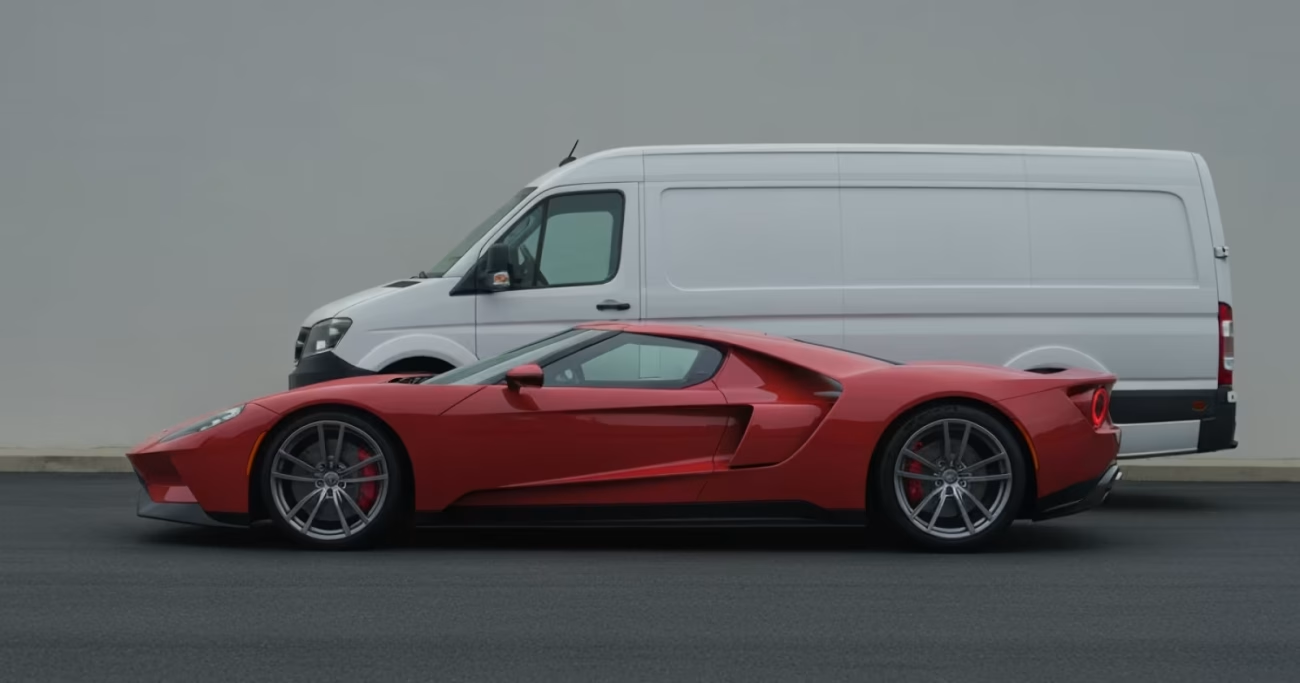
Some cars are rolling pieces of history, and the third-generation Ford GT is absolutely one of them. Watching $2.5 million worth of that history get swallowed by a curb, a concrete wall, and a cloud of debris in a quiet Sacramento suburb is the kind of thing that genuinely stops you mid-scroll.
What makes this crash so hard to process isn’t just the price tag — it’s how ordinary the setting was. A neighborhood intersection. A van leaving a parking lot. A supercar that had reportedly just changed hands days before. And then, in seconds, everything changed.
What we know about the Carmichael crash
The incident happened on April 5 at the intersection of Winding Way and Manzanita Avenue in Carmichael, just outside Sacramento. According to the account that first shared crash footage and aftermath photos, the Ford GT had recently sold for $2.5 million — making it one of the most expensive street-driving casualties in recent California memory.
From what I can piece together watching the grainy intersection footage, the GT was moving noticeably faster than surrounding traffic, though it wasn’t outright flying. The car that potentially set everything in motion was a van pulling out of a parking lot and merging onto the street. Whether the van physically made contact with the GT or simply startled the driver is still genuinely unclear — and that ambiguity matters a lot when you’re trying to assign blame.
The physics of what happened next were brutal
What isn’t ambiguous is what the GT did once it lost grip. The car spun clockwise, gathered speed through the rotation, and then hammered into the landscaping and concrete barriers outside the Winding Way Apartments. The impact was violent enough to launch the car partially airborne, strip the bodywork clean off the driver’s door, and then whip the entire vehicle back counterclockwise before it finally came to rest.
Aftermath footage taken from the front driver’s side tells the rest of the story. Nearly every panel on the car appears damaged. The passenger door somehow remained functional — it was upright and opening — and the hazard lights were flashing, which at least suggests some electrical systems survived. Beyond that, it’s hard to say what, if anything, remained undamaged beneath that carbon fiber skin.
| Detail | Information |
|---|---|
| Vehicle | Third-generation Ford GT supercar |
| Reported value | $2.5 million (recently purchased) |
| Crash location | Winding Way & Manzanita Ave, Carmichael, CA |
| Date | April 5, 2026 |
| Occupants | 2 — both hospitalized, both expected to recover |
| Cause | Under investigation — van merge possibly involved |
| Ambulance response | Nearby unit arrived within moments of the crash |
The one detail that arguably saved two lives
Here’s where I have to give credit where it’s genuinely due — because the human outcome of this crash is far more important than the car. Both occupants were taken to the hospital, and by current reports, both are expected to be okay. That’s remarkable given what the video shows.
Part of that survivability almost certainly comes down to timing. An ambulance happened to be in the area moments before impact and was on scene almost immediately. Ford’s carbon fiber monocoque chassis — the same architecture that makes the GT such a capable track weapon — also deserves serious credit. That structure is designed to absorb enormous crash loads while protecting the occupants, and based on what we’re seeing in aftermath photos, it appears to have done exactly that even while the rest of the car was being destroyed around them.
The owner’s family is still searching for answers
The crash is being investigated, but the family hasn’t had clean answers yet. The owner’s daughter has reportedly been actively seeking out more information about exactly what triggered the sequence of events. That detail hit me — the idea that you’re not just processing the loss of something irreplaceable, but also trying to reconstruct a few seconds of footage that don’t give you a clear picture of what went wrong.
The van’s role remains genuinely unresolved. If contact was made, even a light tap at the wrong moment could have been enough to unsettle a mid-engine supercar traveling at speed. If there was no contact and the driver reacted to a perceived threat, that’s a different story with different implications. Either way, the outcome for the car was the same — and the outcome for the people inside was only narrowly not catastrophic.
What this tells us about supercar ownership on public roads
I’ve covered enough supercar crashes to know the narrative always defaults to driver error or recklessness. And sometimes that’s accurate. But this incident is a useful reminder that even measured speeds on ordinary streets carry real risk when you’re driving machinery with the grip thresholds and reflexes of a third-gen Ford GT. These cars are engineered to operate at the edge — and the edge doesn’t always telegraph itself clearly on a Tuesday afternoon in a Sacramento suburb.
The Ford GT was built in extremely limited numbers, with Ford famously rejecting celebrity applicants to keep the cars in the hands of committed enthusiasts. Each one sold represents a finite piece of American supercar history. Losing one — especially this quickly after it changed hands — is a gut punch to anyone who cares about that lineage. The silver lining, and it is a real one, is that the people inside walked away from something that looked unsurvivable on first viewing.
If you’ve ever considered what it actually means to drive a car worth more than most people’s homes on a public street, this crash is the most honest answer that question is going to get. The machinery can handle far more than the environment around it — and that gap is where things go wrong. Stay informed, drive within your environment, and if you’re near Sacramento and have information about this crash, the owner’s family is still looking for it.
