
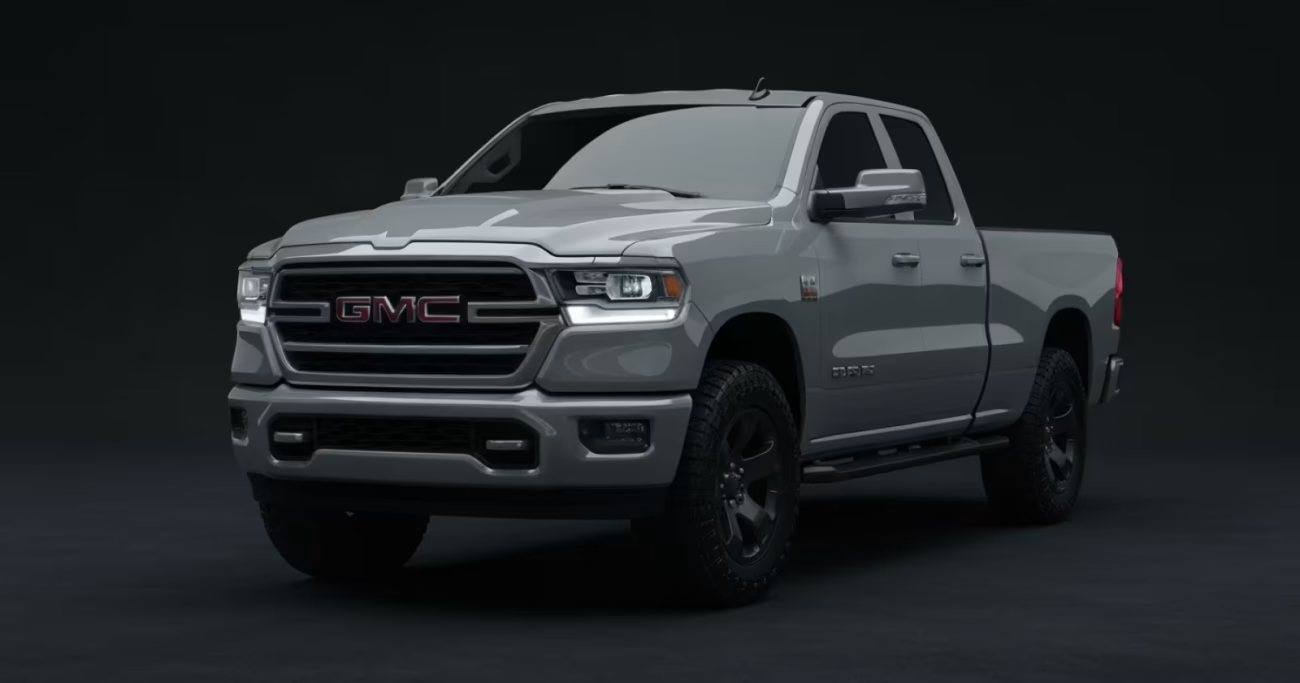
Ram got 10,000 orders inside the first 24 hours after announcing the Hemi V8’s return. That single number tells you everything you need to know about what American truck buyers actually want.
Now the sales data is confirming what those orders predicted — and Chevrolet’s lead over Ram has never looked this fragile heading into a new model year.
At a glance
| Metric | Detail |
|---|---|
| Ram 1500 Q1 2026 sales | 59,828 units (half-ton only) |
| Ram Q1 year-over-year growth | +27% vs Q1 2026 |
| Silverado 1500 Q1 2026 sales | 84,401 units (+7.9%) |
| Ford F-Series Q1 2026 sales | 157,841 units (all variants combined) |
| Ram total (light + HD) Q1 2026 | 98,425 units (+25% YoY) |
| 2026 Ram 1500 base price | $40,275 |
| Hemi V8 order demand | 10,000 orders in first 24 hours |
Why bringing back the Hemi was the smartest move Ram made in years
When Ram pulled the Hemi V8 and replaced it with a pair of inline-six engines, the brand thought it was making a rational, forward-thinking decision. Buyers disagreed — loudly. Sales didn’t collapse, but the backlash was impossible to ignore.
Tim Kuniskis came back to lead Ram and wasted no time reversing course. The Hemi returned. And here’s the real story: it doesn’t matter that the inline-sixes are objectively faster, more powerful, and more fuel efficient on paper. Ram buyers want that V8 rumble, and no amount of horsepower data was going to change that. Ram acknowledged it publicly — “there is no replacement for the iconic Hemi V8” — and the market validated the decision almost immediately.
Ram just passed GMC and Silverado’s cushion is shrinking fast
The ranking shift is the part most people are sleeping on. Ram didn’t just post impressive numbers — it leapfrogged GMC Sierra to become the third-best-selling light-duty pickup in America. The Sierra moved 51,857 half-ton units in Q1 2026. Ram’s 59,828 made that comparison straightforward.
Now look at Chevy. The Silverado 1500 sold 84,401 units, which sounds comfortable until you realize Ram is growing at 27% while Chevy grew at just 7.9%. Keep those trajectories going for two more quarters and the math gets uncomfortable for Chevrolet fast. The gap has not been this narrow in years, and Chevy’s HD truck numbers actually fell 11.4% — meaning the overall Silverado family picture looks worse than the light-duty headline suggests.
What GM isn’t saying about its own truck math
Here’s the catch with the GM numbers — Chevrolet and GMC operate as separate brands even though they share a parent. When you add Silverado and Sierra together, GM’s combined truck volume easily beats the F-Series. But that consolidation doesn’t show up in the official brand rankings, so each nameplate competes on its own.
That structure actually hurts Chevy in the perception battle. Ram climbed past GMC and is now visibly chasing Silverado — and that narrative has momentum behind it. GM executives may not lose sleep over Ram individually, but dealership traffic and consumer conversation don’t care about corporate org charts. Ram’s rise looks real to the people walking into showrooms right now.
Ford, Toyota, and the wildcards that could reshape the rankings by year-end
Ford remains the 800-pound gorilla with 157,841 F-Series units sold despite a 16% sales hit caused by a fire at an aluminum supply plant. A Ford spokesperson confirmed those losses will be recovered later in 2026. Ford doesn’t break out F-150 sales separately from its heavy-duty trucks, which makes direct comparison tricky — but nobody is seriously challenging that top spot anytime soon.
Toyota sits fifth with 34,616 Tundra sales, down 2.6%. The bigger Chevy wildcard is the all-new Silverado arriving later this year. A fresh generation could stall current-model sales as buyers wait — which would hand Ram a window to close the gap even faster. Or it could trigger a rush to buy the outgoing truck before it disappears. Either way, the second half of 2026 sets up as the most competitive truck market moment in years. The return of the supercharged Ram TRX for model year 2027 only adds fuel to that fire.
How it stacks up
| Model | Q1 2026 Sales | YoY Growth | Base Price | Edge |
|---|---|---|---|---|
| Ram 1500 | 59,828 | +27% | $40,275 | Fastest growing |
| Chevy Silverado 1500 | 84,401 | +7.9% | $38,995 | Current #2 |
| GMC Sierra 1500 | 51,857 | N/A | $42,395 | Premium positioning |
| Ford F-Series | 157,841 | -16% (plant fire) | $36,870 | Undisputed #1 |
Why this matters
- Emotional brand identity beats engineering specs in truck segment
- Ram’s 27% growth rate threatens Chevy’s second-place ranking by Q4
- New Silverado launch timing could accidentally accelerate Ram’s rise
The verdict
Ram’s Hemi comeback is one of the cleaner lessons in listening to your customer base in recent auto industry history. The numbers aren’t just good — they’re accelerating at a rate that makes second place a realistic target before 2026 ends. Silverado still holds a comfortable margin today, but comfortable margins have a way of disappearing quickly when one brand is growing at nearly 4 times the pace of another. If you’re shopping a half-ton truck right now, Ram has more momentum behind its lineup than it’s had in years — and that momentum tends to show up in dealer incentives and inventory availability in ways that benefit buyers directly. The truck war just got genuinely interesting again.
If you’re in the market for a new pickup, now is the time to cross-shop the Ram 1500 against the Silverado before the new-model shuffle reshuffles pricing and availability across every dealership lot in the country.
