
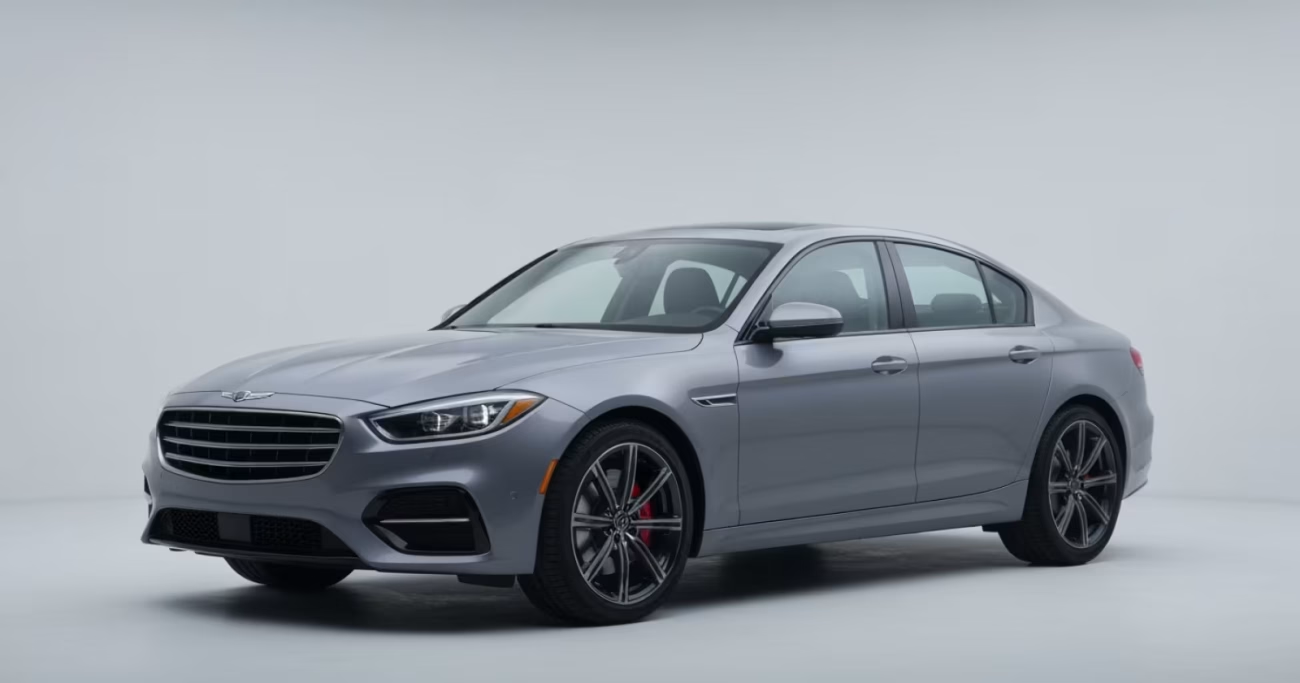
More than 80% of every car on the road right now is gray, white, or black. That stat should embarrass an industry that sells dreams for a living.
But something is shifting — and the $17 billion merger of paint giants Axalta and AkzoNobel may be the clearest signal yet that the automotive world is finally getting serious about color again.
Why the gray car era was never really about taste
Here’s the real story behind why your neighborhood looks like a grayscale photograph. American car buyers are impatient. We want to drive off the lot the same day we decide to buy, so dealers stock the safest, most broadly appealing colors they can find. Gray, white, and black sell fast and offend nobody.
That math has dominated showrooms for decades. Axalta — the former DuPont automotive paint division that has been tracking color trends since 1953 — reports that blue accounts for just 10% of vehicles globally and red a mere 7%. The industry didn’t make cars boring because buyers demanded it. It made cars boring because the supply chain rewarded it.
What color experts are seeing that dealers aren’t telling you
I spoke with the data coming out of the College for Creative Studies in Detroit, and what’s being observed there is genuinely exciting. Kelly Slank, who teaches color and materials at CCS, put it plainly: “What’s happening isn’t just a return to color. It’s a redefinition of what color needs to do.” That framing matters more than it sounds.
The shift isn’t toward screaming neons or shock-value hues. Greens are moving “toward softer, mineral, and plant-based tones that reflect a need for restoration, not just identity.” Oranges are losing their aggression, becoming more desaturated with a nostalgic warmth. Even blue — historically declining in market share — is evolving into deeper, more complex shades with violet and gray undertones. This is color growing up, not showing off.
The $17 billion bet that color is the next competitive battlefield
The merger between Axalta and AkzoNobel isn’t just a business story. It’s a signal that the companies supplying automakers with paint expect demand to grow more complex and more colorful. A combined entity of that scale doesn’t form to sell more white sedans — it forms to lead the next generation of coating technology, including the multi-layer finishes and specialty pigments that make bold colors viable at mass-production volumes.
There’s a catch that doesn’t get discussed enough, though. Automakers have long favored neutrals partly because consistent color replication across multiple global factories is genuinely difficult. Axalta’s own spokeswoman acknowledged that neutral colors are “generally easier to replicate consistently across multiple production plants.” The engineering challenge of scaling a vibrant, complex finish across three continents is real — and it’s a big reason why your local dealer’s lot still looks the way it does.
Genesis and the brands already moving ahead of this trend
While most brands are tiptoeing toward color, Genesis has gone further than almost anyone. The Hyundai-owned luxury brand launched an entire sub-brand called Magma — a name that deliberately conjures images of molten, unstoppable force. That kind of brand architecture around color is unprecedented in the mainstream segment, and it signals that at least one automaker is willing to put real money behind the conviction that buyers want something other than Lunar Silver Metallic.
Retired GM executive design director Dave Rand has watched this cycle before. He’s noticed a re-emergence of pastels on smaller vehicles over the last 5 years — “not exactly like the 1950s, but subtle shades in greens, blues, and khaki that look fresh and stand out in a sea of nondescript.” Rand still drives a 1966 Jaguar E-Type in Opalescent dark green. He’s been right about color longer than most people in this industry have been alive.
| Color Category | Current Global Share | Trend Direction (2026) | Notable Brand Example |
|---|---|---|---|
| White / Silver / Gray / Black | 80%+ | Declining slowly | Most mainstream brands |
| Blue (standard) | ~10% | Evolving to deeper violet-blues | Hyundai Ioniq 6 N |
| Red / Orange | ~7% | Shifting to desaturated warm tones | Infiniti QX65 Sunfire Red |
| Green (earth tones) | Rising | Strong upward trend | Genesis Magma, Toyota 4Runner |
| Pastels (soft hues) | Niche but growing | Re-emerging on smaller vehicles | Fiat 500e, VW GTI |
Why social mood and global anxiety make gray feel “safe” right now
There’s a psychological dimension to all of this that the industry quietly acknowledges. When uncertainty is high — economically, geopolitically, personally — people reach for neutrals. The black, white, and gray palette lets buyers avoid committing to something that feels risky. It’s the automotive equivalent of not wanting to stand out in a crowd when the crowd feels dangerous.
But CCS graduate program chair Melanie McClintock has spent 2 years watching the next generation of designers actively push back against that impulse. Her students are drawn to “earthbound warm oranges and deep greens” alongside “hues of deep sea-sky-space that range between cloudless light blues to mystical, abyssal dark blues, teals, and violets.” These aren’t just aesthetic preferences — they’re expressions of a generation that grew up surrounded by screens and is now hungry for physical, tactile, grounded beauty.
Why this matters
- A $17B paint merger signals industrial-scale investment in complex color technology
- Genesis building a color sub-brand sets a template other luxury makers will follow
- Neutral color dominance could shrink meaningfully within one product generation cycle
The verdict: The tide is turning, and 2026 is the clearest inflection point I’ve seen in years of watching automotive design trends. If you’re shopping for a new car right now, this is the moment to stop defaulting to Midnight Black and actually look at what’s on offer. The resale risk of bold color is overstated on desirable vehicles, and the daily reward of driving something that actually reflects your personality is deeply underrated. The gray era isn’t dead yet — but its days are numbered, and the brands that move fastest on color will own the emotional connection with the next generation of buyers.
If you’re ready to stop blending into traffic, now is exactly the right time to start exploring what’s possible beyond the grayscale. Check out the 10 coolest paint colors available on everyday cars right now — your driveway deserves better than another silver sedan.
